




Ford Details All-New Transit Van Body Styles and Transit Connect Cargo Van Features
Ford released more details about its upcoming 2014-MY full-size Transit van, including information about its available body styles, trim levels, roof heights, and cargo capacity. The automaker also released new information about the cargo van version of its all-new Transit Connect.
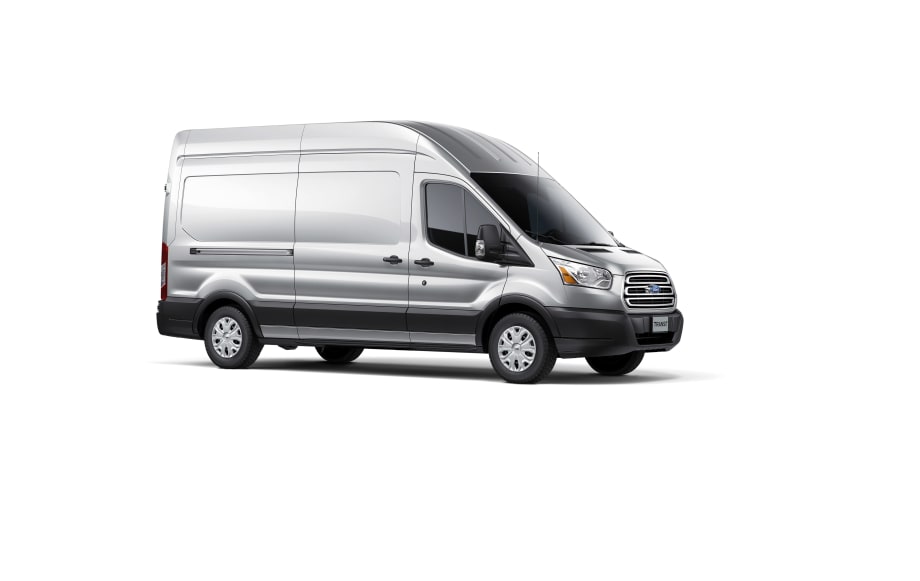
This is the high roof, long wheelbase version of the full-size Transit van.
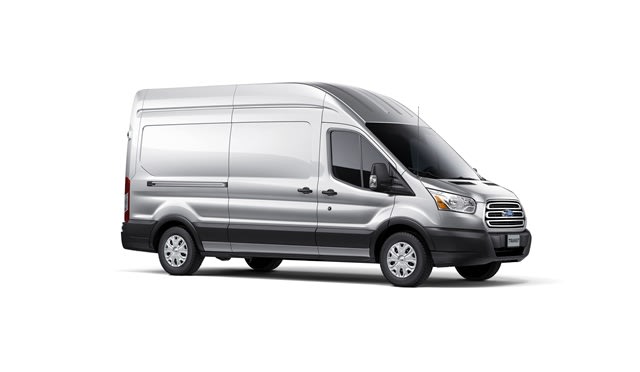
This is the high roof, long wheelbase version of the full-size Transit van.
Ford released more details about its upcoming 2014-MY full-size Transit van, including information about its available body styles, trim levels, roof heights, and cargo capacity. The automaker also released new information about the cargo van version of its all-new Transit Connect.
Ford Details Transit Van Roof Heights, Body Styles and Cargo Capacities
Starting with the Transit, it will come in three body lengths, two wheelbases, three roof heights, five body styles, and two trim levels. The body styles for the van include the following: van, wagon, chassis cab, and cutaway. Trim levels include XL and XLT.
You can view a photo gallery here that shows all the different roof heights and wheelbase configurations.
Regarding the specifications for the models with different roof heights, the high-roof model features 81.5 inches of interior cargo height and the overall vehicle height is 110.2 inches. The medium-roof model has room for up to 72 inches of cargo height and is 100.8 inches tall, and the low-roof model has room for 55.8 inches of cargo height and is 83.2 inches tall.
Cargo volumes range from 250 to nearly 500 ft. (in a “jumbo” configuration, according to Ford), which the automaker said is 80% more space than the largest E-Series van and more than twice the volume of the standard E-Series. For towing, a Class IV hitch is available.
Inside, the Transit van’s rear cargo doors can open up to 270 degrees, and Ford said it designed the vehicle’s interior to allow for easy upfitting with racks, bins, shelves, and other types of cargo storage solutions. For the passenger version of the Transit, the largest model can carry up to 15 people.
Beyond cargo space and configurations, Ford provided details on the Transit’s construction and service life. The company said it engineered the vehicle for a severe-usage service life of 10 years and 150,000 miles. The Transit features unibody construction and the automaker said it made extensive use of high-strength and boron steel throughout the vehicle. Ford added the durability testing program for the Transit involved 148 prototype vehicles that underwent 215 separate tests to evaluate the long-haul functionality of vehicle systems and hardware.
As noted in Automotive Fleet’s previous coverage of the all-new Transit, the powertrain choices include a 3.7L V-6, with a compressed natural gas/liquid propane gas (CNG/LPG) prep kit and E85 flex-fuel capability, the all-new 3.2L Power Stroke five-cylinder common rail turbo diesel engine, and the 3.5L EcoBoost engine. Ford matched each engine with a six-speed automatic transmission. The Transit is a rear-wheel-drive vehicle.
For handling, steering, and ride quality, the Transit features a power rack-and-pinion steering system. The front suspension is composed of subframe-mounted MacPherson struts and a stabilizer bar for improved cornering, progressive rear leaf springs, and heavy-duty gas-charged dampers.
Ford said the all-new full-size Transit can is set to go on sale in fall 2013.
All New Transit Connect Van
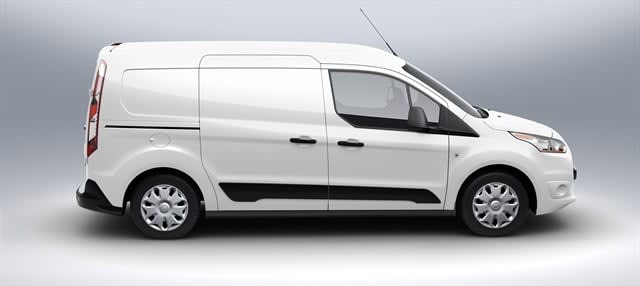
Shown here is the long wheelbase version of the Transit Connect Van, the cargo version of the all-new Transit Connect.
Ford released new information about its Transit Connect cargo van, officially called the Transit Connect Van (as opposed to its passenger-oriented sibling, the previously announced Transit Connect Wagon).
You can view a photo gallery of the Transit Connect Van here.
Under the hood, the all-new Transit Connect Van cargo version offers two four-cylinder engine choices, a standard 2.5L and an optional 1.6L EcoBoost engine. Ford said it estimates the 1.6L EcoBoost version of the Transit Connect will get at least 30 highway mpg. The automaker paired each engine with a six-speed automatic transmission.
For buyers interested in using alternative fuels, they can specify a compressed natural gas/liquid propane gas (CNG/LPG) prep package for 2.5L engine in the all-new Transit Connect.
Inside, the van is available with or without second-row seats. It offers a rear-view camera and a 6.5-inch touchscreen display with navigation and SYNC with MyFord Touch as options. The vehicle comes standard with Ford’s programmable MyKey system, which allows fleet administrators to restrict maximum vehicle speed and set the audio system’s maximum volume level.
The all-new Transit Connect Cargo van will come in two wheelbase lengths and two trim levels, XL and XLT. It has a 1,600-lb. payload capacity and offers more than 130 ft. of cargo space. The van is also approved to tow up to 2,000 lbs. when equipped appropriately.
When it comes to safety, all Transit Connect van models feature first-row frontal and side airbags, first-row side curtain airbags, and a tire pressure monitoring system.
Ford also offers its telematics system for this vehicle, the Ford Work Solutions Crew Chief telematics system, which is powered by Telogis.
The automaker said the Transit Connect Van will go on sale in late 2013.
More Operations

Fleet Has a Talent Pipeline Problem. What Comes Next? | AF News Recap
Where will fleet’s next generation of leaders come from? This week, we’re looking at the industry’s talent pipeline, what certification can add to a fleet career, how to build an award-worthy track record, and the return of Automotive Fleet’s Personal Use Survey.
Read More →
Smith System Launches Driver Risk Management Program
Fleets have more driver data than ever, but identifying risky behavior doesn't necessarily correct it. Smith System's new Driver Risk Management program combines monitoring, training, and follow-up coaching to help fleets connect risk signals with driver intervention.
Read More →
Automotive Fleet Opens 2026 Personal Use Survey for Commercial Fleet Managers
Less than two weeks left! Commercial and corporate fleet managers are invited to share how their organizations handle company vehicle personal-use policies, charges, and driver eligibility.
Read More →
From AI Prompts to AI-Generated Safety Songs | AF News Recap
Can better prompts make AI more useful for fleet managers? This week, we’re breaking down smarter fleet analysis, an AI-assisted experiment that turned safety training into music, and what happened to fuel prices in August.
Read More →
How to Write Better AI Prompts for Fleet Analysis
Include these six elements in your fleet prompts to generate more relevant analysis and accurate answers.
Read More →
Fleet Meets: Eric Kilgore
This edition of the Fleet Meets series features one of the industry's best leaders driving multi-market and national operations.
Read More →
Why Reactive Fleet Management Is Becoming Too Expensive to Sustain
Research highlights a growing need for proactive management strategies to address rising costs in fleet operations effectively.
Read More →
What Your Fleet KPIs Aren’t Telling You
Tracking fleet metrics is only useful when the data leads to better decisions. This guide helps fleet leaders assess cost, utilization, and downtime more accurately, identify performance gaps, and prioritize the actions that can improve operational results.
Read More →
Hidden in Plain Sight: Fleet Compliance Risks
Fleet compliance isn't just about having policies — it's about consistently enforcing them. This practical guide reveals six hidden compliance risks common in public sector and shared fleet operations and outlines proven strategies to improve visibility, accountability, and audit readiness
Read More →
Turning Fleet Payment Data into Executive Insights
Does data alone drive results in operations?
Read More →