




Ford Research Advances Connected-Car Tech
The automaker is collaborating with Russian scientists who have used multichannel connectivity principles to further develop space robot communications.
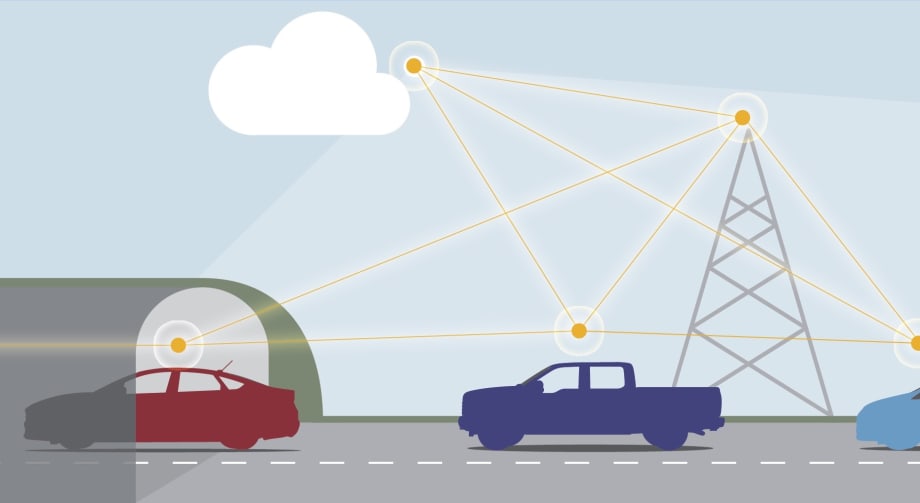
Illustration courtesy of Ford.
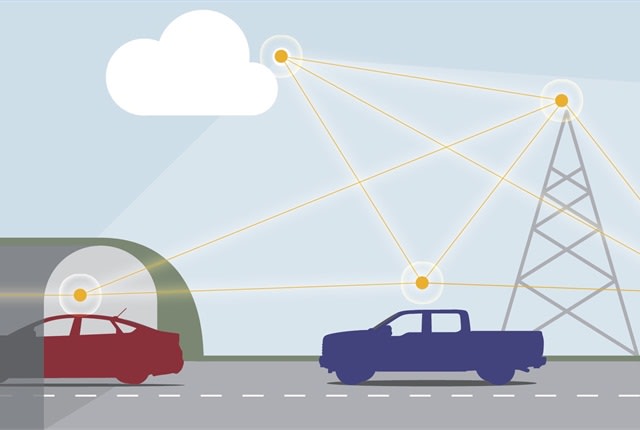
Illustration courtesy of Ford.
Ford Motor Co. and St. Petersburg State Polytechnic University in Russia have reached the final phase of a large-scale research project aimed at enhancing vehicle communication technology, Ford announced.
Building on university telematics expertise in space robot communications, Ford has filed several patents on technologies that can serve to advance connected cars of the future.
“The challenge of creating a robust wireless communications network is shared between the space and automotive industries,” said Oleg Gusikhin, technical leader of advanced connected services for Ford Research & Advanced Engineering. “These first results are very promising in terms of offering more reliable communications technology for the future of connected vehicles.”
The primary goal of the three-year joint project was the development of robust communication technology to connect drivers and service providers with information and services on the cloud. The key problem Ford set out to address was maintaining reliable communication between vehicles and the cloud in conditions where there was wireless network overload or poor connectivity.
Data was collected and transmitted from moving vehicles, which featured a variety of capabilities for a connection to the cloud – cellular, Wi-Fi and communication with other vehicles and the infrastructure.
The team created an intelligent connectivity manager that uses software and algorithms to select the connection option best suited to transmit data to the cloud. Each vehicle is given the opportunity to assess the quality of communication channels and to transmit data.
The researchers developed a small-scale connectivity coverage map that keeps the features of the landscape, while incorporating data on fixed and mobile wireless access points, the quality of service of the available communication channels as well as traffic conditions.
Specifically, the team looked at sharing critical information regarding a road emergency with drivers in an area that has poor connectivity, Ford said. In this scenario, a car entering a tunnel encounters black ice and needs to send a signal noting the slippery conditions for other vehicles. There’s no cellular reception, and Wi-Fi is not an option because there’s no hot spot, but another car leaving the tunnel in the opposite direction has both vehicle-to-vehicle and a cellular connection.
The intelligent connectivity manager selects the second car’s vehicle-to-vehicle channel to deliver information gathered from the first car to the cloud so that it can then transmit a warning to other drivers of the dangerous conditions at the tunnel entrance. If no other cars are around, the connectivity manager would postpone sending the message until the first car leaves the tunnel and a cellular network becomes available.
In nonemergency situations, the connectivity manager can check the coverage map to determine the best point for service delivery. So if a vehicle is traveling in a remote area and a software update is sent out, the update would be delivered over the air when the connection is stronger.
In the future, as information will be collected at the same time from hundreds of vehicles, a universal connectivity map will reflect the current data at all times. This map will act as a database for implementing smart roads and smart city projects. This means that in any given situation, whether moving or parked, the vehicle with the most stable connection – cellular, embedded modem, Wi-Fi, vehicle-to-everything – can be a resource to facilitate a reliable connection to information services. This enhances the connected experience for the entire driving public, Ford said.
Vladimir Zaborovsky, who heads up telematics for St. Petersburg State Polytechnic University, is pleased with the project’s findings.
“The developed solutions are of high reliability, scaleability and adaptability, and they open broad prospects for application – both in transportation logistics and in space robotics,” he said. “We’re looking forward to further collaborating with our colleagues from Ford.”
The project will be finalized by year-end, and the results could be integrated into Ford production programs – including vehicle-to-vehicle communication, the delivery of emergency messages and over-the-air software updates.
St. Petersburg State telematics researchers successfully carried out a series of experiments in space using the same multichannel connectivity fundamentals that served as the basis for the research project with Ford. Cosmonauts aboard the International Space Station used a joystick to control a robot based on Earth amid noisy conditions, operating signal time delays and equipment failures.
Now, the team plans to advance the technology to remotely control a group of robots assembling scientific equipment and satellites.
More Safety

Nexar-Nauto Merger Aims to Give Fleets Better Safety Intelligence Through Larger Driving Dataset
Stefan Heck tells Automotive Fleet that combining more than 10 billion miles of driving history with Nexar's AI models will give fleets deeper insights into driver risk and roadway conditions than either company could provide independently.
Read More →
Don't Wait for a Crisis: 5 Ways to Build Mental Health Into Your Fleet Safety Program
For Suicide Prevention Month, fleet and safety leaders have an opportunity to put mental health where it belongs: at the center of workplace safety.
Read More →
How Camera Data Can Strengthen a Fleet’s Insurance Renewal
Insights from a commercial insurance carrier and a broker show how fleets can turn video telematic data, driver coaching, and improved claims results into a stronger case at insurance renewal.
Read More →
The Safest Fleets Aren’t the Ones with the Most Technology
You’ve made the telematics investment. Here’s how to capture the other half of its value and build the safest fleet on the road.
Read More →
Hidden in Plain Sight: Fleet Compliance Risks
Fleet compliance isn't just about having policies — it's about consistently enforcing them. This practical guide reveals six hidden compliance risks common in public sector and shared fleet operations and outlines proven strategies to improve visibility, accountability, and audit readiness
Read More →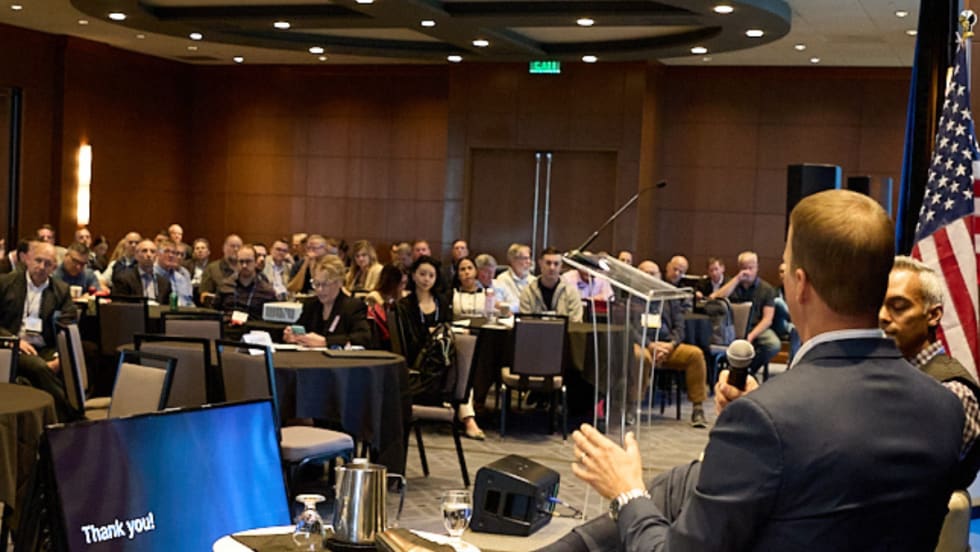
NETS Sets 2026 Fleet Safety Benchmark Conference for Indianapolis
The Sept. 15–17 program will feature fleet benchmarking data, case studies, emerging technologies, and implementation strategies while running alongside the NSC Safety Congress & Expo.
Read More →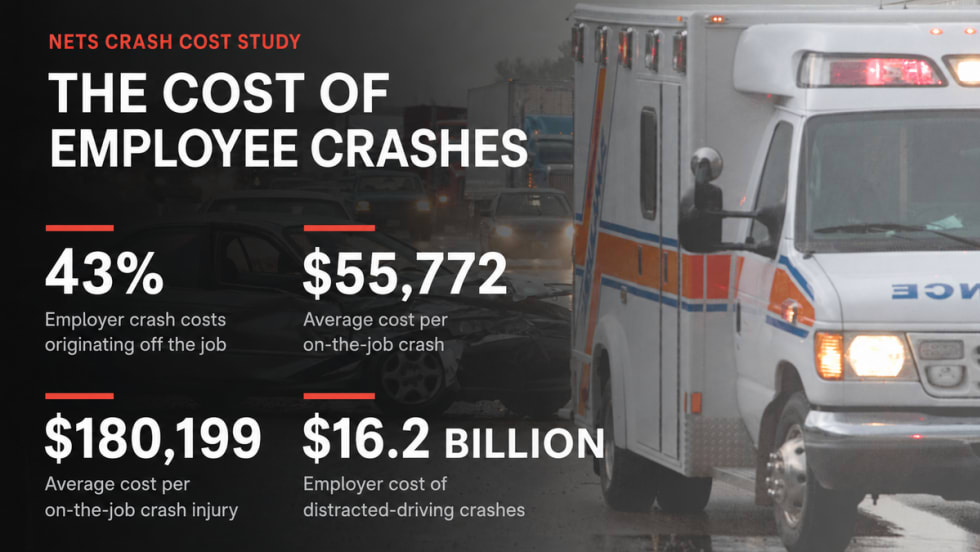
Off-the-Job Crashes Account for 43% of Employers’ $61.7 Billion Crash Burden
NETS quantifies costs dispersed across fleet, risk, HR, and other departments while providing new per-crash benchmarks for employers.
Read More →
Ram Recalls More Than 1.27 Million 1500 Pickups for Seat Belt Anchor Issue
The recall affects certain 2019-2026 Ram 1500 pickups that may have improperly attached second-row seat belt buckle anchors.
Read More →
How Better Visibility Cut Speeding Violations by 48%
Fleet leaders don't need more data, they need clearer visibility into what the data is saying. This case study explores how one utility replaced speeding-event counts with a single metric — miles driven in violation — to strengthen safety and significantly reduce speeding violations.
Read More →
Operation Safe Driver Week: Why the Industry's Oldest Safety Campaign Still Matters to Fleets
A look at how a 2007 enforcement initiative became one of the most consequential weeks on the fleet safety calendar, and what it means for your drivers in 2026.
Read More →