




Ford Ramps Up Safety Technology Testing
DEARBORN, MI --- Ford Motor Co. has introduced new, extreme tests -- such as ramming shopping carts into car doors and blasting water cannons to force vehicles into skids -- to fine-tune new safety technologies for its mainstream vehicles.
DEARBORN, MI --- Ford Motor Co. has introduced new, extreme tests -- such as ramming shopping carts into car doors and blasting water cannons to force vehicles into skids -- to fine-tune new safety technologies for its mainstream vehicles.
These tests, the automaker said, are part of Ford's ongoing efforts to accelerate new collision protection and avoidance technologies.
"Blasting and ramming cars may seem over the top, but they're part of a serious testing regimen that Ford had to invent, because increasingly sophisticated technologies require more advanced testing," said Sue Cischke, group vice president of Ford sustainability, environment and safety engineering. "We will continue to build on our safety leadership with advanced safety technologies that help enhance crash protection or even help customers avoid accidents."
Ford engineers conduct unusual crash tests to take thousands of impact readings that help calibrate the sensitivity of new air bag pressure sensors being introduced on the new 2009 F-150 and 2010 Taurus. The new air bag systems use pressure pulses from a side impact to deploy up to 30 percent faster than a traditional air bag system that uses acceleration-based sensors.
Engineers, however, were concerned that everyday mishaps -- such as shopping cart collisions in parking lots or errant basketballs from neighborhood children -- could trick the new sensors that now help predict crash forces before the full impact occurs. The engineers used reams of data from these unusual tests to calibrate the air bag sensor to disregard typically minor collisions.
In one test, a lab robot repeatedly pushes a shopping cart loaded with a 110-pound weight into the vehicle doors at 10 miles per hour. Another robotic test replicates the impact of a bicycle wheel on the car door.
Pressure-based sensors more accurately measure the severity of a crash than acceleration-based sensors, which makes them better able to differentiate between a life-threatening, air bag-deployable crash and relatively harmless daily abuse that should not require air bag protection. They also perform better in new federal side-impact and oblique-impact tests, are less likely to be affected by vehicle design differences, and give designers more flexibility because they take up less space.
The new F-150 is one of North America's first vehicles to offer this new technology.
Engineers also conduct air bag sensor research on a test track rife with jarring, jolting surface imperfections, ranging from potholes and chatter bumps to curbs and ditches. There, certified test drivers are encouraged to push vehicles to the limit.
"They drive the test vehicles into curbs and railroad tracks at high speeds," said Todd Clark, sensor development supervisor for Ford safety systems. "Most people wouldn't drive that recklessly, but it's our job to find out how much abuse the sensor will take before deploying the air bag and adjust the sensors accordingly."
Ford's safety engineers also have concocted a test method using a multi-tailed, lead-tipped steel whip. They use it to repeatedly "pepper" the underbody area where side impact air bag sensors are located. Data collected from such tests is used to refine sensor calibrations as well.
Ford researchers also use a water cannon test to analyze how a moving vehicle reacts to being struck from the side, without putting test vehicles and drivers at risk of damage or injury. Researchers say the new test could prove useful in the development of next-generation stability control technology.
In this highly coordinated maneuver, Ford engineers mount an air-powered cannon -- a tool commonly used in mining operations and pumpkin-throwing contests -- in the rear compartment of a test vehicle. The cannon blasts water outward, causing a recoil impulse that forces the vehicle into a skid. Engineers use the test data in computer simulations to help study how to enhance stability control technology, reducing risks to test drivers and damage to test vehicles.
"It's a very effective test that demonstrates the ingenuity of our engineering team to think outside the box," said Jeff Rupp, manager of Ford active safety systems engineering. "We know of no other automaker doing anything quite like it."
According to the 2008 New Vehicle Customer Study, safety features account for one of the top 10 reasons why Ford buyers chose their vehicle. More than 53 percent of Ford buyers indicated that safety features are "extremely important" in their decision to purchase a Ford vehicle.
"Ford's efforts to advance vehicle safety are driving more car buyers to the brand," said Mike Harper, brand and tracking manager for Ford market research. "And their interest in safety continues to fuel innovation among our vehicle designers and engineers."
More Safety

Nexar-Nauto Merger Aims to Give Fleets Better Safety Intelligence Through Larger Driving Dataset
Stefan Heck tells Automotive Fleet that combining more than 10 billion miles of driving history with Nexar's AI models will give fleets deeper insights into driver risk and roadway conditions than either company could provide independently.
Read More →
Don't Wait for a Crisis: 5 Ways to Build Mental Health Into Your Fleet Safety Program
For Suicide Prevention Month, fleet and safety leaders have an opportunity to put mental health where it belongs: at the center of workplace safety.
Read More →
How Camera Data Can Strengthen a Fleet’s Insurance Renewal
Insights from a commercial insurance carrier and a broker show how fleets can turn video telematic data, driver coaching, and improved claims results into a stronger case at insurance renewal.
Read More →
The Safest Fleets Aren’t the Ones with the Most Technology
You’ve made the telematics investment. Here’s how to capture the other half of its value and build the safest fleet on the road.
Read More →
Hidden in Plain Sight: Fleet Compliance Risks
Fleet compliance isn't just about having policies — it's about consistently enforcing them. This practical guide reveals six hidden compliance risks common in public sector and shared fleet operations and outlines proven strategies to improve visibility, accountability, and audit readiness
Read More →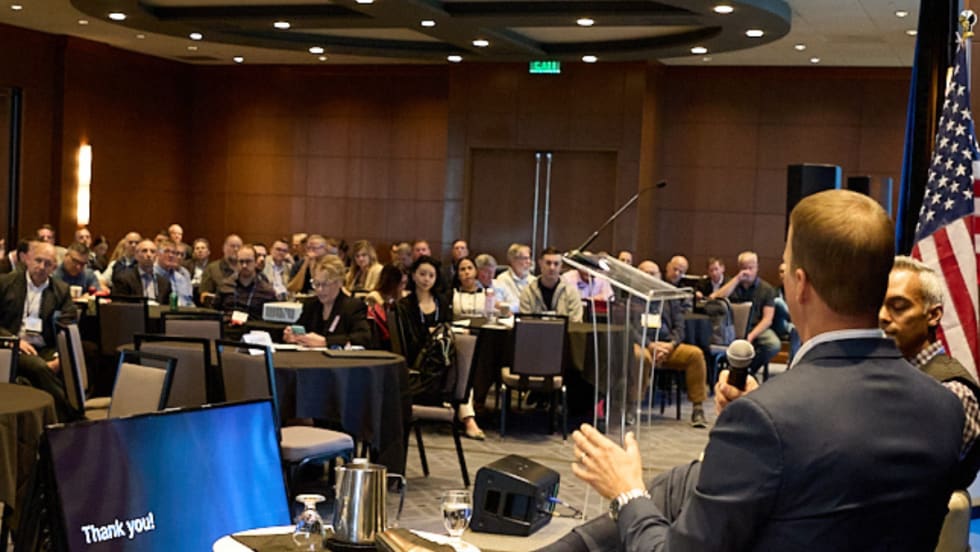
NETS Sets 2026 Fleet Safety Benchmark Conference for Indianapolis
The Sept. 15–17 program will feature fleet benchmarking data, case studies, emerging technologies, and implementation strategies while running alongside the NSC Safety Congress & Expo.
Read More →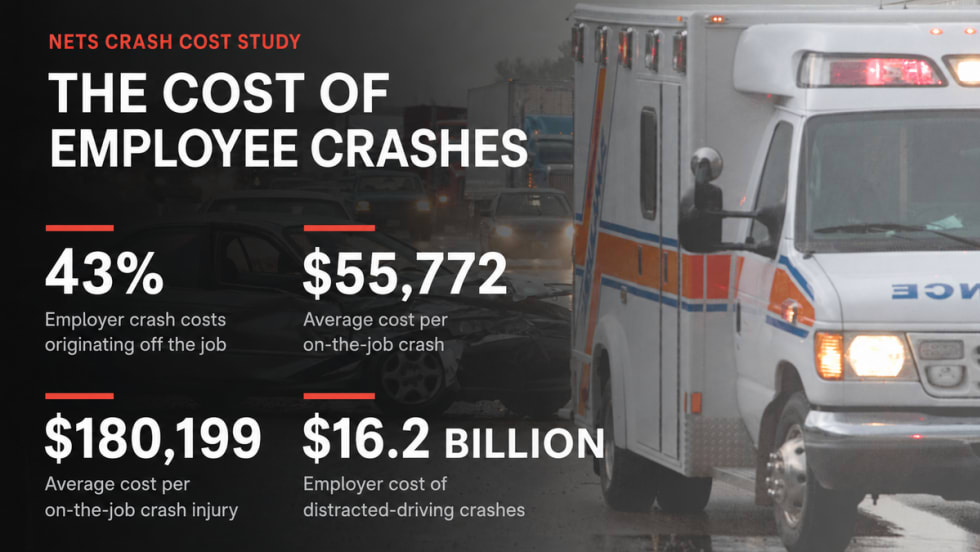
Off-the-Job Crashes Account for 43% of Employers’ $61.7 Billion Crash Burden
NETS quantifies costs dispersed across fleet, risk, HR, and other departments while providing new per-crash benchmarks for employers.
Read More →
Ram Recalls More Than 1.27 Million 1500 Pickups for Seat Belt Anchor Issue
The recall affects certain 2019-2026 Ram 1500 pickups that may have improperly attached second-row seat belt buckle anchors.
Read More →
How Better Visibility Cut Speeding Violations by 48%
Fleet leaders don't need more data, they need clearer visibility into what the data is saying. This case study explores how one utility replaced speeding-event counts with a single metric — miles driven in violation — to strengthen safety and significantly reduce speeding violations.
Read More →
Operation Safe Driver Week: Why the Industry's Oldest Safety Campaign Still Matters to Fleets
A look at how a 2007 enforcement initiative became one of the most consequential weeks on the fleet safety calendar, and what it means for your drivers in 2026.
Read More →