





Related: Autonomous Vehicles Will Cause Less Accidents with Costlier Repairs
Ford Outlines Autonomous Vehicle Safety Plan
Ford Motor Company has released a report for customers and other stakeholders that details the automaker's safety-oriented approach to the development of self-driving vehicles.
August 17, 2018
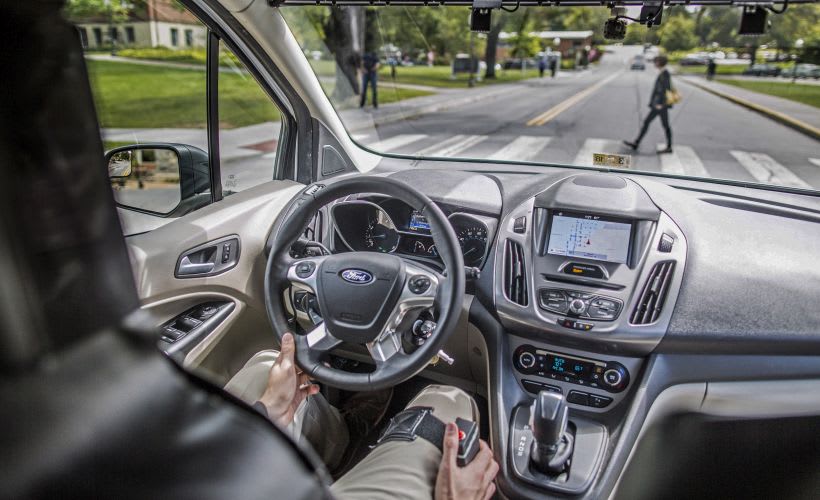
Ford has outlined its approach to safety with its autonomous vehicle testing program in a new report.
Photo courtesy of Ford.
3 min to read
Recent accidents with self-driving test vehicles — including one incident in which a pedestrian was killed — have made consumers more concerned about the safety issues connected with autonomous vehicles.
In fact, a recent AAA study found that nearly three-quarters (73%) of American drivers report they would be too afraid to ride in a fully self-driving vehicle, up significantly from 63% in late 2017. Cox Automotive also found these attitudes in a recent mobility study.
Amid this climate, Ford Motor Company has released a report for customers and other stakeholders that details the automaker's safety-oriented approach to the development of self-driving vehicles.
The report, "A Matter of Trust," covers Ford's commitment to safety as top priority, outlines how the manufacturer is collaborating with industry and government partners, and explains how Ford is applying technology to solve the transportation challenges faced by our cities.
Ford plans to deploy its first self-driving vehicles in 2021. Its initial wave of autonomous vehicles will be utilized by commercial fleets in mobility services such as ride-hailing and goods delivery, according to the report.
The testing of its self-driving vehicles is a key topic area covered in the Ford report. The automaker notes that the company is confident in its safety processes and procedures, which have been refined over decade of engineering and testing.
Moreover, notes the report, Ford follows its proven safety strategies, including extensive computer simulations and driving on closed-course tracks, before allowing any self-driving test vehicles on public roads.
As for safety operators of autonomous vehicles, Ford states that the company puts them through extensive training so that they are familiar with everything from vehicle dynamics and the local roads to the capabilities of the self-driving system before they take an AV out for a test.
In addition, Ford test vehicles make it easy for safety operators to override the self-driving system in any situation. If the safety operator controls the vehicle in any way, by steering, throttle or braking, the vehicle returns full control with notification to the driver. The safety operator can also disconnect the self-driving system or disable the powertrain completely by pressing a failsafe button in the center console.
Finally, notes the reports, all of Ford's vehicle operators currently work in two-person teams with the driver monitoring the road ahead and the passenger monitoring the self-driving system via a laptop computer.
The report also discusses how Ford is working in partnership with Argo AI to integrate decades of vehicle safety experience with the latest advancements in artificial intelligence to integrate both vehicle hardware and system software into a safe, efficient and enjoyable experience for its customers.
To learn more about Ford's commitment to safety in AV development, read the full report here.
More Safety

Nexar-Nauto Merger Aims to Give Fleets Better Safety Intelligence Through Larger Driving Dataset
Stefan Heck tells Automotive Fleet that combining more than 10 billion miles of driving history with Nexar's AI models will give fleets deeper insights into driver risk and roadway conditions than either company could provide independently.
Read More →
Don't Wait for a Crisis: 5 Ways to Build Mental Health Into Your Fleet Safety Program
For Suicide Prevention Month, fleet and safety leaders have an opportunity to put mental health where it belongs: at the center of workplace safety.
Read More →
How Camera Data Can Strengthen a Fleet’s Insurance Renewal
Insights from a commercial insurance carrier and a broker show how fleets can turn video telematic data, driver coaching, and improved claims results into a stronger case at insurance renewal.
Read More →
The Safest Fleets Aren’t the Ones with the Most Technology
You’ve made the telematics investment. Here’s how to capture the other half of its value and build the safest fleet on the road.
Read More →
Sponsored•August 7, 2026
Hidden in Plain Sight: Fleet Compliance Risks
Fleet compliance isn't just about having policies — it's about consistently enforcing them. This practical guide reveals six hidden compliance risks common in public sector and shared fleet operations and outlines proven strategies to improve visibility, accountability, and audit readiness
Read More →
NETS Sets 2026 Fleet Safety Benchmark Conference for Indianapolis
The Sept. 15–17 program will feature fleet benchmarking data, case studies, emerging technologies, and implementation strategies while running alongside the NSC Safety Congress & Expo.
Read More →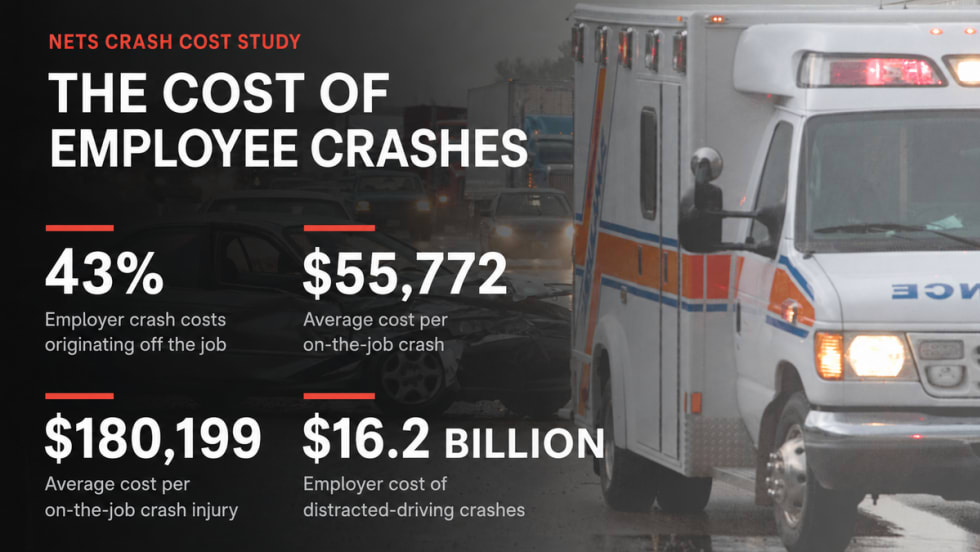
Off-the-Job Crashes Account for 43% of Employers’ $61.7 Billion Crash Burden
NETS quantifies costs dispersed across fleet, risk, HR, and other departments while providing new per-crash benchmarks for employers.
Read More →
Ram Recalls More Than 1.27 Million 1500 Pickups for Seat Belt Anchor Issue
The recall affects certain 2019-2026 Ram 1500 pickups that may have improperly attached second-row seat belt buckle anchors.
Read More →
Sponsored•July 17, 2026
How Better Visibility Cut Speeding Violations by 48%
Fleet leaders don't need more data, they need clearer visibility into what the data is saying. This case study explores how one utility replaced speeding-event counts with a single metric — miles driven in violation — to strengthen safety and significantly reduce speeding violations.
Read More →
Operation Safe Driver Week: Why the Industry's Oldest Safety Campaign Still Matters to Fleets
A look at how a 2007 enforcement initiative became one of the most consequential weeks on the fleet safety calendar, and what it means for your drivers in 2026.
Read More →