




Ford Focus Best Performer in Fender-Bender Crash Tests for Small Cars
ARLINGTON, VA --- In a series of crash tests, the Insurance Institute for Highway Safety recently assessed how well the bumpers of 20 small car models would protect the vehicles from damage in low-speed collisions.
ARLINGTON, VA --- In a series of crash tests, the Insurance Institute for Highway Safety recently assessed how well the bumpers of 20 small car models would protect the vehicles from damage in low-speed collisions.
The worst performers were the Hyundai Elantra, Toyota Prius and Volkswagen Rabbit, each sustaining about $4,000 damage or more in a single test, the institute said. The Ford Focus performed the best, with about one-third that amount of damage in its worst test.
"Small cars are supposed to be economical, but there's nothing economical about three or four thousand dollars in repairs after a low-speed collision," said Institute Senior Vice President Joe Nolan. "Ford did the best job of putting bumpers on a small car that largely do what they're supposed to do. In three of the four tests, the bumpers on the Focus protected sheet metal and most other expensive parts from damage."
To assess and compare bumper performance in low-speed impacts, the institute conducts a series of four crash tests -- full front and rear into a barrier designed to mimic the front or back bumper on another vehicle plus front and rear corner impacts. The full-width impacts are conducted at 6 mph while the corner impacts are run at 3 mph.
The purpose of a bumper is to absorb the energy of a low-speed collision and slow the vehicles before there's damage to expensive-to-repair parts like fenders and hoods. But there are multiple problems, the first of which is that the bumpers on colliding vehicles often don't line up vertically so they don't engage to begin with. Even some that do line up don't stay engaged during an impact.
Modern front-end styling results in bumper designs that can either slide under the bumpers of vehicles they strike or that simply don't have enough room to absorb the energy of a low-speed crash. Even if they do engage the bumper of the vehicle they crash into, the bars underneath bumper covers often aren't up to absorbing the energy. They may not be big enough to provide much protection from damage, especially if they don't extend to vehicle corners, or they may be too flimsy to absorb much energy.
Bumpers have to be tall enough to engage, and to stay engaged with the bumpers on other vehicles in collisions, even during emergency braking. Otherwise, the bumpers bypass each other when the vehicles collide, overriding and underriding so that crash energy goes right through and crumples the vehicle body.
The front bumper of the Focus is tall enough to do a reasonably good job in the full-width test. Repairs cost less than $600. In contrast, damage to the Elantra of nearly $5,000 in the same test is equal to almost one-third of the car's sales price.
"The Focus shows that decent bumpers don't have to be heavy or costly," said Nolan. "Many consumers are turning to small cars for better fuel economy, but damage in our tests approached luxury car territory. Savings at the pump could be more than offset by a single low-speed collision in one of these so-called economy cars."
Underride is a frequent cause of significant damage in the tests, just like in real-world crashes. For example, the front bumpers of the Rabbit and Honda Civic underrode the barrier in the front full-width test, resulting in damage to their grilles, hoods, fenders and air-conditioning condensers. Similarly, the Prius sustained nearly $4,000 damage in the rear full-width test because its bumper is mounted too low to be in position to protect the vehicle's tailgate, rear body panel and taillights, the institute said.
In the front corner test of the right side of the Prius, damage was much less, about $1,200, involving the fender and headlight. But had the test been conducted on the left side, the barrier would have crushed a coolant tank which costs more than $1,000 to replace, not including labor.
The cost of big-ticket engine components is one thing, but something else driving repair costs are the prices of everyday parts that require replacement after what should be minor collisions. For example, plastic bumper covers that fit over the bumper bars of modern cars don't cost the same. Among the small cars tested, the front covers on the Scions cost less than $500 to replace and refinish, but the Mitsubishi Lancer's front cover is twice as expensive. Headlights and taillights vary widely in cost, too. A taillight costs $205 to replace on the Prius, compared with just $65 on the Focus, the institute said.
To do an effective job of managing crash energy, the bars underneath bumper covers have to be long enough to protect car bodies out to the front and rear corners. If a bar doesn't extend far enough, a minor corner impact is likely to cause lots of damage, even compromising lights and other safety-related parts, the institute said. Eleven of the cars in the full-front test and 18 in the front corner test required headlight replacement or repair.
To illustrate how small changes to bumper design can make a significant difference in repair costs, the institute worked with Tech-Cor, the research division of Allstate Insurance, to modify the front bumper of the Prius. The reinforcement bar and foam absorber were extended another 10 inches on the passenger side under the headlight. When the institute tested the Prius again, the headlight and fender were undamaged and the repair cost dropped from $1,200 to $254.
"There's plenty of room under the bumper covers of most cars to make this simple change," said Nolan.
The shape of the barrier the institute uses to test bumpers represents a typical vehicle bumper, the institute said. It's set at 16 inches from the ground in the corner test and 18 inches from the ground in the full-width test. The barrier height in the corner test matches the bumper zone specified in federal standards that require bumpers on cars.
Because minivans, pickups and SUVs aren't required to comply with the federal rule, institute researchers set the barrier in the full-width test 2 inches higher to promote car bumper designs with a better chance of engaging the bumpers on these vehicles, which often are higher than typical car bumpers. The idea is that car bumpers should work not only in crashes with other cars, but also in crashes with other vehicles.
It wouldn't take much for automakers to reduce the cost of repairing the damage that occurs in low-speed collisions, the institute said. Nolan advised the automakers to take these steps:
-- Make the bumper bars longer so they protect headlights and other critical and costly equipment at the corners of vehicles.
-- Make bumpers taller so they engage the bumpers on higher riding SUVs and pickup trucks instead of underriding them, even during emergency braking.
-- Don't sacrifice function for style by mounting bumpers too close to the car body. This makes for a sleek look, but it doesn't leave much room for absorbing crash energy. Mount bumper bars farther out and use the available space under a bumper cover for energy absorption.
"Bumpers on most cars aren't worthy of the term," Nolan said. "Even the best bumper in this group still allowed more than $1,000 damage in one 3 mph crash test. Some simple changes could prevent a lot of damage to cars, and expense and headaches for consumers."
For full crash test results, click here.
More Safety

Nexar-Nauto Merger Aims to Give Fleets Better Safety Intelligence Through Larger Driving Dataset
Stefan Heck tells Automotive Fleet that combining more than 10 billion miles of driving history with Nexar's AI models will give fleets deeper insights into driver risk and roadway conditions than either company could provide independently.
Read More →
Don't Wait for a Crisis: 5 Ways to Build Mental Health Into Your Fleet Safety Program
For Suicide Prevention Month, fleet and safety leaders have an opportunity to put mental health where it belongs: at the center of workplace safety.
Read More →
How Camera Data Can Strengthen a Fleet’s Insurance Renewal
Insights from a commercial insurance carrier and a broker show how fleets can turn video telematic data, driver coaching, and improved claims results into a stronger case at insurance renewal.
Read More →
The Safest Fleets Aren’t the Ones with the Most Technology
You’ve made the telematics investment. Here’s how to capture the other half of its value and build the safest fleet on the road.
Read More →
Hidden in Plain Sight: Fleet Compliance Risks
Fleet compliance isn't just about having policies — it's about consistently enforcing them. This practical guide reveals six hidden compliance risks common in public sector and shared fleet operations and outlines proven strategies to improve visibility, accountability, and audit readiness
Read More →
NETS Sets 2026 Fleet Safety Benchmark Conference for Indianapolis
The Sept. 15–17 program will feature fleet benchmarking data, case studies, emerging technologies, and implementation strategies while running alongside the NSC Safety Congress & Expo.
Read More →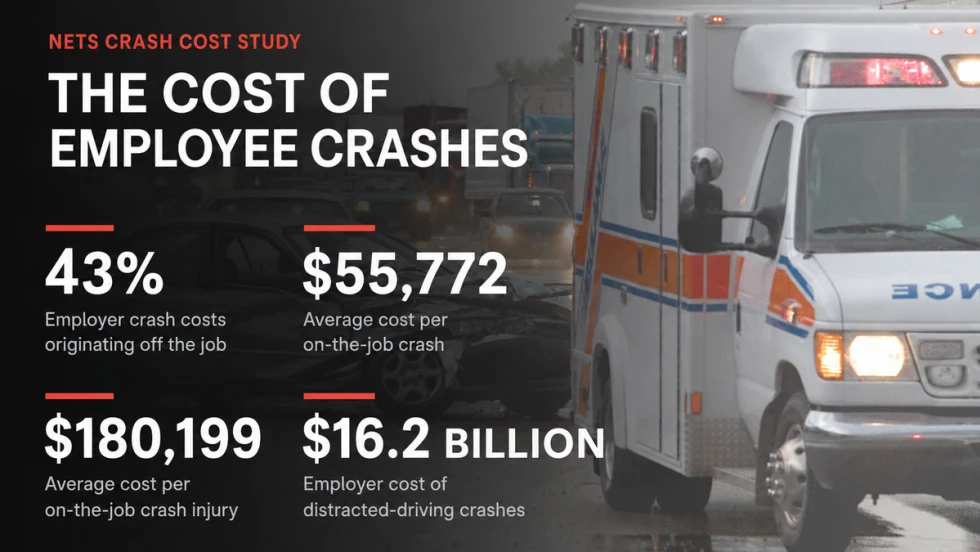
Off-the-Job Crashes Account for 43% of Employers’ $61.7 Billion Crash Burden
NETS quantifies costs dispersed across fleet, risk, HR, and other departments while providing new per-crash benchmarks for employers.
Read More →
Ram Recalls More Than 1.27 Million 1500 Pickups for Seat Belt Anchor Issue
The recall affects certain 2019-2026 Ram 1500 pickups that may have improperly attached second-row seat belt buckle anchors.
Read More →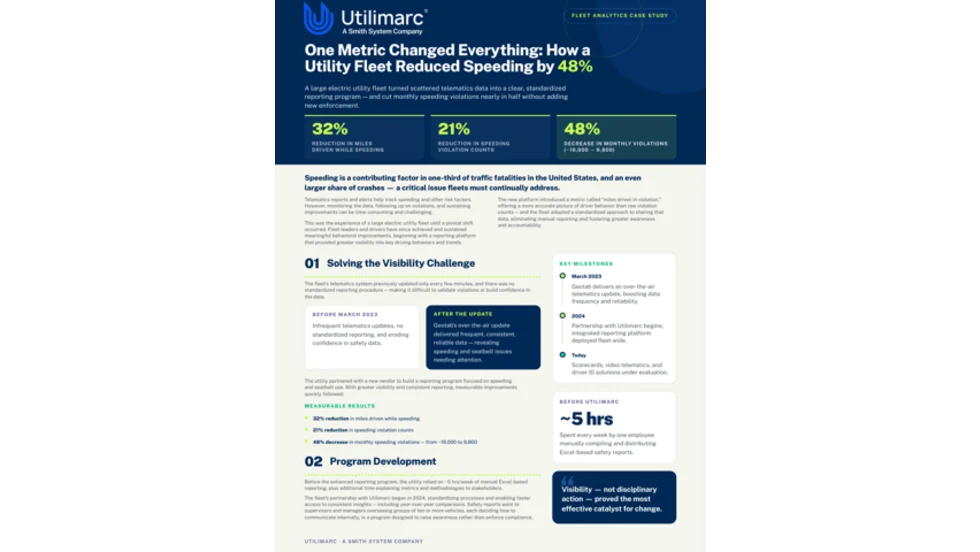
How Better Visibility Cut Speeding Violations by 48%
Fleet leaders don't need more data, they need clearer visibility into what the data is saying. This case study explores how one utility replaced speeding-event counts with a single metric — miles driven in violation — to strengthen safety and significantly reduce speeding violations.
Read More →
Operation Safe Driver Week: Why the Industry's Oldest Safety Campaign Still Matters to Fleets
A look at how a 2007 enforcement initiative became one of the most consequential weeks on the fleet safety calendar, and what it means for your drivers in 2026.
Read More →