




Ford Developing New Technologies Aimed at Boosting Vehicle Safety, Easing Driver Stress
DEARBORN, MI – Ford is researching and developing intelligent driving technologies, including Traffic Jam Assist and an advanced version of active park assist.
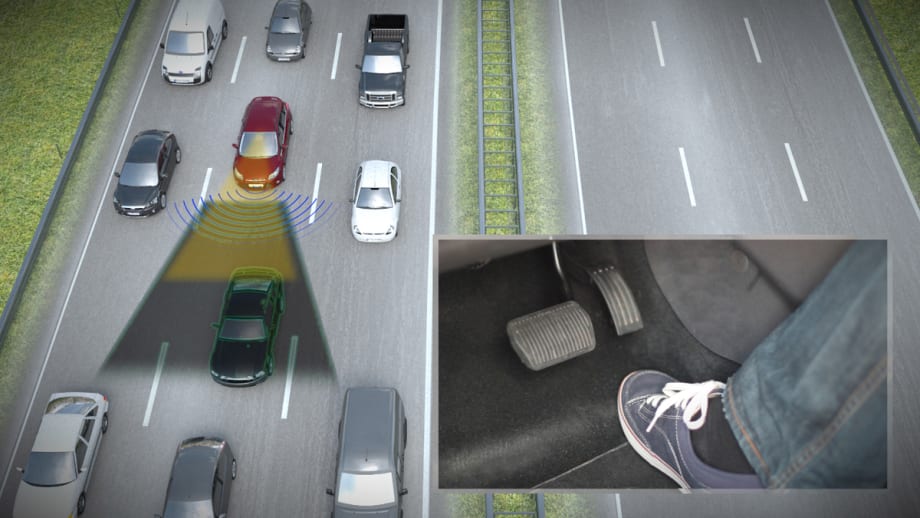
Traffic Jam Assist is among the technologies Ford is researching and developing.
DEARBORN, MI – Ford Motor Co. is researching and developing intelligent, next-generation driving technologies designed to help address traffic jams and other future mobility challenges that come with rapid urbanization and population growth around the world.
Ford’s early prototypes of two such technologies – Traffic Jam Assist and an advanced version of active park assist – are designed to interact with a vehicle’s surroundings, reduce driver stress and help reduce traffic gridlock, the automaker said.
“Developing these technologies is part of the first step in a journey toward a more connected future,” said Paul Mascarenas, Ford chief technical officer and vice president of research and innovation. “It’s an undertaking we believe will save time, conserve resources, lower emissions, improve safety and help reduce driver stress.”
Traffic Jam Assist
Traffic Jam Assist is an intelligent driving technology that Ford is developing for the mid-term. It uses radar and camera technology to help a vehicle keep pace with other vehicles in traffic and provide automated steering control to stay in the current lane, reducing driver stress and potentially improving vehicle flow.
Traffic Jam Assist is among the technologies Ford is researching and developing.
“Drivers spend more than 30% of their time in heavy traffic,” said Joseph Urhahne, engineer with Ford Research and Innovation. “Traffic Jam Assist could help make traveling through congestion a more relaxing experience and, by keeping pace with the flow of traffic, potentially help relieve road congestion.”
Individual simulation studies have found that where 25% of vehicles on a stretch of road are equipped to automatically follow the traffic ahead, journey times can be reduced by 37.5% and delays reduced by 20% – saving millions of gallons of fuel each year.
Traffic Jam Assist has the potential to follow the traffic ahead while maintaining lane position in environments where there are no pedestrians, cyclists or animals, and where lanes are clearly marked.
Many of the sensing technologies required to deliver Traffic Jam Assist already are available on current Ford models including Focus, Escape and Fusion.
The developing technology would be able to respond to changing traffic situations ahead and communicate any developments to the driver. Traffic Jam Assist would also incorporate features to help ensure the driver remains alert and in contact with the vehicle controls, even when the system is active. It could also be overridden at any time.
Perpendicular Parking
In the near term, Ford said, the automaker plans to further develop its active park assist technology, a popular feature that allows drivers to parallel park without touching the wheel. Ford is adding perpendicular parking to the parallel parking maneuvers already possible.
The enhanced system would harness the technologies introduced with active park assist. It uses ultrasonic sensors to identify suitable parking spaces, for width rather than length, and then steers the vehicle into them using electric power-assisted steering (EPAS).
Active park assist is activated by pressing a center console button. When a suitable space is detected, the system will advise the driver to stop with an audible and visual warning. The driver will then be told to put the vehicle into reverse gear and operate brakes and clutch, if needed, while the car controls the steering wheel.
Perpendicular parking functionality would use the vehicle’s rear parking distance control sensors to monitor for obstructions not seen by the driver when backing into the space.
Where there is insufficient space to complete the maneuver in one attempt, the system might ask the driver to shift the vehicle into forward and reverse as necessary. Once the vehicle is perfectly parked, the driver gets a finish signal.
More Safety
Stellantis Recalls 1.3 Million Jeep Vehicles Worldwide Over Fire Risk
Stellantis is recalling more than 1.3 million Jeep Wrangler and Gladiator models worldwide over a fire risk linked to power steering pump wiring.
Read More →
Coaching Is Not Training, Even When AI Is Doing It
AI-powered safety platforms can detect risky behaviors and deliver immediate feedback. But effective driver development still requires a foundation of training followed by coaching that reinforces those skills.
Read More →
How Emotions Behind the Wheel Can Affect Fleet Safety
During National Safety Month, fleets are encouraged to look beyond distracted driving and recognize how stress, fatigue, and emotional well-being influence driver performance and crash risk.
Read More →

Nominations Open for 2026 Fleet Safety Award
Nominations have officially opened for the 2026 Fleet Safety Award Winner.
Read More →
Turning Connected Vehicle Data Into Decisions That Matter
Fleet leaders have more data than ever, but turning that data into clear, actionable decisions remains a challenge. This white paper shows how leading organizations are using connected vehicle data to improve safety, reduce costs, and optimize fleet performance. Learn how to turn insight into action across your fleet.
Read More →
Cameras, Safety and Insurance: From Reactive Claims to Real-time Prevention
Commercial auto remains one of the most challenging and costly lines of coverage for fleet operators and insurers alike. Learn more about how to effectively address these issues from Onur Aksan, Enterprise Business Development Executive, Geotab.
Read More →
NAFA Fleet Safety Symposium to Collocate With 2026 Fleet Forward Conference
The daylong certificate program will precede the Fleet Forward Conference at the Gaylord National Harbor in Maryland.
Read More →
The Distractions You Can’t Turn Off: What Drivers Face Outside the Vehicle
Fleet drivers face constant visual, cognitive, and environmental interruptions the moment they hit the road. From roadside chaos to mental fatigue and digital overload, today’s biggest driving risks often come from outside the vehicle itself.
Read More →
FLASH Weather AI Launches First Deep-Learning Hail Prediction Model With High-Resolution Forecasting
FLASH Weather AI has launched a first-of-its-kind hail prediction model capable of forecasting hail size and arrival time at 1-kilometer resolution up to 55 minutes ahead, giving fleets and insurers critical time to prepare for severe storms.
Read More →
How Coca-Cola United Protects Its Fleet from Growing Legal Risk
As litigation risk rises, vehicles are increasingly targeted. This Coca-Cola bottler shares how it’s reducing exposure through driver training, technology, and a proactive risk management approach.
Read More →