




Ford Design Initiative Focuses on Making Vehicles More Damage Resistant
INKSTER, MI --- Ford is opening a technology center in Inkster, MI., dedicated to finding design solutions and repair procedures that will lower repair costs and ultimately drive down auto insurance premiums.
INKSTER, MI --- Ford is opening a technology center in Inkster, MI., dedicated to finding design solutions and repair procedures that will lower repair costs and ultimately drive down auto insurance premiums.
The new Ford Paint and Body Technology Center in Inkster will leverage the combined expertise of Ford's repair and safety experts, auto repair technicians and insurance companies. Ford's goal is developing affordable, innovative vehicle designs, replacement parts and repair procedures that lower the cost to fix a damaged vehicle.
"Our bottom line for this new initiative is simple: If your vehicle costs less to repair, it's going to cost less to insure," said Darryl Hazel, president of Ford's customer service division. "The work Ford will perform at the new Paint and Body Technology Center will help reduce insurers' repair costs so they can drive down auto insurance premiums for consumers."
Ford's new Paint and Body Technology Center is funded by a $650,000 investment made by collision repair product, equipment and service suppliers. Those partners, along with insurance companies, are collaborating with Ford by providing repair recommendations early in a new vehicle's development. They also will use the facility to train certified repair technicians.
"It's great that Ford gets insurance industry insight about how to improve repairability of its vehicle designs," said Mark Woirol, project manager with Allstate Insurance Co.'s Tech-Cor Applied Research Center, which works with automakers, insurers and repairers to make cars more damage-resistant and repair methods more cost-efficient. "We've never been as involved in an automaker's product development process as we have since Ford invited us to participate."
Ford's Paint and Body Technology Center is merging operations with Ford's existing Safety Crash Test Analysis building.
The goal is to identify potential repair issues and refine designs to help dealers and other auto repairers more affordably repair vehicles to pre-accident condition, ensuring safety and quality. Many new affordable repair designs are expected to be designed into vehicles earlier in development so they can be analyzed during crash and durability testing.
After crashes, the repair engineering team works to develop specific repair procedure recommendations for body shops.
Ford repair and safety engineers first began collaborating on the new 2009 Ford F-150. During the early development period, engineers realized new materials -- including ultra-high-strength steel and boron -- made the new truck safer, but also could make it more expensive to repair after a collision.
"The extensive use of advanced technologies and materials in the 2009 F-150 required specific procedures and repair recommendations for the industry," said Gerry Bonanni, Ford collision repair senior engineer.
To address the issue, Ford developed special front and rear frame section kits that can be used rather than having to replace the entire frame. Partial frame repairs cost at least $2,000 less than full frame replacements and will save vehicles that before may have been totaled based on some state repair laws.
The success of the collaboration on repair procedures for the F-150 led to the decision to open the new facility.
"We're now able to prepare repair procedure manuals in advance for all of our new vehicles," said Mark Albrant, customer service engineering supervisor. "This effort saves insurers repair costs so they can reduce consumers' auto insurance premiums. At the same time, repairs can be done with safety-approved procedures that help ensure the vehicle's quality is restored."
Ford said it recognizes that affordability, including insurance costs, is a key concern for consumers. In 2008, the National Highway Traffic Safety Administration reported that Ford had more collision insurance cost segment leaders than any other automakers. And, four of its cars and trucks are on Insure.com's Top 10 Least Expensive Vehicles to Insure list, which is more than any other automaker.
According to the Highway Loss Data Institute, the four-door 2008 Ford Focus saw a 13 percent improvement in average insurance loss payments compared to the 2007 model as a result of design improvements.
"The work that Ford's repairability experts already have done with Ford's safety engineers has made the Focus's bumper bigger and stronger to better protect adjacent components," said Larry Coan, Ford damageability engineer. "The new Paint and Body Technology Center will allow us to develop even more affordable repairs before vehicles launch."
Ford said it also helped to reduce insurance premiums for Mustang owners by making improvements to the car's overall repairability based on consultation with insurance industry repairability experts. The cost of insuring a 2008 Mustang is approximately 25 percent lower than it was on 2006 models and 50 percent lower than on 2004 models, according to a leading U.S. insurance company.
In addition, Ford said it is significantly reducing prices for genuine Ford replacement collision parts to its dealers and repair shops. In 2008, Ford reduced prices on more than 6,000 of its highest volume replacement parts.
The use of genuine Ford parts ensures the same quality, fit, structural integrity, corrosion resistance and dent resistance of Ford's original parts, as well as helping ensure proper functionality of safety systems damaged in accidents, the automaker said.
"When customers take their vehicles in for collision repair, they want their vehicles to be returned to pre-accident condition, using the same quality parts that were on the vehicle when it was built," said George Gilbert, manager of FCSD's collision parts truckload program. "By enabling more of our dealers to stock genuine Ford parts, we're better able to satisfy our customers’ needs."
More Safety

Nexar-Nauto Merger Aims to Give Fleets Better Safety Intelligence Through Larger Driving Dataset
Stefan Heck tells Automotive Fleet that combining more than 10 billion miles of driving history with Nexar's AI models will give fleets deeper insights into driver risk and roadway conditions than either company could provide independently.
Read More →
Don't Wait for a Crisis: 5 Ways to Build Mental Health Into Your Fleet Safety Program
For Suicide Prevention Month, fleet and safety leaders have an opportunity to put mental health where it belongs: at the center of workplace safety.
Read More →
How Camera Data Can Strengthen a Fleet’s Insurance Renewal
Insights from a commercial insurance carrier and a broker show how fleets can turn video telematic data, driver coaching, and improved claims results into a stronger case at insurance renewal.
Read More →
The Safest Fleets Aren’t the Ones with the Most Technology
You’ve made the telematics investment. Here’s how to capture the other half of its value and build the safest fleet on the road.
Read More →
Hidden in Plain Sight: Fleet Compliance Risks
Fleet compliance isn't just about having policies — it's about consistently enforcing them. This practical guide reveals six hidden compliance risks common in public sector and shared fleet operations and outlines proven strategies to improve visibility, accountability, and audit readiness
Read More →
NETS Sets 2026 Fleet Safety Benchmark Conference for Indianapolis
The Sept. 15–17 program will feature fleet benchmarking data, case studies, emerging technologies, and implementation strategies while running alongside the NSC Safety Congress & Expo.
Read More →
Off-the-Job Crashes Account for 43% of Employers’ $61.7 Billion Crash Burden
NETS quantifies costs dispersed across fleet, risk, HR, and other departments while providing new per-crash benchmarks for employers.
Read More →
Ram Recalls More Than 1.27 Million 1500 Pickups for Seat Belt Anchor Issue
The recall affects certain 2019-2026 Ram 1500 pickups that may have improperly attached second-row seat belt buckle anchors.
Read More →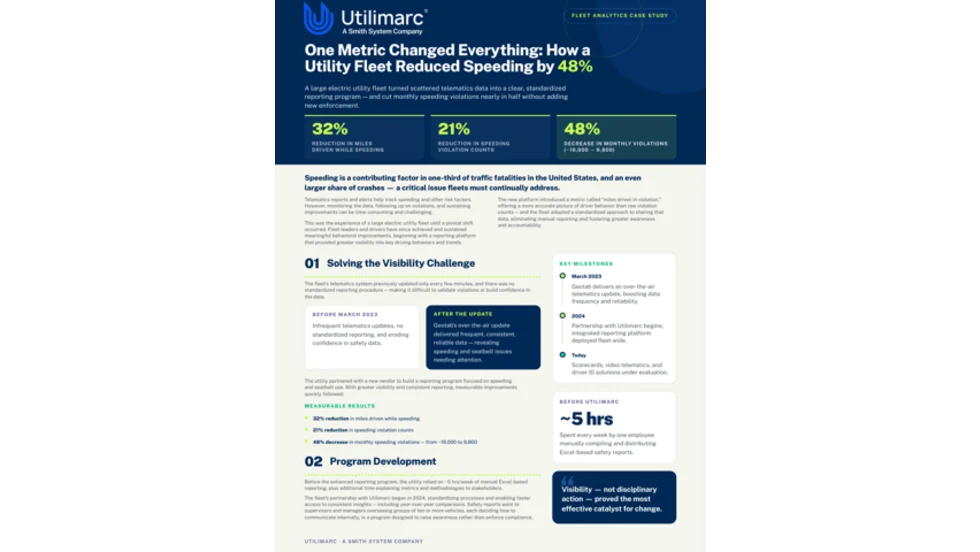
How Better Visibility Cut Speeding Violations by 48%
Fleet leaders don't need more data, they need clearer visibility into what the data is saying. This case study explores how one utility replaced speeding-event counts with a single metric — miles driven in violation — to strengthen safety and significantly reduce speeding violations.
Read More →
Operation Safe Driver Week: Why the Industry's Oldest Safety Campaign Still Matters to Fleets
A look at how a 2007 enforcement initiative became one of the most consequential weeks on the fleet safety calendar, and what it means for your drivers in 2026.
Read More →