




Ford Data Reveals How Often Plug-In Hybrid Owners Run on Battery Alone
New sales data from Ford shows that the Ford Kuga Plug-In Hybrid electric vehicle was the best‑selling PHEV in Europe during the first half of this year.

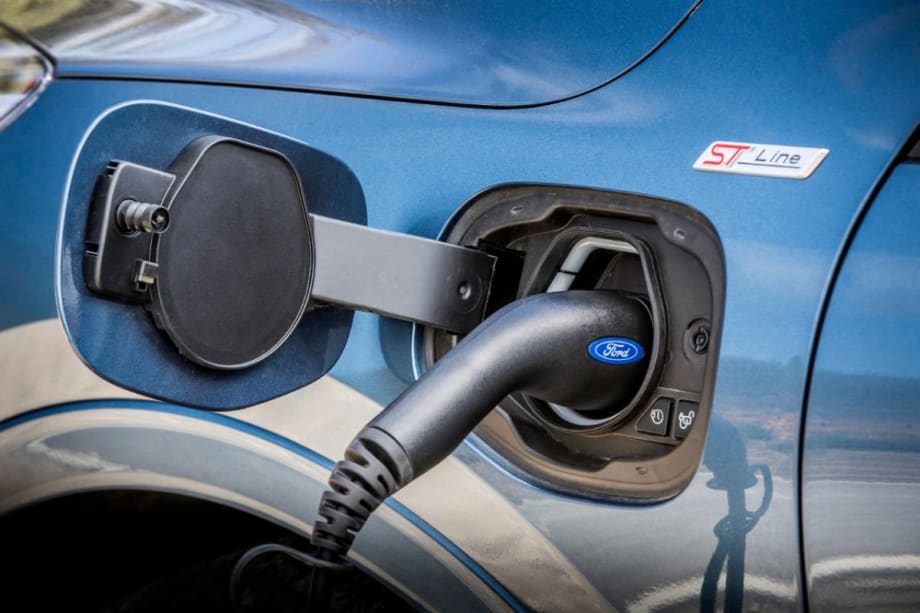
By mid-2026, Ford aims for 100% of its passenger vehicle range in Europe to be zero-emissions capable, all-electric or PHEV, and will move to all-electric by 2030.
Photo: Ford
The Ford Kuga Plug-In Hybrid electric vehicle (PHEV) was the best-selling PHEV across all segments in Europe during the first half of 2021, Ford announced on August 5. The automaker also shared key insights from drivers of the vehicle across Europe.
Data from the OEM shows that customers are making the most of their vehicles’ 56 km WLTP (which stands for Worldwide harmonized Light vehicles Test Procedure, a series of tests required to certify that new vehicles abide by global regulation standards) electric driving range. Findings also showed that Kuga Plug-In Hybrid drivers across Europe so far this year have traveled 49% of their distance using externally charged battery power alone.
The Kuga Plug-In Hybrid achieved more sales in June than any previous month — with more than 6,300 models sold — and now outsells all other models in the Kuga range put together. Across April, May, and June this year, Ford sold almost 16,000 Kuga Plug-In Hybrids — over a third more than the next best-selling competitor during the same period.
Sales of PHEV and all-electric passenger vehicles are surging across Europe as a growing number of people discover how their driving needs can be managed using at-home charging. PHEV models accounted for 8.4% of all new cars sold in Europe during the second quarter of this year, an increase of more than 255% compared with the same period last year.
“We firmly believe that our customers buy hybrid vehicles to benefit from the advantages of driving on electric power, and this data shows that Kuga Plug-In Hybrid customers are keen to use their cars in EV mode as much as possible,” said Roelant de Waard, general manager, Passenger Vehicles, Ford of Europe. “We are committed to an electrified future for Ford, and the fact that Kuga is the best-selling PHEV shows that our customers want to join us on this exciting journey.”
Kuga Plug-In Hybrid Customer Usage
Anonymous real-world data collected by Ford helps to understand and optimize the PHEV ownership experience, with insights including:
Drivers are using the battery-electric driving capability of their Kuga Plug-In Hybrid significantly. Almost half (49%) of the collective distance traveled this year has used externally charged battery power alone.
More than two-thirds of Kuga Plug-In Hybrid customers’ journeys are shorter, local trips of 50 km or less that could be completed using just externally charged battery power. From more than 633,000 drive days this year, the vehicle made possible more than 420,000 drive days with zero tailpipe emissions. The average daily driving distance was 52 km, which is less than the vehicle’s 56 km WLTP pure-electric driving range.
Customers are confident when it comes to using battery technology and are routinely able to access charging points. For every 100 drive days in a Kuga Plug-In Hybrid, there were 89 charging events.
Customers are taking advantage of overnight charging and cheaper night-time domestic electricity rates to reduce their motoring costs. Thirty-five percent of charging events took place overnight with a plug-in time of 12 hours or more – twice the six hours required to charge the battery fully from a conventional domestic 230-volt supply. In total, 45% of all charging events took place overnight, demonstrating that customer car charging habits are similar to how they would charge their smartphone or tablet.
Ford earlier this year announced that 100% of its passenger vehicle range in Europe will be zero-emissions capable, all-electric or PHEV by mid-2026; moving to all-electric by 2030.
More Global Fleet

GeoFencing Adds to Your Truck Security Arsenal
Geofencing is a familiar fleet tool today, but its early adoption marked a major shift in vehicle tracking, route monitoring, and the debate over employee privacy.
Read More →
Holman Takes Full Ownership of ARIZA in Mexico
Holman is bringing its Mexican fleet management operation fully under its own brand after more than 30 years as a joint venture. The change gives multinational fleet customers a single Holman operation across the U.S., Canada, and Mexico.
Read More →
5 Tire Maintenance Tips to Help Prevent Work Truck Downtime
Regular tire checks can do more than extend tread life. These five maintenance practices can help work truck fleets catch problems early, reduce costs, and prevent downtime.
Read More →

Proven Ways to Reduce Work Truck Downtime
The age-old problem of downtime will always be a reality, but with new strategies at hand, fleets have more ways to keep trucks on the road longer.
Read More →


Cameras, Safety and Insurance: From Reactive Claims to Real-Time Prevention (Part 2 of 2)
Part Two: Commercial auto remains one of the most challenging and costly lines of coverage for fleet operators and insurers alike. Continue learning more about how to effectively address these issues from Onur Aksan, Enterprise Business Development Executive, Geotab
Read More →
Cameras, Safety and Insurance: From Reactive Claims to Real-time Prevention
Commercial auto remains one of the most challenging and costly lines of coverage for fleet operators and insurers alike. Learn more about how to effectively address these issues from Onur Aksan, Enterprise Business Development Executive, Geotab.
Read More →
Fleet Costs Are Rising: Here’s How Leaders Are Responding
Fleet leaders are under pressure to reduce costs, adapt to economic uncertainty, and make smarter decisions. See how peers across North America are responding with real data, proven strategies, and forward-looking insights. Download the 2026 Market Pulse Report to benchmark your strategy and uncover where you can gain an edge.
Read More →
Enterprise Fleet Management Surpasses 900,000 Vehicles in U.S. & Canada
Enterprise Mobility connects with mobility solutions around the globe
Read More →