The automaker increases its investment in computing power by 50 percent to maximize the number and speed of virtual vehicle crashes. This allows safety engineering and vehicle evaluation teams to generate more data, more quickly.
by Staff
March 10, 2014
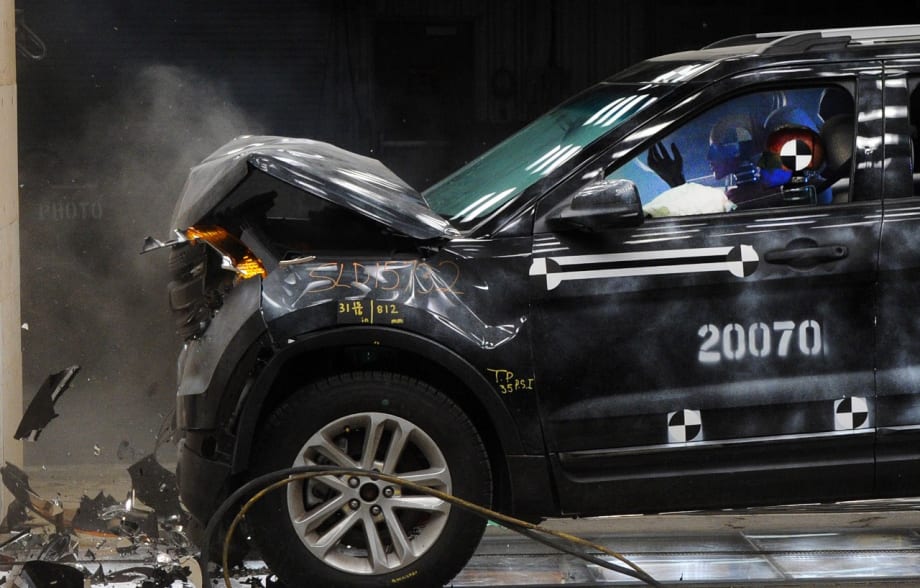
Computer simulations precede physical crash tests such as this one. Ford's Dearborn facility has performed more than 20,000 physical crash tests since 1954. Photo courtesy of Ford Motor Co.
2 min to read
Computer simulations precede physical crash tests such as this one. Ford's Dearborn facility has performed more than 20,000 physical crash tests since 1954. Photo courtesy of Ford Motor Co.
To meet growing demands for virtual crash test data, Ford Motor Co. said it is increasing its investment in computing power an additional 50 percent this year.
The technology investment will allow Ford to more quickly conduct virtual crash tests – some of which can take up to a full day to run – while also collecting more data. More than 2 million crash test simulations have been run over the past 10 years. The use of advanced computer crash test models also allows Ford safety teams to more quickly evaluate and verify a variety of designs, the automaker said.
Ad Loading...
Ford recently performed its 20,000th full-vehicle crash test at the Dearborn, Mich., development center. Physical crash tests, combined with virtual crash testing, allow Ford to gather more safety data faster than ever before.
The work helps to ensure Ford vehicles meet or exceed industry safety standards in the global markets in which they are sold, the manufacturer said.
“Today’s vehicles come in a greater variety of body styles -- and have more technology and driver-assist features – and many countries have unique regulations,” said Steve Kenner, global director at the Ford automotive safety office. “We are able to manage this workload efficiently thanks to our significant investment in technology and the hard work of our teams.”
More than 500 engineers around the world are dedicated to safety at Ford. These teams run thousands of computer simulations before the physical tests are conducted. These include simulations to evaluate frontal impact, side impact, rear impact, roof strength and safety systems.
“Ford is committed to designing vehicles that are safe for our customers,” said Nand Kochhar, Ford global safety chief engineer. “In the early stages of vehicle design, we use computer simulations; later we use crash test verification to ensure our vehicles perform as expected.”
Ad Loading...
The company’s investment in computing power has led to a tenfold increase in the number of virtual crash tests Ford can conduct during vehicle development. The level of detail on the models has increased as well. Safety teams can now run full-vehicle crash simulations with up to 2 million elements, up from half a million just five years ago.
Distracted driving remains one of the most persistent risks in fleet operations. New approaches focus on removing mobile device use entirely while adding real-time safety support.
As distraction risks evolve, fleets are turning to smarter, more connected technologies to better understand what’s happening behind the wheel. Part 2 explores how these tools are helping identify risky behaviors and improve visibility across operations.
Distracted driving is often measured by what we can see—phones in hand, eyes off the road. But what about the distractions we can’t? A recent incident raises a bigger question about awareness, attention, and why subtle risks so often go unnoticed.
Fleets have more driver data than ever, so why isn't behavior changing? Training requires more than reports and coaching — it requires real-world practice.
A two-part conversation with Stefan Heck on how AI is transforming the fight against distracted driving. As fleets adopt smarter tools, the focus shifts from reacting to preventing risk. In Part 1, we look at where AI is making an impact for fleets today.
Fleet managers are under pressure to reduce accidents, control costs, and improve operational efficiency. See how advanced vehicle safety technologies are helping fleets operate smarter and safer.
An 11% drop in pedestrian fatalities in early 2025 signals progress in U.S. road safety, but elevated death rates and ongoing risks underscore the need for continued action from fleets and policymakers.