




Fleet Safety Video Tip: When Hailstorms Threaten
Though scientists are making progress in developing better ways to forecast extreme hailstorms, these destructive weather events can still take drivers by surprise. Here are some safety tips you can pass along to fleet drivers.
Ever wish you had more advance warning whenever a severe hailstorm headed toward your area, so you could take more measures to protect both fleet drivers and their vehicles?
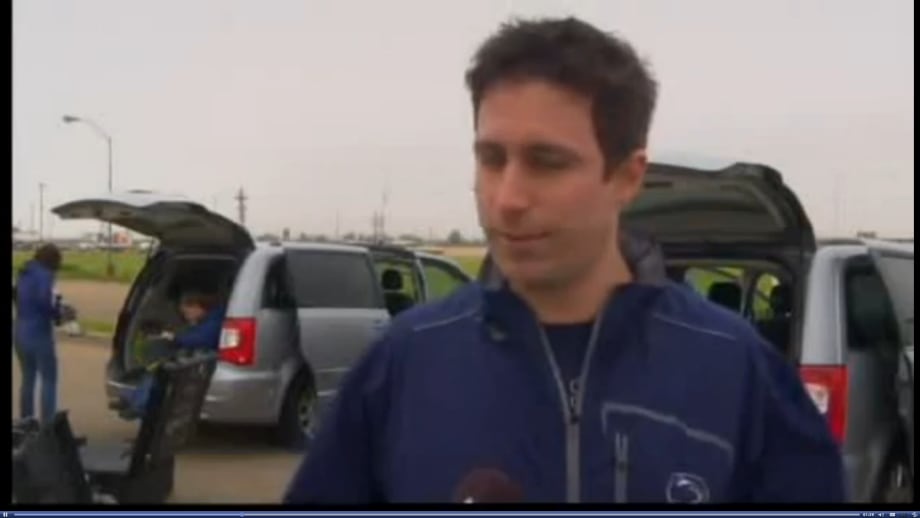
The Insurance Institute for Business and Home Safety, based in South Carolina, is in fact conducting a research project aimed at reducing hailstorm property damage and improving hailstorm forecast models and radar detection. The project is in collaboration with Penn State University.
But until such research leads to reliable hailstorm forecasting, fleet managers in some regions – particularly the Central Plains states – will continue to deal with occasional hailstorm damage claims. Last month, Texas, Oklahoma and Colorado all experienced major hailstorms that generated plenty of business for local body shops.
There are some measures that drivers can take, though, to protect themselves and their vehicle. Here are some safety tips, provided by Union Mutual of Vermont and Progressive Insurance, you can pass along to fleet drivers as a friendly reminder.
When hail is larger than three-quarters of an inch in diameter, drivers are advised to:
Stop driving. If you can see a safe place to drive to, such as inside a garage or under a service station awning, do so as soon as you can. Make sure you pull completely off the highway, but avoid ditches due to possible high-rising water.
Keep your vehicle angled so the hail hits the front of the vehicle. Windshields are reinforced to withstand forward driving and pelting objects. Side windows and back glass are not, so they’re much more susceptible to breakage.
Stay away from vehicle windows. Cover yourself with a blanket or coat, if possible, because there may be debris. In particular, protect your eyes. See if you can get onto the floor face-down, or lay down on the seat with your back to the windows.
Don’t leave the vehicle until the hailing stops. Your car will furnish reasonable protection.
To learn more about the hailstorm research project, click on the photo or link under the headline. To learn more about the science behind hailstorms, you can watch the Weather Channel video below.
More Safety
What’s Next for Fleet? Safety, AI & Industry Recognition | AF News Recap
Could your company's culture be encouraging distracted driving? This week, we're exploring how workplace expectations affect driver safety, what AI, EVs, and autonomous vehicles could mean for the future of fleet management, and how fleet professionals can strengthen their award nominations.
Read More →
Does Your Fleet's Culture Encourage Distracted Driving?
What happens when the people responsible for enforcing safety rules are the ones setting the wrong example? The answer may reveal why some of the biggest risks to fleet drivers have little to do with what's written in the employee handbook.
Read More →
Fleet Manager’s Ultimate Playbook: Navigating the New Standard in OEM Connectivity
Rising operating costs, driver safety concerns, and unplanned downtime are putting unprecedented pressure on modern fleets. Discover how fleet managers use embedded OEM connectivity and real-time vehicle data to cut TCO, prevent downtime, and protect drivers without aftermarket telematics hardware.
Read More →
From Driver Well-Being to EV Charging | AF News Recap
Mental health belongs in the fleet safety conversation. This week, we’re looking at five ways fleets can support employee well-being before a crisis, plus Holman’s expansion in Mexico, new one-day Fleet Forward passes, and why EV charging demand is outpacing infrastructure growth.
Read More →
Nexar-Nauto Merger Aims to Give Fleets Better Safety Intelligence Through Larger Driving Dataset
Stefan Heck tells Automotive Fleet that combining more than 10 billion miles of driving history with Nexar's AI models will give fleets deeper insights into driver risk and roadway conditions than either company could provide independently.
Read More →
Don't Wait for a Crisis: 5 Ways to Build Mental Health Into Your Fleet Safety Program
For Suicide Prevention Month, fleet and safety leaders have an opportunity to put mental health where it belongs: at the center of workplace safety.
Read More →
How Camera Data Can Strengthen a Fleet’s Insurance Renewal
Insights from a commercial insurance carrier and a broker show how fleets can turn video telematic data, driver coaching, and improved claims results into a stronger case at insurance renewal.
Read More →
The Safest Fleets Aren’t the Ones with the Most Technology
You’ve made the telematics investment. Here’s how to capture the other half of its value and build the safest fleet on the road.
Read More →
Hidden in Plain Sight: Fleet Compliance Risks
Fleet compliance isn't just about having policies — it's about consistently enforcing them. This practical guide reveals six hidden compliance risks common in public sector and shared fleet operations and outlines proven strategies to improve visibility, accountability, and audit readiness
Read More →
NETS Sets 2026 Fleet Safety Benchmark Conference for Indianapolis
The Sept. 15–17 program will feature fleet benchmarking data, case studies, emerging technologies, and implementation strategies while running alongside the NSC Safety Congress & Expo.
Read More →