




Fleet Safety Video Tip: Fighting Drowsy Driving
Drowsy driving is the second leading cause of fatal crashes, behind drunken driving. But the scope and nature of this safety risk is often misunderstood.
Unfortunately, fleet drivers with the best intentions can sometimes place themselves at a higher risk for a drowsy-driving crash: The utility worker who pulls a double-shift after a storm leads to a massive power blackout. The vice president who willingly doubles his commute time to place his kids in a better-performing school district. The homicide detective who works 32 straight hours, intent on following leads before they grow cold. The account manager who squeezes in as many sales calls as possible during a multi-city road trip, even though that means lots of late-night driving.
But all of these drivers can dramatically decrease their chances of falling asleep behind the wheel by recognizing – and heeding – early signs of fatigue and knowing when to pull the car over and "shut it down." And like all other drivers, they need to make getting adequate sleep an ongoing personal priority. That means taking steps to prevent the accumulation of sleep debt whenever possible.
In the U.S. from 1999 to 2013, an estimated 13 percent of crashes that resulted in injuries requiring hospitalization – and 21 percent of fatal crashes – involved a drowsy driver, according to a AAA Foundation study released in November 2014.
Experts agree, however, that driver fatigue’s overall impact on road safety is routinely underestimated because sleepiness isn’t easily measured. Alcohol impairment can be roughly quantified by blood alcohol concentration (BAC); there is no equivalent for sleepiness. Also, fatigue exacerbates other forms of impairment and compromises reaction time and decision-making. Fatigue can be a major factor contributing to a crash without being the sole factor.
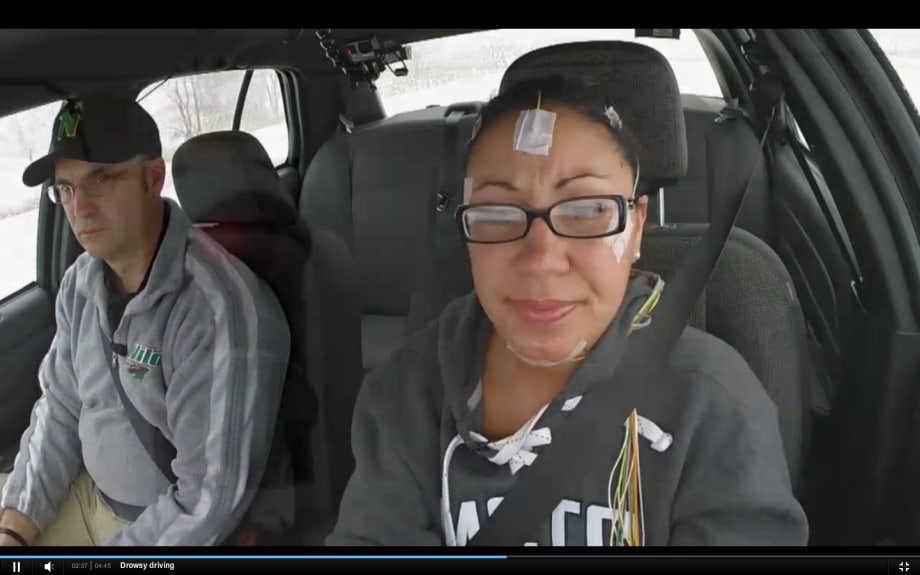
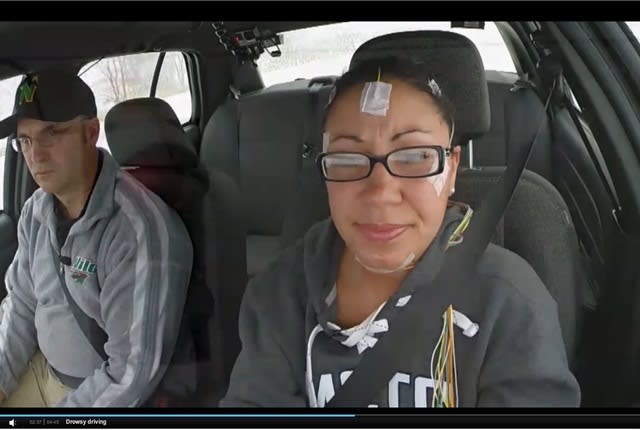
Many sleep-deprived drivers have experienced the sensation of nodding off or “microsleep” – the eyelids might close and head drop down for a few seconds. The brain is trying to transition from wakefulness to sleep. Drivers often respond to this by taking such measures as turning up the radio volume or rolling down the windows and vowing to push through the fatigue. What they may not realize is that they’ve likely experienced earlier microsleeps of which they weren’t consciously aware. At this point, they’re no longer fit to assess their own ability to drive safely. It’s time to pull off the road for a little shut-eye.
To view a video about drowsy driving and the impact of microsleep, click on the photo or link below the headline.
Here is some advice, provided by the National Sleep Foundation and other groups, on how to improve your sleep. You may want to pass these tips along to fleet drivers.
Avoid stimulants such as caffeine, nicotine and alcohol too close to bedtime. Though alcohol can initially speed the onset of sleep, it later disrupts sleep in the second half as the body begins to metabolize the alcohol. Also, remember that chocolate has caffeine.
Exercise in the morning or late afternoon. Later, a relaxing exercise, such as yoga, can help initiate a restful night’s sleep.
Avoid meals too close to bedtime. If you’re struggling with insomnia, avoid spicy foods altogether.
During the day, get adequate exposure to natural light. Light exposure helps you maintain a healthy sleep-awake cycle.
Establish a relaxing routine to help you wind down before bedtime. Read a book, listen to soft music or take a warm bath, for example.
Try to avoid emotionally upsetting conversations just before bedtime. Don’t dwell on your problems as you’re trying to fall asleep.If you’re having sleep problems, keep the TV, computer and mobile phone out of the bedroom.
Make sure your sleep environment is as comfortable and relaxing as possible – the right temperature, level of light and number of blankets.When possible, try to go to bed each night at the same time and arise the next day at the same time.
According to the National Sleep Foundation, the following warning signs indicate that it’s time for a driver to stop and find a safe place to pull over and address his or her condition:
Difficulty focusing, frequent blinking or heavy eyelids
Trouble keeping your head up
Drifting from your lane, swerving, tailgating or hitting rumble strips
Inability to clearly remember the last few miles driven
Missing exits or traffic signs
Yawning repeatedly
Feeling restless, irritable or aggressive.
More Safety

What’s Next for Fleet? Safety, AI & Industry Recognition | AF News Recap
Could your company's culture be encouraging distracted driving? This week, we're exploring how workplace expectations affect driver safety, what AI, EVs, and autonomous vehicles could mean for the future of fleet management, and how fleet professionals can strengthen their award nominations.
Read More →
Does Your Fleet's Culture Encourage Distracted Driving?
What happens when the people responsible for enforcing safety rules are the ones setting the wrong example? The answer may reveal why some of the biggest risks to fleet drivers have little to do with what's written in the employee handbook.
Read More →
Fleet Manager’s Ultimate Playbook: Navigating the New Standard in OEM Connectivity
Rising operating costs, driver safety concerns, and unplanned downtime are putting unprecedented pressure on modern fleets. Discover how fleet managers use embedded OEM connectivity and real-time vehicle data to cut TCO, prevent downtime, and protect drivers without aftermarket telematics hardware.
Read More →
From Driver Well-Being to EV Charging | AF News Recap
Mental health belongs in the fleet safety conversation. This week, we’re looking at five ways fleets can support employee well-being before a crisis, plus Holman’s expansion in Mexico, new one-day Fleet Forward passes, and why EV charging demand is outpacing infrastructure growth.
Read More →
Nexar-Nauto Merger Aims to Give Fleets Better Safety Intelligence Through Larger Driving Dataset
Stefan Heck tells Automotive Fleet that combining more than 10 billion miles of driving history with Nexar's AI models will give fleets deeper insights into driver risk and roadway conditions than either company could provide independently.
Read More →
Don't Wait for a Crisis: 5 Ways to Build Mental Health Into Your Fleet Safety Program
For Suicide Prevention Month, fleet and safety leaders have an opportunity to put mental health where it belongs: at the center of workplace safety.
Read More →
How Camera Data Can Strengthen a Fleet’s Insurance Renewal
Insights from a commercial insurance carrier and a broker show how fleets can turn video telematic data, driver coaching, and improved claims results into a stronger case at insurance renewal.
Read More →
The Safest Fleets Aren’t the Ones with the Most Technology
You’ve made the telematics investment. Here’s how to capture the other half of its value and build the safest fleet on the road.
Read More →
Hidden in Plain Sight: Fleet Compliance Risks
Fleet compliance isn't just about having policies — it's about consistently enforcing them. This practical guide reveals six hidden compliance risks common in public sector and shared fleet operations and outlines proven strategies to improve visibility, accountability, and audit readiness
Read More →
NETS Sets 2026 Fleet Safety Benchmark Conference for Indianapolis
The Sept. 15–17 program will feature fleet benchmarking data, case studies, emerging technologies, and implementation strategies while running alongside the NSC Safety Congress & Expo.
Read More →