Automotive Fleet
MenuMENU
SearchSEARCH

Fleet Safety Tip of the Week

In light of the devastating flooding taking place in New England, now is a good time to revisit driving tips for flash flood conditions.

by Staff
March 31, 2010
2 min to read


In light of the devastating flooding taking place in New England, now is a good time to revisit driving tips for flash flood conditions. Less than one inch of water can cause a driver to lose control of a car. And most vehicles can float in two feet of water or less.

Here's some timely advice, taken from the Nevada Driver's Handbook, which you may want to pass along to your fleet drivers as a friendly reminder. 

Ad Loading...
  • If you encounter a flooded roadway, don't attempt to drive through it. Turn around and seek an alternate route or wait until the water subsides. Although it may look like just a few inches of water on the roadway, you have no idea if the road has washed away underneath providing a hazardous situation for drivers. It is also difficult to determine the depth of floodwaters.

  • If your vehicle stalls in rising flood water, and you can safely do so, abandon it immediately and seek higher ground. Rapidly rising water may engulf the vehicle and its occupants and sweep them away. Once vehicles begin to float they move toward deep, faster-moving water where escape is even more dangerous and top-heavy vehicles may roll over. Deaths often occur because people mistakenly believe that vehicles provide protection from rising, swiftly moving waters. However, if you find yourself in this situation you must make a judgment call about whether you can make it to higher ground or if you would be better off remaining with your vehicle. The only sure safety rule is to turn around and avoid flooded roadways in the first place.

  • Be especially cautious at night when it is harder to recognize flood dangers.

  • Avoid already flooded areas and areas subject to sudden flooding. Do not attempt to cross flowing streams or water flowing over the roadway.

  • If you are driving and come upon rapidly rising waters, turn around and find another route.

  • Move to higher ground away from streams, creeks and flood control channels.

  • If your route is blocked by floodwaters or barricades, find another route. Barricades are put up by local officials to protect people from unsafe roads. Never drive around barricades. Driving around them can be a serious risk.

More Safety

Chris Brown sits across from safety experft at Lifesaver mobile in an interview about distracted driving and phone use tech.
Safetyby Chris BrownMay 1, 2026

Reducing Risk by Eliminating Phone Use Behind the Wheel

Distracted driving remains one of the most persistent risks in fleet operations. New approaches focus on removing mobile device use entirely while adding real-time safety support.

Read More →
Safetyby Jeanny RoaApril 15, 2026

Distracted Driving in the Age of Smart Tech – Part 2

As distraction risks evolve, fleets are turning to smarter, more connected technologies to better understand what’s happening behind the wheel. Part 2 explores how these tools are helping identify risky behaviors and improve visibility across operations.

Read More →
Safetyby Jeanny RoaApril 11, 2026

 Data Rights, Risks, and Responsibilities After a Crash

What fleets capture to improve safety can also expose them in litigation, forcing leaders to rethink how data is managed, stored, and shared.

Read More →
Ad Loading...
Driver holding a phone while steering, illustrating distracted driving and the importance of mental awareness and attention on the road for fleet safety.
Safetyby Judie NuskeyApril 10, 2026

From Distraction to Detection: Strengthening Awareness in Fleet Drivers

Distracted driving is often measured by what we can see—phones in hand, eyes off the road. But what about the distractions we can’t? A recent incident raises a bigger question about awareness, attention, and why subtle risks so often go unnoticed.

Read More →
Safetyby StaffApril 8, 2026

Lytx 2026 Road Safety Report

While serious crashes are declining, a rise in minor incidents and ongoing risk hotspots underscore the need for continued fleet safety investment.

Read More →
Driver’s hands on steering wheel in a sunlit vehicle, representing real-world driver behavior and the shift from data monitoring to hands-on training in fleet safety programs.
Safetyby Judie NuskeyApril 7, 2026

Behind-the-Wheel vs. Classroom Training: What Actually Changes Driver Behavior?

Fleets have more driver data than ever, so why isn't behavior changing? Training requires more than reports and coaching — it requires real-world practice.

Read More →
Ad Loading...
A person in a car on their phone behind the steering wheel.
Safetyby Jeanny RoaApril 1, 2026

Distracted Driving in the Age of Smart Tech – Part 1

A two-part conversation with Stefan Heck on how AI is transforming the fight against distracted driving. As fleets adopt smarter tools, the focus shifts from reacting to preventing risk. In Part 1, we look at where AI is making an impact for fleets today.

Read More →
Pedestrians crossing a busy street, highlighting the importance of driver awareness and caution to prevent pedestrian accidents.
Safetyby StaffMarch 30, 2026

Pedestrian Safety Starts With the Driver

More people on foot means more risk for drivers. These pedestrian safety tips can help prevent serious injuries and keep everyone safer on the road.

Read More →
SponsoredMarch 30, 2026

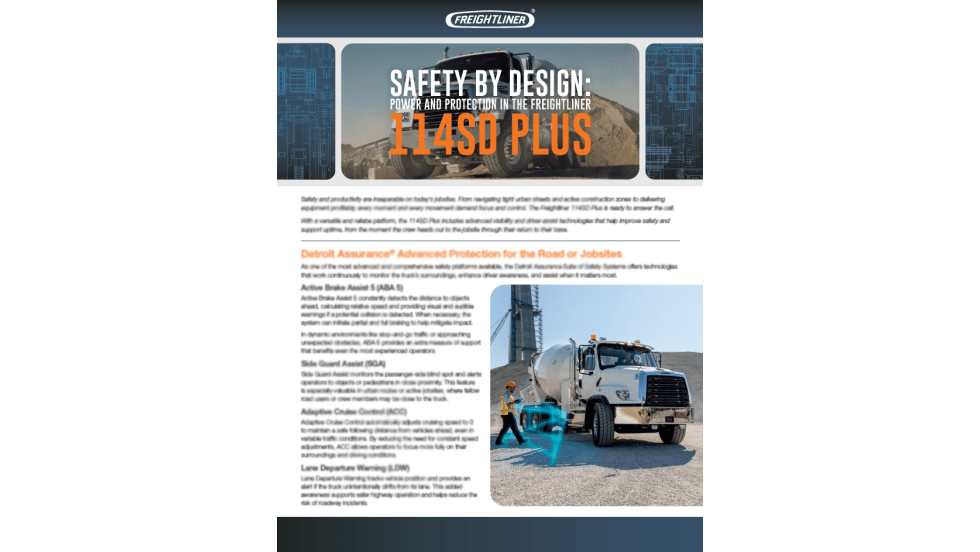
Safety by Design: Power and Protection in the Freightliner 114SD Plus

Fleet managers are under pressure to reduce accidents, control costs, and improve operational efficiency. See how advanced vehicle safety technologies are helping fleets operate smarter and safer.

Read More →
Ad Loading...
Safetyby StaffMarch 26, 2026

Pedestrian Deaths Drop in First Half of 2025, Marking Largest Decline in Years

An 11% drop in pedestrian fatalities in early 2025 signals progress in U.S. road safety, but elevated death rates and ongoing risks underscore the need for continued action from fleets and policymakers.

Read More →