




Fleet Safety Tip of the Week: Sharing the Highway With Big Trucks
Share the Road is a highway safety program operated by the American Trucking Associations. Here is some advice from the group on how to safely share the road with heavy-duty commercial trucks.
Share the Road is a highway safety program operated by the American Trucking Associations. Here is some advice from the group on how to safely share the road with heavy-duty commercial trucks. You may want to pass this along to your drivers as a friendly reminder. * * * Following Behind a Truck When following behind a truck, leave yourself 20 to 25 car lengths behind it. This may seem like a long distance. But because large trucks obscure visibility far more than smaller vehicles, that much room is needed so you have enough time to react if road conditions suddenly change. A good rule of thumb to ensure you’ve left yourself enough room is to look for the truck’s side mirrors. If you can see them then you are in a good place. Take these considerations into account: - Debris in the road, such as lumber or a ladder, might have no impact on a large truck. If that debris was suddenly in front of you because the truck drove over it and you were following too closely, it could have a devastating impact. - On congested roadways traffic often slows down suddenly. If you are traveling too closely behind a truck, you cannot see the slowdown coming. - At highway speeds everything happens very fast. Accidents up ahead or right in front of a truck require fast reactions. Leaving enough space in front of you will allow for that response. Passing a Truck
When passing a truck and moving back into its lane, make sure you can see the truck’s headlights in your rear-view mirror before you cut back in. That allows the truck enough space to slow down or stop if something happens up ahead.
A fully loaded tractor trailer can weigh up to 80,000 pounds and take the length of a football field to stop. Most passenger cars weigh around 3,000 pounds and have a much shorter stopping distance. Just because you can stop in time doesn’t mean that the truck behind you can if you’ve cut too close in front of it. Even if the driver makes a monumental effort, the truck may not be able to stop if you haven’t left enough room.
You may wonder why truck drivers leave space in front of them in heavy traffic. It’s so they have enough stopping distance. Don’t fill in that space and take up that safety buffer that the driver is trying to maintain.
More Safety

Nexar-Nauto Merger Aims to Give Fleets Better Safety Intelligence Through Larger Driving Dataset
Stefan Heck tells Automotive Fleet that combining more than 10 billion miles of driving history with Nexar's AI models will give fleets deeper insights into driver risk and roadway conditions than either company could provide independently.
Read More →
Don't Wait for a Crisis: 5 Ways to Build Mental Health Into Your Fleet Safety Program
For Suicide Prevention Month, fleet and safety leaders have an opportunity to put mental health where it belongs: at the center of workplace safety.
Read More →
How Camera Data Can Strengthen a Fleet’s Insurance Renewal
Insights from a commercial insurance carrier and a broker show how fleets can turn video telematic data, driver coaching, and improved claims results into a stronger case at insurance renewal.
Read More →
The Safest Fleets Aren’t the Ones with the Most Technology
You’ve made the telematics investment. Here’s how to capture the other half of its value and build the safest fleet on the road.
Read More →
Hidden in Plain Sight: Fleet Compliance Risks
Fleet compliance isn't just about having policies — it's about consistently enforcing them. This practical guide reveals six hidden compliance risks common in public sector and shared fleet operations and outlines proven strategies to improve visibility, accountability, and audit readiness
Read More →
NETS Sets 2026 Fleet Safety Benchmark Conference for Indianapolis
The Sept. 15–17 program will feature fleet benchmarking data, case studies, emerging technologies, and implementation strategies while running alongside the NSC Safety Congress & Expo.
Read More →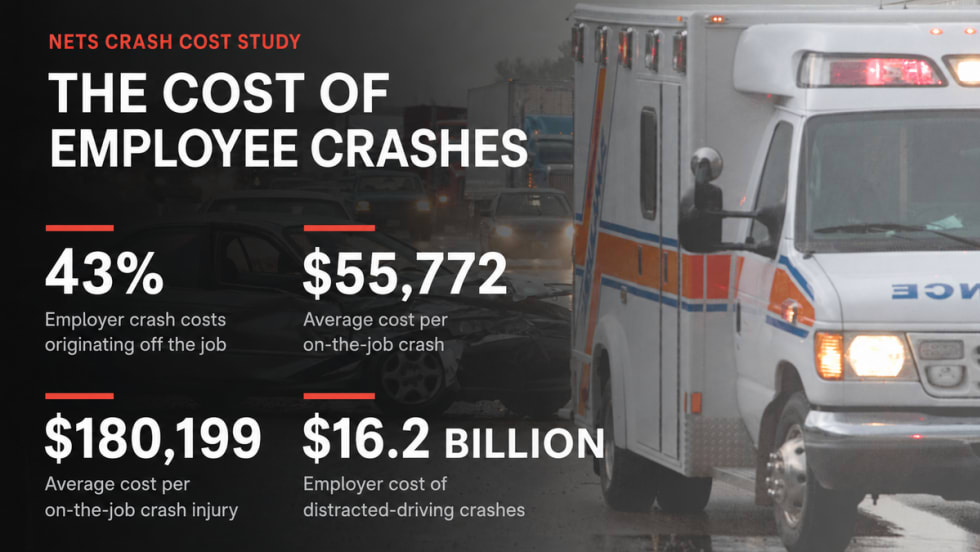
Off-the-Job Crashes Account for 43% of Employers’ $61.7 Billion Crash Burden
NETS quantifies costs dispersed across fleet, risk, HR, and other departments while providing new per-crash benchmarks for employers.
Read More →
Ram Recalls More Than 1.27 Million 1500 Pickups for Seat Belt Anchor Issue
The recall affects certain 2019-2026 Ram 1500 pickups that may have improperly attached second-row seat belt buckle anchors.
Read More →
How Better Visibility Cut Speeding Violations by 48%
Fleet leaders don't need more data, they need clearer visibility into what the data is saying. This case study explores how one utility replaced speeding-event counts with a single metric — miles driven in violation — to strengthen safety and significantly reduce speeding violations.
Read More →
Operation Safe Driver Week: Why the Industry's Oldest Safety Campaign Still Matters to Fleets
A look at how a 2007 enforcement initiative became one of the most consequential weeks on the fleet safety calendar, and what it means for your drivers in 2026.
Read More →