




Fit for 55: EU Announces Ambitious Decarbonization Plans
Fleets operating in Europe will be forced to electrify vehicles by 2035 under far-reaching plans announced on July 14, 2021, by the European Commission. Called the European Green Deal and dubbed ‘Fit for 55’, the plan embraces the EU’s climate, energy, land use, transport and taxation policies making them fit for reducing net greenhouse gas emissions by at least 55% by 2030, compared with 1990 levels.

The European Green Deal is a wide ranging proposal by the European Commission to radically reduce CO2 emissions in Europe.
Credit: European Commission
Fleets operating in Europe will be forced to electrify vehicles by 2035 under far-reaching plans announced on July 14, 2021, by the European Commission.
Called the European Green Deal and dubbed ‘Fit for 55’, the plan embraces the EU’s climate, energy, land use, transport and taxation policies making them fit for reducing net greenhouse gas emissions by at least 55% by 2030, compared with 1990 levels.
While these plans have to be ratified, dramatic action is required to reduce the EU’s carbon emissions. In particular, this will affect passenger cars which will be required to be zero emission by 2035. The EU wants average emissions of new cars to come down by 55% from 2030 and 100% from 2035 compared to 2021 levels.
President of the European Commission, Ursula von der Leyen, said: “The fossil fuel economy has reached its limits. We want to leave the next generation a healthy planet as well as good jobs and growth that does not hurt our nature. The European Green Deal is our growth strategy that is moving towards a decarbonised economy.”
While the European Automobile Manufacturers’ Association (ACEA) welcomed the report, it said it wanted to study the detail more fully, saying that carmakers were already committed to reducing emissions to zero. However, it said that banning a single technology was not a rational way forward while Europe was still adjusting to the infrastructure required to deliver emission-free motoring.
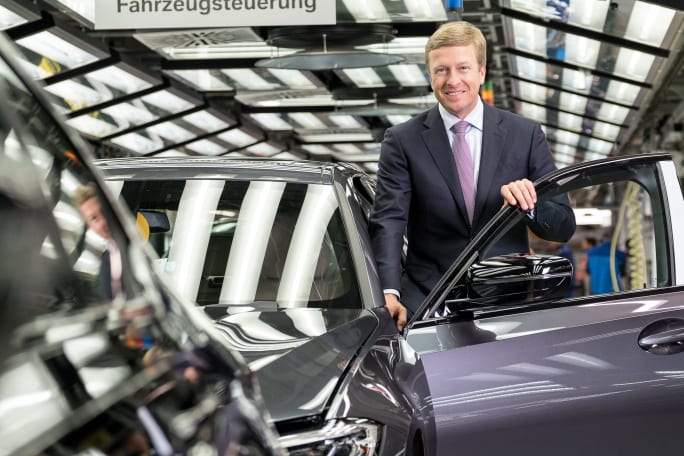
Credit: BMW
Oliver Zipse, ACEA President and CEO of BMW, commented: “The current proposal for an even bigger cut in CO2 emissions by 2030 requires a massive further increase in market demand for electric vehicles in a short timeframe. Without significantly increased efforts by all stakeholders – including member states and all involved sectors – the proposed target is simply not viable.”
Zipse added that all options should be on the table, from highly efficient combustion engines to hybrid, battery electric and hydrogen fuel cell vehicles, because all have a role to play in the route to carbon neutrality, adding that without the the availability of renewable fuels, a 100% reduction target in 2035 was effectively a ban of the internal combustion engine.
“Within the context of the proposed technology restrictions from 2035 onwards, we urge all EU institutions to focus on innovation rather than mandating, or effectively banning, a specific technology,” Zipse underlined.
The environmental group, Transport & Environment (T&E), said that the transition from sales of cars with polluting engines to fully electric vehicles was “an essential step” for achieving carbon neutrality by 2050, with Isabell Büschel, director of T&E in Spain calling it "a turning point for the automotive industry".
More Global Fleet

GeoFencing Adds to Your Truck Security Arsenal
Geofencing is a familiar fleet tool today, but its early adoption marked a major shift in vehicle tracking, route monitoring, and the debate over employee privacy.
Read More →
Holman Takes Full Ownership of ARIZA in Mexico
Holman is bringing its Mexican fleet management operation fully under its own brand after more than 30 years as a joint venture. The change gives multinational fleet customers a single Holman operation across the U.S., Canada, and Mexico.
Read More →
5 Tire Maintenance Tips to Help Prevent Work Truck Downtime
Regular tire checks can do more than extend tread life. These five maintenance practices can help work truck fleets catch problems early, reduce costs, and prevent downtime.
Read More →

Proven Ways to Reduce Work Truck Downtime
The age-old problem of downtime will always be a reality, but with new strategies at hand, fleets have more ways to keep trucks on the road longer.
Read More →


Cameras, Safety and Insurance: From Reactive Claims to Real-Time Prevention (Part 2 of 2)
Part Two: Commercial auto remains one of the most challenging and costly lines of coverage for fleet operators and insurers alike. Continue learning more about how to effectively address these issues from Onur Aksan, Enterprise Business Development Executive, Geotab
Read More →
Cameras, Safety and Insurance: From Reactive Claims to Real-time Prevention
Commercial auto remains one of the most challenging and costly lines of coverage for fleet operators and insurers alike. Learn more about how to effectively address these issues from Onur Aksan, Enterprise Business Development Executive, Geotab.
Read More →
Fleet Costs Are Rising: Here’s How Leaders Are Responding
Fleet leaders are under pressure to reduce costs, adapt to economic uncertainty, and make smarter decisions. See how peers across North America are responding with real data, proven strategies, and forward-looking insights. Download the 2026 Market Pulse Report to benchmark your strategy and uncover where you can gain an edge.
Read More →
Enterprise Fleet Management Surpasses 900,000 Vehicles in U.S. & Canada
Enterprise Mobility connects with mobility solutions around the globe
Read More →