




Feds Fining Takata $14K Daily
Federal transportation officials say the air bag manufacturer isn’t fully cooperating with the ongoing investigation into Takata’s defective air bags.
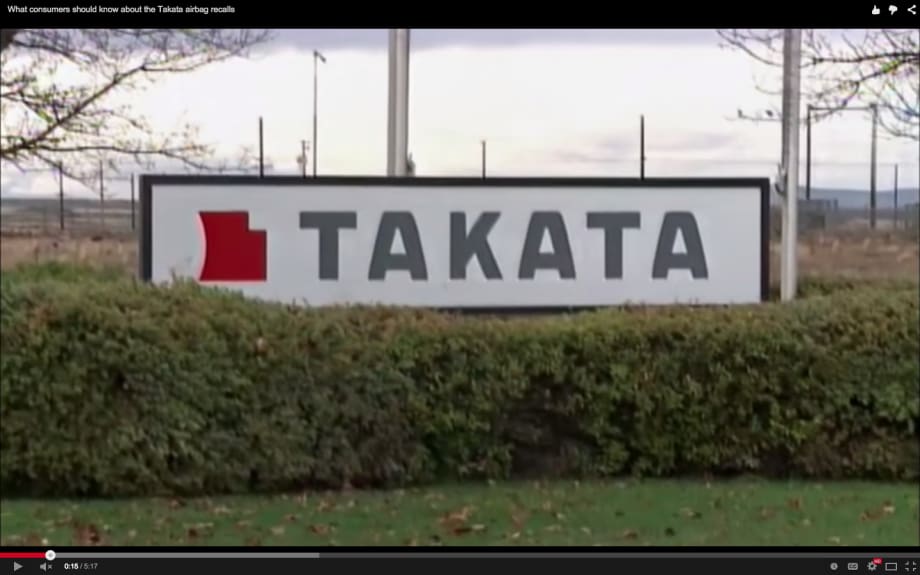
Screen capture courtesy of PBS via YouTube.
Screen capture courtesy of PBS via YouTube.
The National Highway Traffic Safety Administration has begun fining Takata Corp. $14,000 per day for failing to fully cooperate with the agency’s probe into the manufacturer’s defective air bags, U.S. Transportation Secretary Anthony Foxx announced Feb. 20.
The air bag inflators are at risk for exploding upon deployment. Metal fragments from the destroyed housings can disperse like shrapnel and injure vehicle occupants. Such explosions, linked to five deaths worldwide, have led to recall plans for more than 7 million vehicles in the U.S.
In November 2014, NHTSA ordered Takata to provide documents and other materials pertinent to the agency’s investigation. In response, Takata produced a mountain of documents – more than 2.4 million pages – but has repeatedly ignored NHTSA’s many requests for a “walk-through” or explanation of all the paperwork, the agency said.
“At this point, Takata has still not taken any steps to provide the agency with an explanation of the documents it has produced,” stated NHTSA Chief Counsel O. Kevin Vincent in a Feb. 20 letter to Takata attorney Steven Bradbury.
After informing Takata’s attorney of the daily penalties, Vincent also stated in the letter that NHTSA will begin serving depositions to Takata employees in the U.S. and Japan if the company fails to resolve the issue soon. What’s more, further noncompliance may prompt NHTSA to refer the matter to the Department of Justice.
“We are surprised and disappointed by the DOT/NHTSA letter and press release today, and we strongly disagree with their characterization that we have not been fully cooperating with them,” Takata said in a statement also released Feb. 20. “In response to NHTSA’s Special Orders, we have provided the agency with almost 2.5 million pages of documents to date. Since the Special Orders were issued, we have been in regular communication with NHTSA staff regarding our ongoing production of documents in response to the Special Orders.”
The statement from Takata also asserts that the company has kept NHTSA informed about ongoing testing aimed at identifying the root cause of the “inflator issue.” Thus far, Takata said, test results have “supported our initial view that age and sustained exposure to heat and humidity is a common factor in the small number of inflators that have malfunctioned.”
Additionally, Takata said it has ramped up production of replacement parts and is working with other air bag inflator suppliers to accommodate safety recalls “in those geographic areas identified as being most at risk.”
For additional background on the air bag inflator defect, click here to watch a PBS news report from last October.
More Safety

Nexar-Nauto Merger Aims to Give Fleets Better Safety Intelligence Through Larger Driving Dataset
Stefan Heck tells Automotive Fleet that combining more than 10 billion miles of driving history with Nexar's AI models will give fleets deeper insights into driver risk and roadway conditions than either company could provide independently.
Read More →
Don't Wait for a Crisis: 5 Ways to Build Mental Health Into Your Fleet Safety Program
For Suicide Prevention Month, fleet and safety leaders have an opportunity to put mental health where it belongs: at the center of workplace safety.
Read More →
How Camera Data Can Strengthen a Fleet’s Insurance Renewal
Insights from a commercial insurance carrier and a broker show how fleets can turn video telematic data, driver coaching, and improved claims results into a stronger case at insurance renewal.
Read More →
The Safest Fleets Aren’t the Ones with the Most Technology
You’ve made the telematics investment. Here’s how to capture the other half of its value and build the safest fleet on the road.
Read More →
Hidden in Plain Sight: Fleet Compliance Risks
Fleet compliance isn't just about having policies — it's about consistently enforcing them. This practical guide reveals six hidden compliance risks common in public sector and shared fleet operations and outlines proven strategies to improve visibility, accountability, and audit readiness
Read More →
NETS Sets 2026 Fleet Safety Benchmark Conference for Indianapolis
The Sept. 15–17 program will feature fleet benchmarking data, case studies, emerging technologies, and implementation strategies while running alongside the NSC Safety Congress & Expo.
Read More →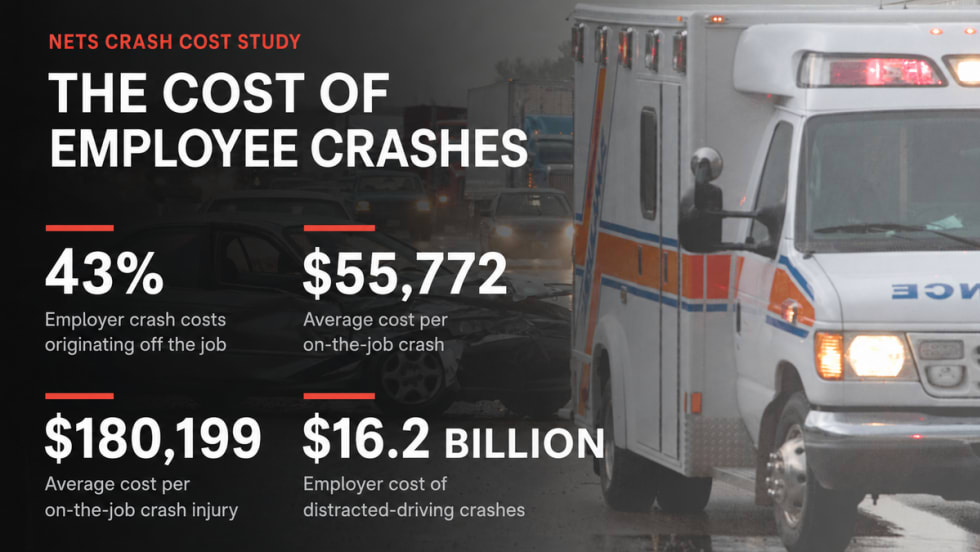
Off-the-Job Crashes Account for 43% of Employers’ $61.7 Billion Crash Burden
NETS quantifies costs dispersed across fleet, risk, HR, and other departments while providing new per-crash benchmarks for employers.
Read More →
Ram Recalls More Than 1.27 Million 1500 Pickups for Seat Belt Anchor Issue
The recall affects certain 2019-2026 Ram 1500 pickups that may have improperly attached second-row seat belt buckle anchors.
Read More →
How Better Visibility Cut Speeding Violations by 48%
Fleet leaders don't need more data, they need clearer visibility into what the data is saying. This case study explores how one utility replaced speeding-event counts with a single metric — miles driven in violation — to strengthen safety and significantly reduce speeding violations.
Read More →
Operation Safe Driver Week: Why the Industry's Oldest Safety Campaign Still Matters to Fleets
A look at how a 2007 enforcement initiative became one of the most consequential weeks on the fleet safety calendar, and what it means for your drivers in 2026.
Read More →