




Feds Add 35M More Air Bags to Takata Recall
This expansion, which more than doubles the size of the Takata recall, is aimed at replacing all Takata frontal air bag inflators that contain ammonium nitrate but don’t contain a drying agent.
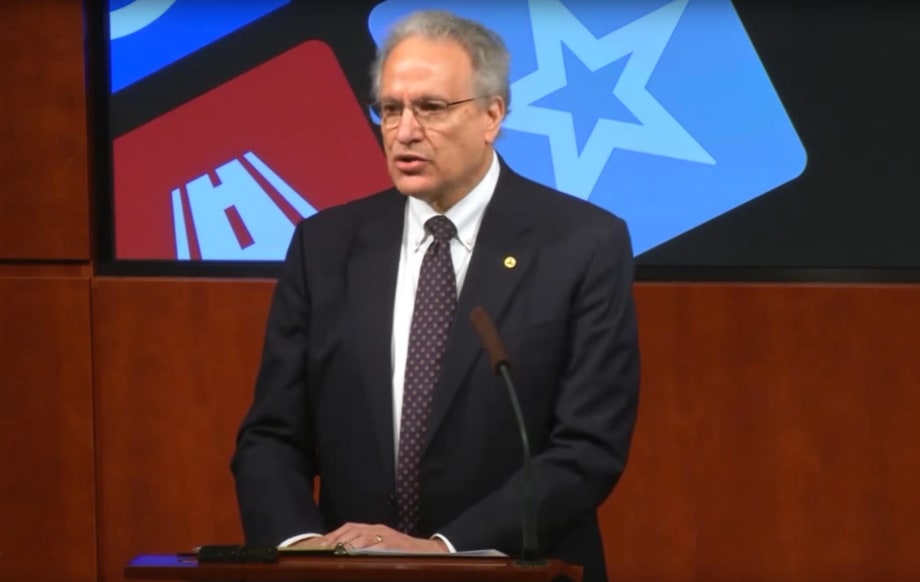
NHTSA Administrator Mark Rosekind discusses the latest Takata air bag inflator recall expansion during a May 4 press conference. Screen shot courtesy of NHTSA via YouTube.

NHTSA Administrator Mark Rosekind discusses the latest Takata air bag inflator recall expansion during a May 4 press conference. Screen shot courtesy of NHTSA via YouTube.
The National Highway Traffic Safety Administration announced plans to accelerate and further expand the Takata air bag inflator recall, adding 35-40 million more frontal air bag inflators that use an ammonium nitrate-based propellant.
The majority of the inflators included in this expansion are in front passenger-side air bags. Affected vehicles will eventually be added to NHTSA’s recalls lookup tool.
The decision to further expand the recall follows the federal agency’s confirmation of the root cause behind the inflators’ propensity to rupture. Exploding Takata air bag inflators have been linked to 10 deaths and more than 100 injuries in the U.S., according to NHTSA.
Under an amended consent order issued to Takata this week, the beleaguered automotive supplier must make a series of decisions acknowledging defects. These decisions will support vehicle manufacturer recall campaigns of the additional inflators.
A total of 28.8 million inflators have been previously recalled. The new expansion is set to take place in phases between now and the end of 2019, according to NHTSA. As a result, all Takata ammonium nitrate-based propellant frontal air bag inflators without a chemical drying agent, also known as a desiccant, will be recalled. That includes both driver-side and passenger-side frontal air bag inflators.
“Today’s action is a significant step in the U.S. Department of Transportation’s aggressive oversight of Takata on behalf of drivers and passengers across America,” said Transportation Secretary Anthony Foxx. “The acceleration of this recall is based on scientific evidence and will protect all Americans from air bag inflators that may become unsafe.”
NHTSA is an agency within the U.S. Department of Transportation.
The five recall phases are based on level of risk, determined by the age of the inflators and exposure to high humidity and fluctuating high temperatures. These factors accelerate the degradation of the chemical propellant.
“NHTSA’s aggressive actions in 2015 mean this recall is already a year ahead of where it would have been if the agency had waited for this research,” said NHTSA Administrator Mark Rosekind. “As a result, all of the most dangerous inflators responsible for the deaths and injuries are already under recall.”
NHTSA and its independent expert reviewed the findings of three separate investigations into the Takata air bag ruptures and confirmed the conclusions about the root cause of inflator ruptures. A combination of time, environmental moisture, and fluctuating high temperatures degrades the ammonium nitrate propellant in the inflators. Such degradation can cause the propellant to burn too quickly, rupturing the inflator module and sending shrapnel through the air bag and into the vehicle occupant area.
“The science clearly shows that these inflators become unsafe over time, faster when exposed to humidity and variations of temperature,” Rosekind added. “This recall schedule ensures the inflators will be recalled and replaced before they become dangerous, giving vehicle owners sufficient time to have them replaced before they pose a danger to vehicle occupants. NHTSA will continue to evaluate all available research and will act quickly to protect safety.”
NHTSA said it will consult with affected manufacturers before revising the remedy order that governs the accelerated program. More details about the revised remedy program will be announced this summer, including an updated vehicle prioritization schedule and manufacturer deadlines for procuring replacement parts.
The Takata air bag inflator recall is the largest and most complex safety recall in U.S. history. NHTSA and the involved vehicle manufacturers have committed to seek a 100-percent recall completion rate. A total of 8.16 million air bags have been repaired already. Of those, 4.6 million are driver-side and 3.5 million are passenger-side.
“Everyone plays a role in making sure that this recall is completed quickly and safely, including manufacturers, suppliers and vehicle owners themselves,” Rosekind said. “People who receive notification that there is a remedy available for their vehicle should act immediately to have their inflator fixed. All vehicle owners should regularly check SaferCar.gov for information about any open safety recall on their vehicle and what they can do to have it fixed free of charge.”
The recall expansion doesn’t include inflators with a chemical desiccant that absorbs moisture. There have been no reported ruptures of the desiccated inflators due to propellant degradation, NHTSA said. But under the amended consent order, Takata must redirect its research toward the safety of the desiccated inflators. If the company can’t prove they’re safe, Takata must recall them as well.
For more information about the Takata air bag recalls, click here.
More Safety

Nexar-Nauto Merger Aims to Give Fleets Better Safety Intelligence Through Larger Driving Dataset
Stefan Heck tells Automotive Fleet that combining more than 10 billion miles of driving history with Nexar's AI models will give fleets deeper insights into driver risk and roadway conditions than either company could provide independently.
Read More →
Don't Wait for a Crisis: 5 Ways to Build Mental Health Into Your Fleet Safety Program
For Suicide Prevention Month, fleet and safety leaders have an opportunity to put mental health where it belongs: at the center of workplace safety.
Read More →
How Camera Data Can Strengthen a Fleet’s Insurance Renewal
Insights from a commercial insurance carrier and a broker show how fleets can turn video telematic data, driver coaching, and improved claims results into a stronger case at insurance renewal.
Read More →
The Safest Fleets Aren’t the Ones with the Most Technology
You’ve made the telematics investment. Here’s how to capture the other half of its value and build the safest fleet on the road.
Read More →
Hidden in Plain Sight: Fleet Compliance Risks
Fleet compliance isn't just about having policies — it's about consistently enforcing them. This practical guide reveals six hidden compliance risks common in public sector and shared fleet operations and outlines proven strategies to improve visibility, accountability, and audit readiness
Read More →
NETS Sets 2026 Fleet Safety Benchmark Conference for Indianapolis
The Sept. 15–17 program will feature fleet benchmarking data, case studies, emerging technologies, and implementation strategies while running alongside the NSC Safety Congress & Expo.
Read More →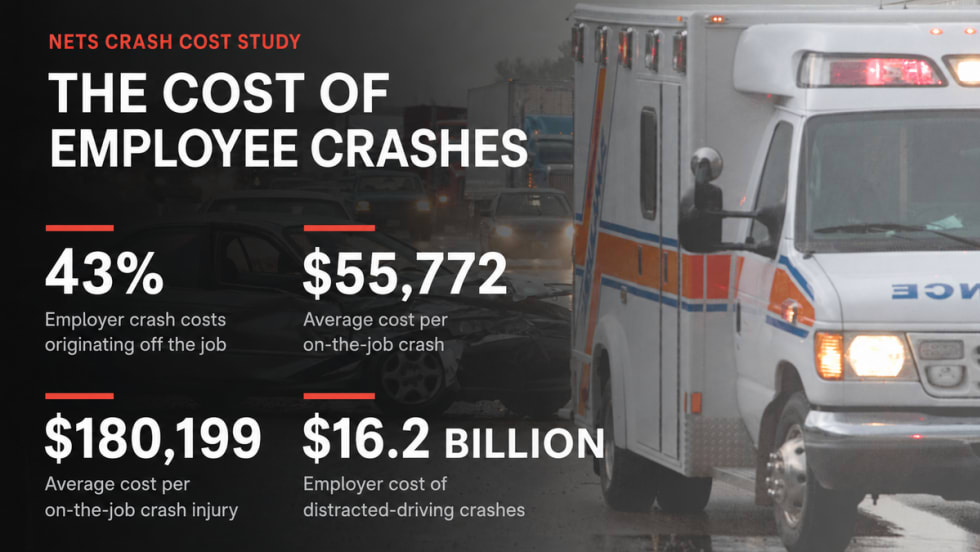
Off-the-Job Crashes Account for 43% of Employers’ $61.7 Billion Crash Burden
NETS quantifies costs dispersed across fleet, risk, HR, and other departments while providing new per-crash benchmarks for employers.
Read More →
Ram Recalls More Than 1.27 Million 1500 Pickups for Seat Belt Anchor Issue
The recall affects certain 2019-2026 Ram 1500 pickups that may have improperly attached second-row seat belt buckle anchors.
Read More →
How Better Visibility Cut Speeding Violations by 48%
Fleet leaders don't need more data, they need clearer visibility into what the data is saying. This case study explores how one utility replaced speeding-event counts with a single metric — miles driven in violation — to strengthen safety and significantly reduce speeding violations.
Read More →
Operation Safe Driver Week: Why the Industry's Oldest Safety Campaign Still Matters to Fleets
A look at how a 2007 enforcement initiative became one of the most consequential weeks on the fleet safety calendar, and what it means for your drivers in 2026.
Read More →