





Related: FTR -- Tight Capacity, Rate Increases Projected to Continue
Fed Economist: 'All Sectors Have Room to Grow'
In the years following the recession, U.S. economic growth has been "so modest that no sector has been overheated,” said William Strauss, senior economist and economic adviser at the Federal Reserve Bank of Chicago.
January 23, 2018
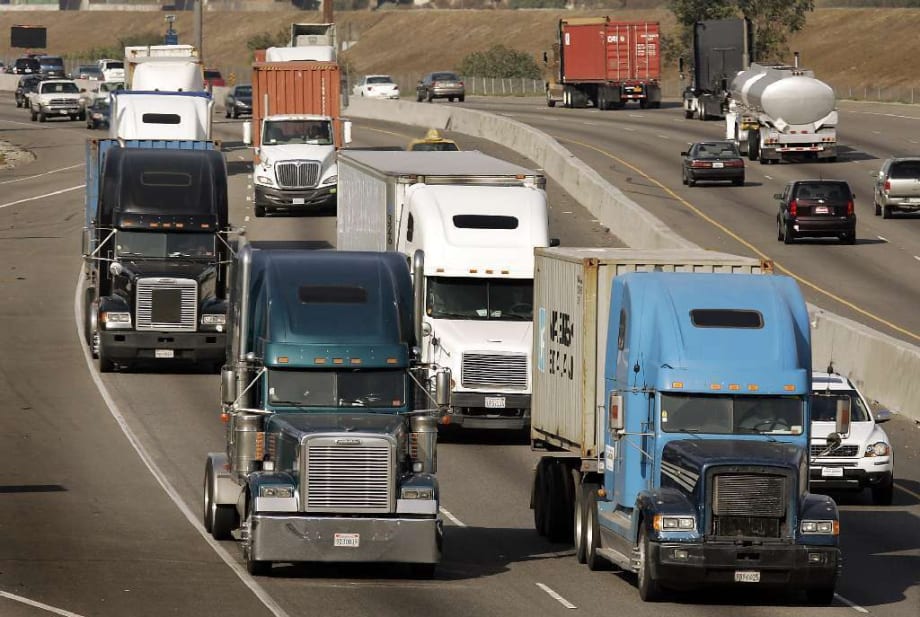
Photo: U.S. Department of Transportation
3 min to read
Photo: U.S. Department of Transportation
“We are now in the third longest expansion,” said William Strauss, senior economist and economic adviser at the Federal Reserve Bank of Chicago, speaking at the Heavy Duty Aftermarket Dialogue event here just ahead of Heavy Duty Aftermarket Week.
Pointing out that we are in the ninth year of the current economic expansion, he said, “I don't see any shocks that will alter that behavior,” he said. “Our growth has been so modest that no sector has been overheated and all sectors have room to grow.”
Strauss explained that in previous expansions, the growth rate was higher than what we are seeing in the current cycle. “Our economy for the past eight years is 20% bigger than it was in 2009, but average growth has been 2.2% – and that is why there is still slack [room for growth.]”
In fact, his outlook for 2018 is that the U.S. economy will expand at a pace somewhat above trend and be at around trend for both 2019 and 2020. He added that the “probability of recession within the next six months has eased. The scaling back of regulations has added a boost to economic growth as has the tax bill.”
The Blue Chip Forecast sees economic growth in 2018 matching that of 2017 and then slowing to 2.2% in 2019. The Federal Open Market Committee expects Gross Domestic Product to grow slightly above trend this year and then around trend for the next two years.
Strauss also expects employment to rise moderately with unemployment remaining at low levels. Employment increased by just over 2 million jobs in 2017, he said. “Eventually we will run out of workers, yet somehow businesses have been able to attract enough workers, even though unemployment is low.”
The unemployment rate has fallen to 4.1% and the Blue Chip Forecast expects that to edge down a little to 4% this year, while the Federal Open Market Committee believes unemployment will be below the natural rate through 2020.
However, Strauss contended that one quarter of the unemployed have been unemployed for more than six months. That’s despite the fact that businesses say they need to hire more people. He believes this is the result of issues surrounding workers’ skill sets.
One thing that surprises him is that despite low unemployment levels, wages have not risen. Wages and salaries are just edging higher with 2.5% increases. These are nominal and do not take into account inflation, which is at 1.5% meaning real gains are only at 1%. “Workers remain quite the bargain,” Strauss said.
He said that slow productivity growth helps explain why relatively strong employment growth has not translated into higher wages.
A large part of the weakness in productivity growth has been the weak pace of investment, he said, adding that investment in it increased at a solid pace during 2017.
“For the last several years, investment [in equipment was] trending down; capital stock at end of 2016 was lower than in 2015,” he said. Normally that does not happen during a growth period.
“In growth, you should see investment in equipment," said Strauss. However, he thinks that after the Great Recession, businesses were reluctant to make equipment purchases. “It’s easier to lay off workers than get rid of equipment, so it is a safer bet to hire workers than buy new equipment. I thought we were on the verge of investment rebound last year, and we did see some improvement in 2017 in investment.” He believes we will continue to see more businesses making investments in needed equipment.
Strauss also talked about inflation, saying that it is moving closer to the Fed target of 2%. He explained that in large part, inflation has been following the pattern of energy prices.
Turning to trucking, Strauss expects trucking activity to remain solid in 2018, but anticipates that vehicle sales will likely edge lower this year.
More Operations

How Fleets Can Recruit and Train Veterans for Technician Roles
Here's how the technician shortage has affected uptime for fleets, and what to do about it.
Read More →
Avis Budget Group Deploys Neology Toll Management Technology Across Major Brands
Neology’s neoFleet platform will manage toll transactions and toll-authority operations for vehicles across Avis, Budget, Payless, Budget Truck and Zipcar.
Read More →
Fleet Personal-Use Charges Edge Higher in 2026
Nearly eight in 10 surveyed fleets allow personal use of company vehicles, while just over half of respondents report charging employees for the privilege.
Read More →
The Future of Fleet + What’s Changing Right Now | AF News Recap
Could developments overseas offer a preview of what’s coming for U.S. fleets? This week, we’re looking at the future of AI, autonomy, and electrification, plus Ford Pro’s new certified pre-owned program, smarter vehicle offboarding, and a new way for fleets to manage toll expenses.
Read More →
How to Handle Vehicle Offboarding
What do fleet managers need to do when a driver leaves?
Read More →
Sponsored•October 1, 2026
Fleet Manager’s Ultimate Playbook: Navigating the New Standard in OEM Connectivity
Rising operating costs, driver safety concerns, and unplanned downtime are putting unprecedented pressure on modern fleets. Discover how fleet managers use embedded OEM connectivity and real-time vehicle data to cut TCO, prevent downtime, and protect drivers without aftermarket telematics hardware.
Read More →
U.S. Bank Adds Verra Mobility Toll Management to Voyager Fleet Platform
The integration allows U.S. Bank Voyager fleet customers to manage toll payments and violations alongside fuel, EV charging and maintenance expenses.
Read More →
ADAS Prevents Crashes. But Repairs Cost More | AF News Recap
ADAS-equipped vehicles may crash less often, but they can cost more when they do. This week, we’re breaking down what that tradeoff means for fleets, plus Subaru’s first Forester Wilderness Hybrid, Nissan’s new e-POWER Rogue, and why Calstart has become Catalyst Mobility.
Read More →
Moventum Fleet Management Names Mark Iorillo Head of Sales
Iorillo brings nearly 20 years of fleet management and sales experience to the role, including previous positions at Element Fleet Management, CEI, Donlen and Ryder.
Read More →
Fleet Has a Talent Pipeline Problem. What Comes Next? | AF News Recap
Where will fleet’s next generation of leaders come from? This week, we’re looking at the industry’s talent pipeline, what certification can add to a fleet career, how to build an award-worthy track record, and the return of Automotive Fleet’s Personal Use Survey.
Read More →