




Fed Agency Lists Most-Wanted Safety Improvements
The National Transportation Safety Board releases its annual list of safety improvement needs, underscoring such threats as driver distraction and substance abuse.
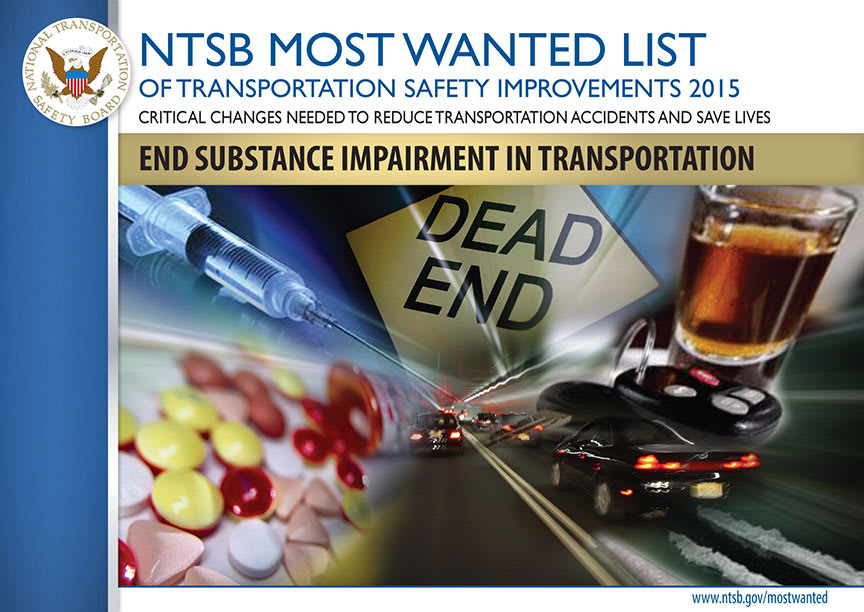
Image courtesy of NTSB.
Image courtesy of NTSB.
The National Transportation Safety Board this week released its annual list of most-wanted transportation improvements, which included a call to disconnect from deadly distractions, end substance impairment, and require medical fitness for duty.
The NTSB is a federal agency charged with investigating major accidents in various modes of transportation, including highways. The agency also conducts special studies on transportation safety.
In addressing the threat of alcohol and drug abuse, the NTSB stressed the need for “stronger laws, swifter enforcement, and expanded use of technology to end substance impairment.”
The agency also indicated a need for additional employee education and training about the issue.
“Drivers, transportation operators and enforcement authorities also need good information to make informed decisions about the use of illicit drugs and over-the-counter medications,” the agency noted.
Also prominent were concerns about the use of mobile electronic devices.
“Since 2003, the NTSB has found distraction from portable electronic devices (PEDs) as a cause or contributing factor in 11 accident investigations,” the agency said. “Those crashes resulted in 259 people injured and 50 people killed. The first step toward removing deadly distractions will be to disconnect from non-mission-critical information. All modes of transportation need to rise to today’s distraction challenges.”
The agency also called for a strengthening of commercial trucking safety. “To manage their safety risks, trucking companies must go beyond securing regulatory compliance from all their employees and proactively identify operational hazards and potential solutions,” the NTSC said.
In response to the agency’s list, the National Safety Council praised the board’s decision to highlight such threats as distracted driving and prescription painkiller use.
“Our desire to be constantly connected, even while behind the wheel, results in far too many deadly crashes, while the proliferation and misuse of prescription painkillers results in 46 overdose deaths per day,” said Deborah A.P. Hersman, president and CEO of NSC. “The council thanks NTSB for keeping these important issues on its Most Wanted List, because continued attention and education are key ingredients of culture change.”
More Safety

Nexar-Nauto Merger Aims to Give Fleets Better Safety Intelligence Through Larger Driving Dataset
Stefan Heck tells Automotive Fleet that combining more than 10 billion miles of driving history with Nexar's AI models will give fleets deeper insights into driver risk and roadway conditions than either company could provide independently.
Read More →
Don't Wait for a Crisis: 5 Ways to Build Mental Health Into Your Fleet Safety Program
For Suicide Prevention Month, fleet and safety leaders have an opportunity to put mental health where it belongs: at the center of workplace safety.
Read More →
How Camera Data Can Strengthen a Fleet’s Insurance Renewal
Insights from a commercial insurance carrier and a broker show how fleets can turn video telematic data, driver coaching, and improved claims results into a stronger case at insurance renewal.
Read More →
The Safest Fleets Aren’t the Ones with the Most Technology
You’ve made the telematics investment. Here’s how to capture the other half of its value and build the safest fleet on the road.
Read More →
Hidden in Plain Sight: Fleet Compliance Risks
Fleet compliance isn't just about having policies — it's about consistently enforcing them. This practical guide reveals six hidden compliance risks common in public sector and shared fleet operations and outlines proven strategies to improve visibility, accountability, and audit readiness
Read More →
NETS Sets 2026 Fleet Safety Benchmark Conference for Indianapolis
The Sept. 15–17 program will feature fleet benchmarking data, case studies, emerging technologies, and implementation strategies while running alongside the NSC Safety Congress & Expo.
Read More →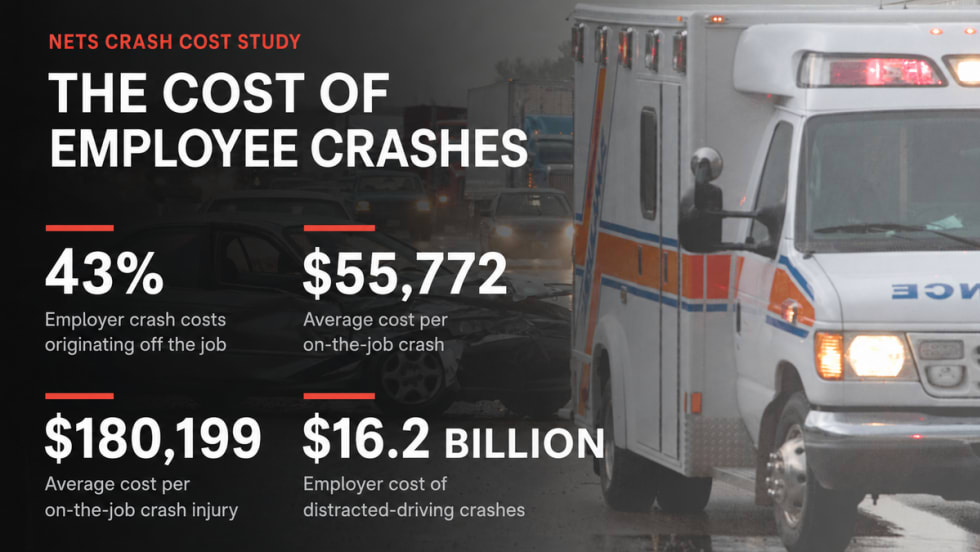
Off-the-Job Crashes Account for 43% of Employers’ $61.7 Billion Crash Burden
NETS quantifies costs dispersed across fleet, risk, HR, and other departments while providing new per-crash benchmarks for employers.
Read More →
Ram Recalls More Than 1.27 Million 1500 Pickups for Seat Belt Anchor Issue
The recall affects certain 2019-2026 Ram 1500 pickups that may have improperly attached second-row seat belt buckle anchors.
Read More →
How Better Visibility Cut Speeding Violations by 48%
Fleet leaders don't need more data, they need clearer visibility into what the data is saying. This case study explores how one utility replaced speeding-event counts with a single metric — miles driven in violation — to strengthen safety and significantly reduce speeding violations.
Read More →
Operation Safe Driver Week: Why the Industry's Oldest Safety Campaign Still Matters to Fleets
A look at how a 2007 enforcement initiative became one of the most consequential weeks on the fleet safety calendar, and what it means for your drivers in 2026.
Read More →