




FCA US Vows to Improve Safety Recall Process
During a July 2 public hearing, the automaker outlines recent changes aimed at improving and speeding up its safety recall notifications and remedies. But federal regulators are expected to take enforcement action later this month for FCA’s past mistakes in 23 recalls.

Kunselman

Kunselman
Fiat Chrysler Automobiles, facing rising scrutiny from U.S. safety regulators, on July 2 sought to reassure government officials that the company is already taking significant measures to improve its safety recall notifications, remedies and completion rates.
During public hearing testimony, Scott Kunselman, senior vice president for vehicle safety and regulatory compliance at FCA US, acknowledged problems with the company’s execution of 23 separate recalls during 2013-2015. Kunselman stressed, however, the automaker is committed to improving its overall recall campaign process.
That process will feature more timely availability of replacement parts and greater communications transparency with customers, dealers and the National Highway Traffic Safety Administration (NHTSA), he said.
The 23 recalls involve about 11 million vehicles. Included are recalls for fuel systems at risk for catching fire in rear crashes, defective ignition switches that can disable a vehicle’s air bags, and defective air bags that can unexpectedly go off. “These defects have caused deaths and serious injuries,” testified Jennifer Timian, acting director of NHTSA’s Office of Defects Investigation (ODI) and chief of NHTSA’s recall management division.
NHTSA’s ODI itself has come under fire in recent days, after the release of a scathing audit report from U.S. Department of Transportation Inspector General Calvin L. Scovel III.
NHTSA held the July 2 public hearing in Washington, D.C., to determine whether FCA US fulfilled its Motor Vehicle Safety Act obligations to fix safety defects and issue required notices in the 23 identified recalls.
NHTSA Administrator Mark Rosekind said the agency will take enforcement action against FCA US by the end of this month.
“Fiat Chrysler takes a long time to produce the parts needed to get vehicles fixed,” testified Scott Yon, chief of the vehicle integrity division in NHTSA’s ODI. “Their dealers have difficulty getting parts for recalls. Their customers have trouble getting recall repairs done."
But recent organizational changes within the company will address many of the factors that led to such delays in the past, Kunselman said. His own position of senior vice president for vehicle safety and regulatory compliance is relatively new. It was created in September 2014, when FCA US overhauled its safety and compliance functions.
“We have broadened the expertise of our new safety and regulatory compliance organization by adding personnel such as campaign managers and campaign coordinators and additional product investigators,” Kunselman said. “In addition, our supporting functions – Mopar [FCA’s parts, service and customer care group] and purchasing and supply chain – have dedicated specific resources to recall execution.”
Additionally, Kunselman said, FCA US has reformed its internal processes to procure parts for use in safety recalls.
“Primarily, we are working closely with our suppliers to shorten the amount of time it takes to design, validate, tool and produce the required quantity of parts,” Kunselman said.
The automaker is also improving its recall tracking system, implementing new call center protocols so agents can offer to schedule service, initiating a loaner-vehicle program, launching an app to alert customers about recalls, and better tracking customer feedback after a recall is launched, Kunselman added.
To view a list of the 23 recalls at issue, click here.
More Safety

The Safest Fleets Aren’t the Ones with the Most Technology
You’ve made the telematics investment. Here’s how to capture the other half of its value and build the safest fleet on the road.
Read More →
Hidden in Plain Sight: Fleet Compliance Risks
Fleet compliance isn't just about having policies — it's about consistently enforcing them. This practical guide reveals six hidden compliance risks common in public sector and shared fleet operations and outlines proven strategies to improve visibility, accountability, and audit readiness
Read More →
NETS Sets 2026 Fleet Safety Benchmark Conference for Indianapolis
The Sept. 15–17 program will feature fleet benchmarking data, case studies, emerging technologies, and implementation strategies while running alongside the NSC Safety Congress & Expo.
Read More →
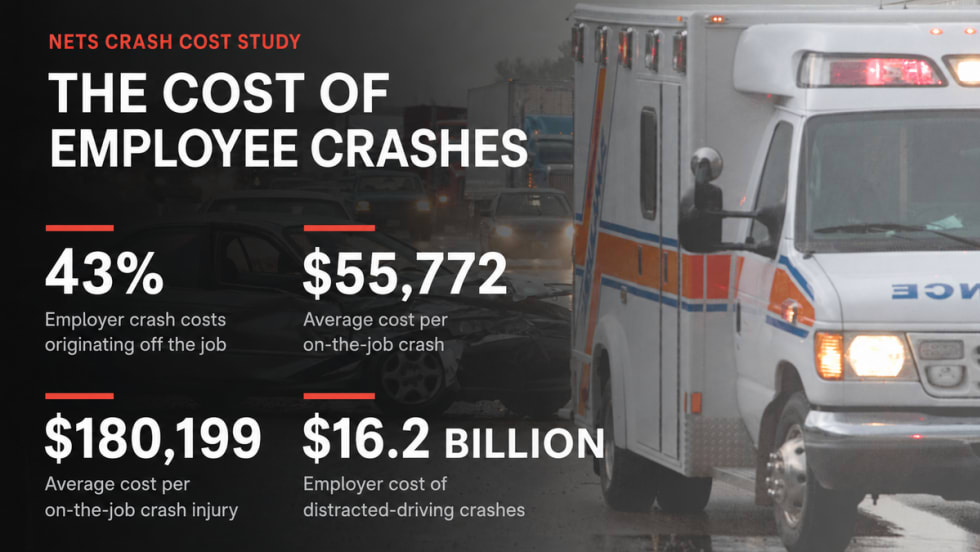
Off-the-Job Crashes Account for 43% of Employers’ $61.7 Billion Crash Burden
NETS quantifies costs dispersed across fleet, risk, HR, and other departments while providing new per-crash benchmarks for employers.
Read More →
Ram Recalls More Than 1.27 Million 1500 Pickups for Seat Belt Anchor Issue
The recall affects certain 2019-2026 Ram 1500 pickups that may have improperly attached second-row seat belt buckle anchors.
Read More →
How Better Visibility Cut Speeding Violations by 48%
Fleet leaders don't need more data, they need clearer visibility into what the data is saying. This case study explores how one utility replaced speeding-event counts with a single metric — miles driven in violation — to strengthen safety and significantly reduce speeding violations.
Read More →
Operation Safe Driver Week: Why the Industry's Oldest Safety Campaign Still Matters to Fleets
A look at how a 2007 enforcement initiative became one of the most consequential weeks on the fleet safety calendar, and what it means for your drivers in 2026.
Read More →
Nexar-Nauto Merger Aims to Give Fleets Better Safety Intelligence Through Larger Driving Dataset
Stefan Heck tells Automotive Fleet that combining more than 10 billion miles of driving history with Nexar's AI models will give fleets deeper insights into driver risk and roadway conditions than either company could provide independently.
Read More →
From Silos to Solutions: Relationship Management for Safer Fleets
From telematics adoption and driver accountability to policy consistency and risk mitigation, this episode breaks down what it really takes to build a safer fleet culture without slowing business down.
Read More →
IIHS Launches First Commercial Vehicle Safety Evaluations
The Insurance Institute for Highway Safety has begun evaluating heavy-duty pickups and cargo vans for driver protection. Which models earned top marks?
Read More →