




FAA Approves Testing of Workhorse Drone Delivery System
Workhorse Group says it has obtained permission from the Federal Aviation Administration to test its Horsefly delivery drone, an eight-motor, eight-rotor “octocopter” designed to work with a specially equipped E-Gen electric walk-in van.

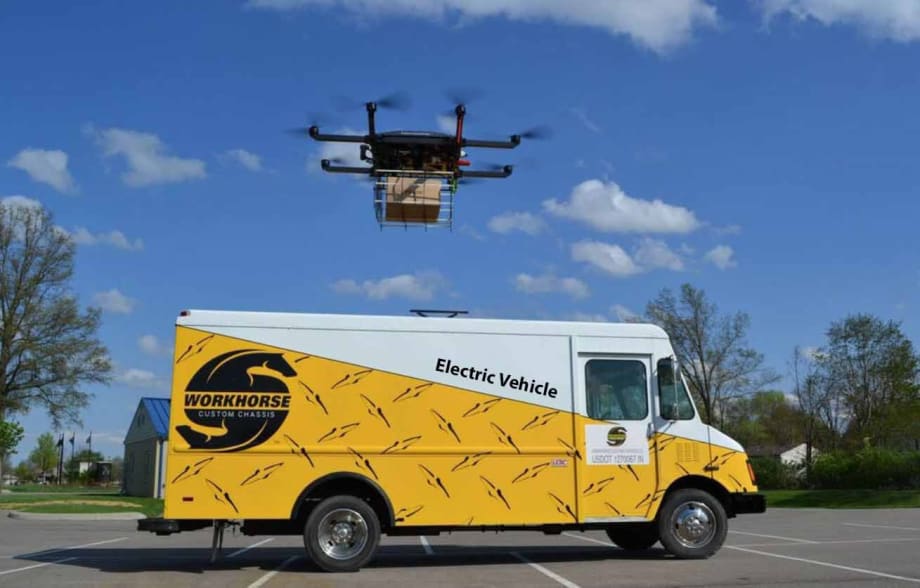
Horsefly drone teams with E-Gen van, but roof support equipment can be installed on any walk-in van, Workhorse says. Photo: Workhorse Group
Horsefly drone teams with E-Gen van, but roof support equipment can be installed on any walk-in van, Workhorse says. Photo: Workhorse Group
Workhorse Group says it has obtained permission from the Federal Aviation Administration to test its Horsefly delivery drone, an eight-motor, eight-rotor “octocopter” designed to work with a specially equipped E-Gen electric walk-in van.
The drone weighs 18 pounds and can carry a package weighing up to 10 pounds beneath its belly, according to Steve Burns, Workhorse’s CEO. The company retained the University of Cincinnati, whose engineers designed the aircraft and its guidance system.
In initial tests, a qualified operator will pilot the drone. But its guidance system is designed to perform missions on its own, leaving the roof of the van, flying to a drop-off point, and returning to the van to fetch another package. There its battery can also be recharged if needed.
“The premise is we launch it from on top of this truck and we’ve got a drop 1 mile to the left, another to the right, and it comes back,” Burns said. “So it can go 5 miles round trip, but for now it will be line-of-sight (of the pilot) to accommodate the FAA.
“It’s flown by joystick; a camera looks at place to drop – a house’s stoop, a loading dock at back of plant, and so on. It works from a satellite image and address. The driver can guide it and then it’s in the system’s memory for future deliveries. It can fly autonomously. In the future, when we can get past line-of-sight (restrictions), when the FAA’s comfortable, then the flying can be done by someone in the control center.”
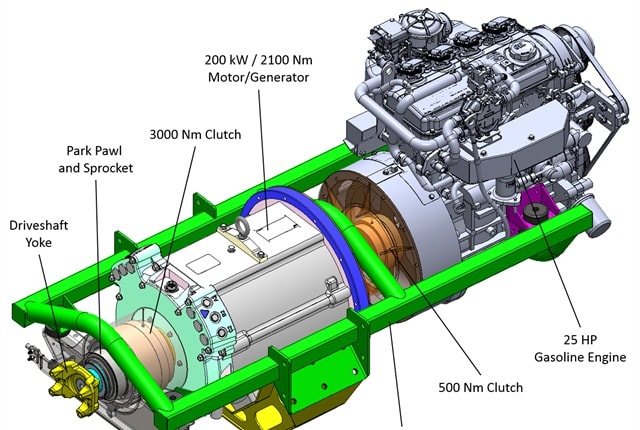
E-Gen propulsion system is mainly electric. A 25-hp gasoline engine drives a generator to charge the truck's battery during stops.
The Truck
The test truck is a Workhorse E-Gen, a battery-electric chassis with a gasoline-driven generator to extend operating range, Burns explained. It’s designed to complete an urban route in one charge, but the 25-hp engine starts up when the truck’s stopped to charge the batteries in spurts. And the drive motor becomes a generator during braking.
“Regenerative braking is a big part of it,” he said. “There’s a lot of energy to be captured from a 19,800-pound truck. Regenerative braking also helps keep the battery charged.”
An E-Gen’s 60-kilowatt-hour battery consists of 5,888 Panasonic cells, like those used in a Tesla automobile, that have proven to be reliable, he said.
UPS has ordered 125 E-Gen vans for in-service testing, and Alpha Bakery, in Chicago, ordered five for bread deliveries, Burns said. The van is “suitable for classic users of Stepvans, for local deliveries. Its price premium is paid back in four years.” The U.S. Postal Service is also considering the vehicle paired with a drone for its next-generation vehicle.
Workhorse will build the E-Gen and conventionally-powered vans at a plant in Union City, Ind., that it bought from Navistar. It is slowly ramping up the plant as orders come in.
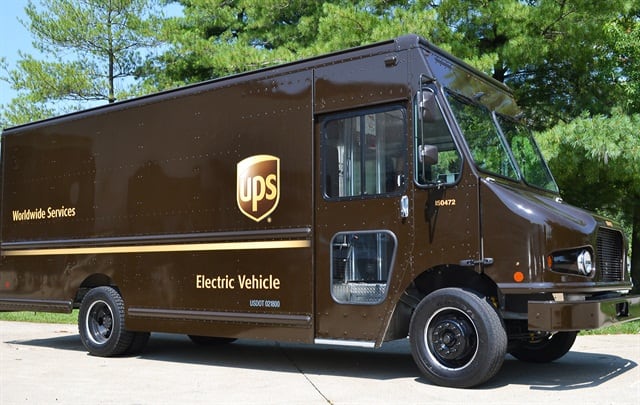
UPS has ordered 125 E-Gen extended-range electric vans and a Chicago bakery is buying another five, Workhorse says. Photo: Workhorse Group
Flying the Drone
In flying the drone, “the hardest part is re-landing on the truck,” Burns continued. “It’s harder than GPS can do, harder than a human can do. Infrared beams guide it and identify the landing place,” a platform atop the Workhorse van. “A door on the van’s roof is sliding. For a landing, the door retracts, the drone lands, and it covers in 5 seconds.
“It built to run in rain and wind, but too much and it won’t fly, like any aircraft,” he said. “Charging is wireless, on a cradle with positive and negative bars, at 22 volts.”
The Horsefly measures 58 inches from prop-to-prop and 41 inches motor-to-motor, Burns said. Two of the eight props can fail and it will still fly and maneuver. Its top speed is 50 mph.
“If you’ve got to do line of sight delivery, we think a rolling warehouse, a truck, is the way to do it,” he said. “But integration with the truck is difficult; the university helped a lot in that. The main thing is that landing. To protect people, there are guards around the props, and there are sensors so that the prop closest to somebody will stop.”
When the Horsefly begins operating autonomously, its economics will make sense, Burns said.
Sound Economics
“A diesel truck is a buck a mile, an electric truck brings that down to 30 cents, and a bird (the drone) is 3 cents a mile. Using the truck also makes it familiar to people. The cost now is prohibitive, and we’re not trying to sell anything.
“But if you’ve got a 5-pound book, it doesn’t pay to drag a 20,000-pound truck up the driveway. Use the drone. For a set of tires, use the truck to deliver it. While the bird is on a delivery, he (the driver) goes on with his regular deliveries and it finds him.”
There’s commercial interest in the drone-van system, Burns said.
“A couple of companies are considering becoming partners. That first legally delivered package will be a big one. The economics are pretty compelling, and in the end it might be safer, too, than a big diesel truck coming down your driveway.”
More Green Fleet
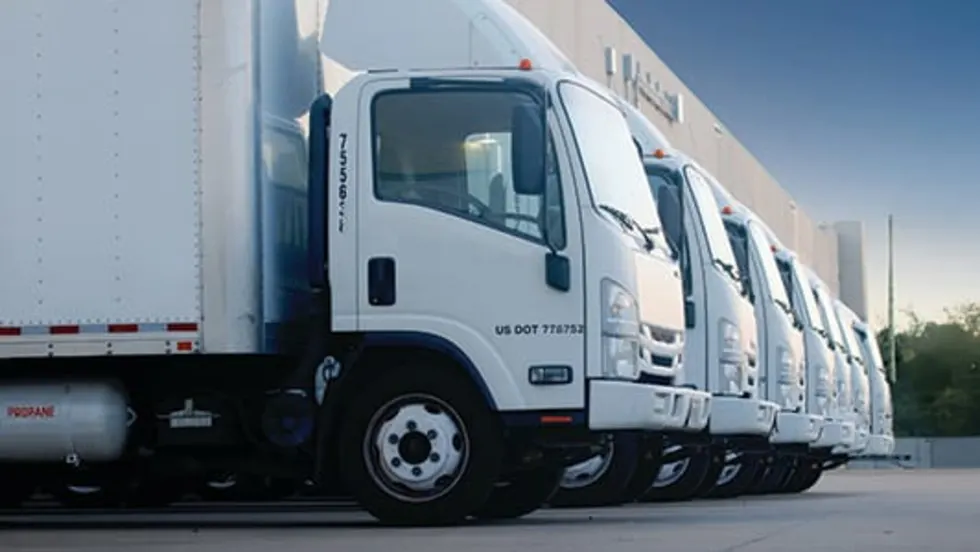
New Propane Autogas Program Offers Fleet Compensation
Qualified commercial fleets can receive $7,500 per eligible propane autogas vehicle and up to $10,000 for new refueling site prep. Learn how the program works and see whether your fleet qualifies.
Read More →
EV Charging Use Is Outpacing Infrastructure Growth
ChargePoint’s 2026 Charging Forward Report points to rising charger use, higher-powered charging, commercial vehicle electrification, and energy-management technology. Here’s what fleets should know.
Read More →
Merchants Fleet Reports 290M EV Miles as Fleets Navigate Changing Electrification Market
From millions in operating savings to hundreds of millions of EV miles, Merchants Fleet’s latest report reveals what’s working and what’s changing in fleet electrification.
Read More →
The EV Breakdown Nobody's Talking About: Why Most Electric Vehicle Roadside Calls Aren't Mechanical Failures
Here's why EV breakdowns are widely misunderstood.
Read More →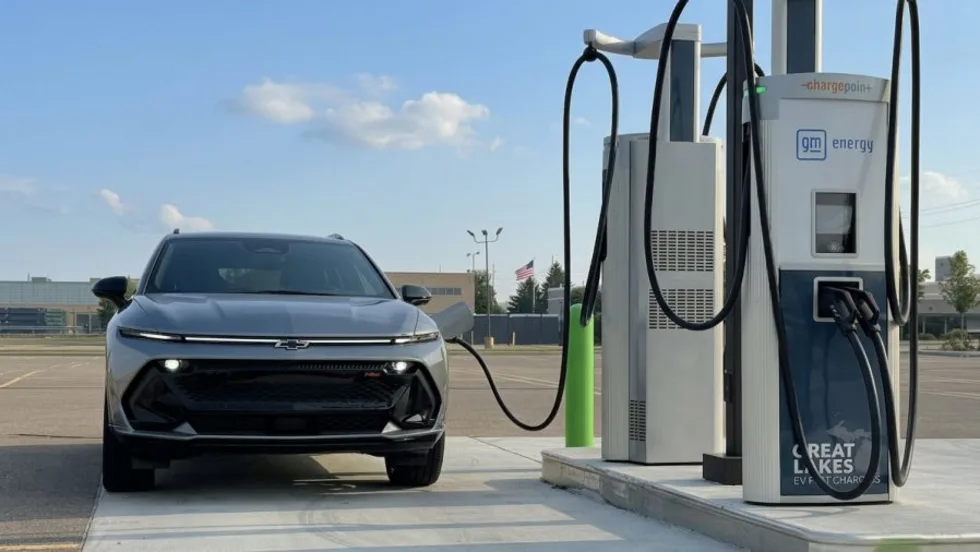
ChargePoint Now Available in Energy Pass
ChargePoint and additional planned charging network integrations were added to GM's Energy Pass.
Read More →
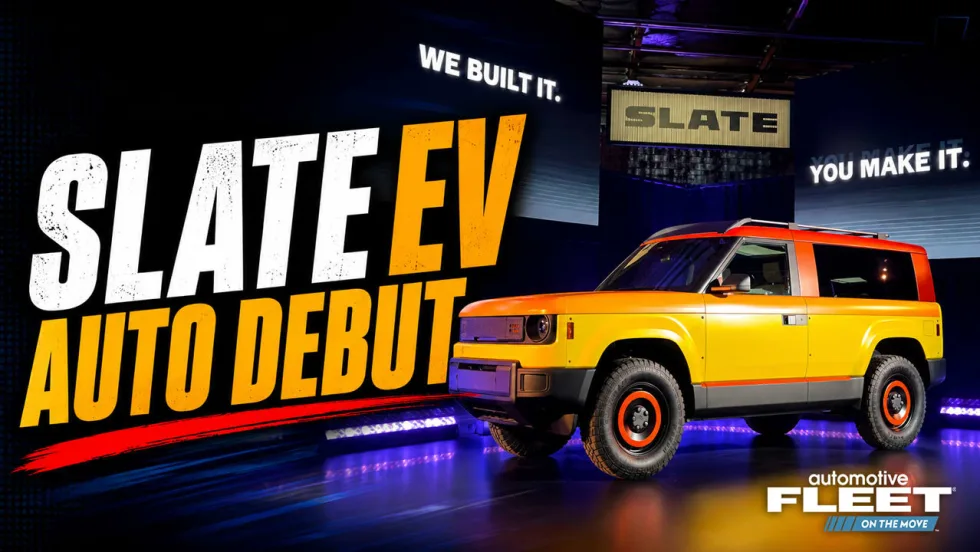
First Look: Slate Auto's Electric Fleet Pickup
Could an affordable, modular EV pickup make electrification more practical for fleets?
Read More →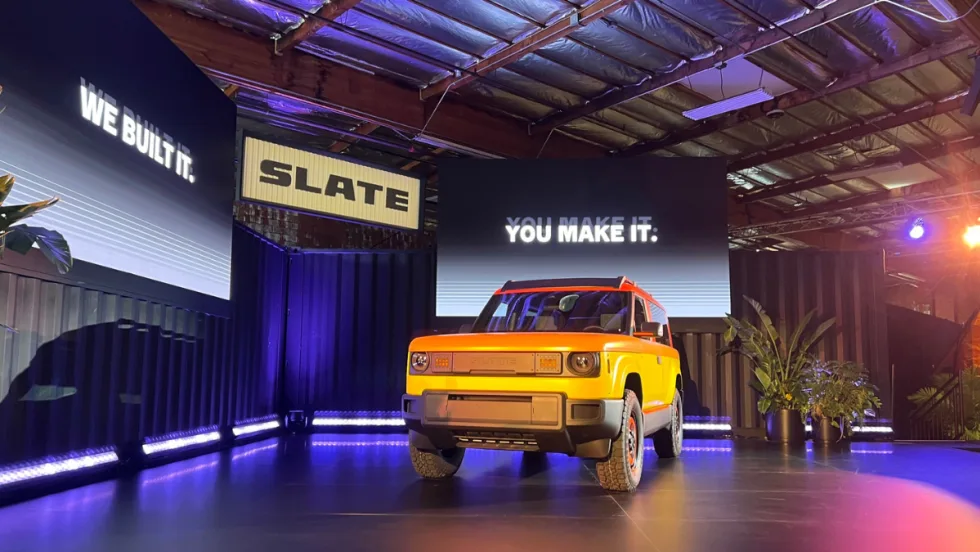
Slate Debuts Colorful, Unique EV Models
A recent media and client event, studded with electric vehicles dressed up on platforms, planted a new position for the manufacturer in the wider EV market. Fleets will find cost-saving advantages.
Read More →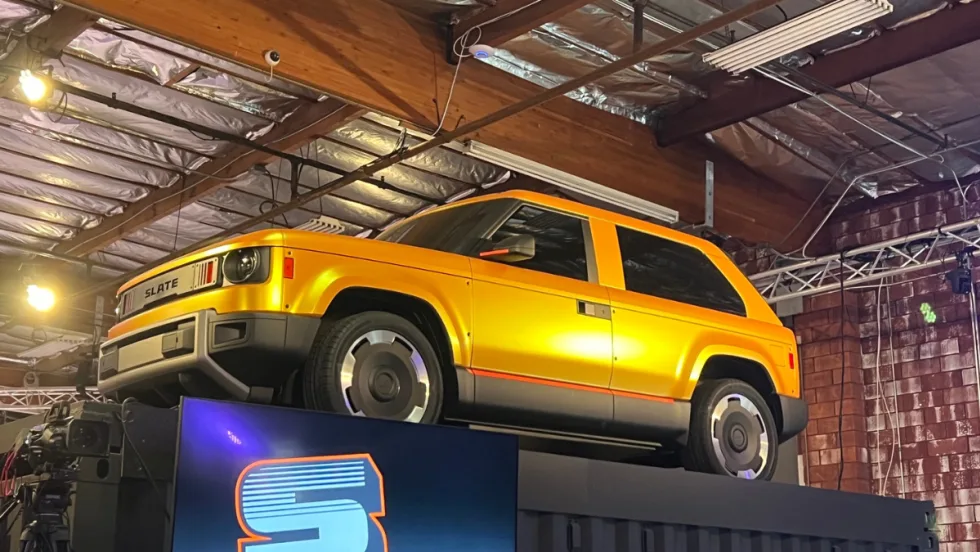
Slate Electric SUV, Pickup Switchable Model Aims For Light-Duty Fleets
Everything about this EV is counterintuitive and understated, making it stand out from the crowd.
Read More →
Inspiration Mobility Acquires Key Electrada Assets
Inspiration Mobility Group has acquired select assets of Electrada, adding the fleet electrification provider's team, technology, and charging infrastructure development capabilities to its energy management business.
Read More →