




European Taxation Guide Makes Case for Going Greener
According to the 2013 edition of the "European Taxation Guide," international fleet managers can produce cost savings of tens of thousands of Pounds/Euros for their companies by reducing the average carbon emissions on a typical fleet of 200 cars by just 10g/km.
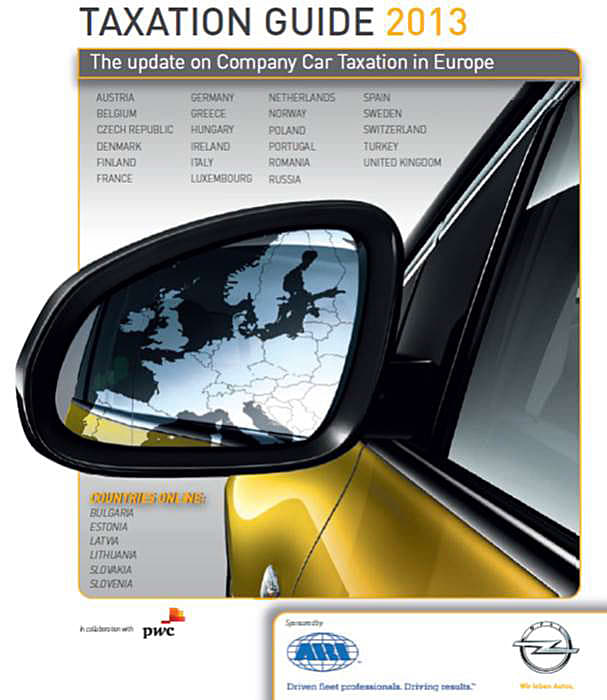
According to the 2013 edition of the European Taxation Guide, international fleet managers can produce cost savings of tens of thousands of Pounds/Euros for their companies by reducing the average carbon emissions on a typical fleet of 200 cars by just 10g/km.
Produced by Nexus Communication, publisher of Fleet Europe, in conjunction with global accountancy firm PwC and sponsored by Opel and ARI Fleet, this year’s Guide, the seventh to date, reviews the company car tax situation in 23 European countries in print and in 29 digitally.
The Guide shows that the company car is already inextricably linked to carbon emissions-based taxes in 20 Member States across Europe, while other countries are keen to follow suit as governments continue to target the company car as a source of tax-raising revenue.
But, according to data in the Guide, fleet managers have it within their power to achieve significant savings through adapting fleet policy. By lowering CO2-emissions by only 10 grams from 135g/km to 125g/km, fleet managers can already produce annual savings in fuel costs of around €44,000 on a fleet of 200 cars in most European countries.
And when direct, indirect and hidden taxes are added to the fuel cost savings on the same fleet of 200 cars, the total cost savings can rise dramatically, according to the Guide.
In Portugal, for example, once direct taxes are included, cost savings can be as high as €132,000 a year, while in Belgium, where there are more indirect and hidden taxes, the savings can be a staggering €163,000. The figures throughout the Guide have been produced using PwC’s extended automotive network.
When focusing on potential tax savings, reducing CO2 emissions pays off most in major developed Western European countries like Belgium, the UK, the Netherlands, France, and Spain. Comparing company car tax systems in these countries, it is clear all of them have registration taxes linked to CO2 emissions, according to the Guide.
The Guide also notes that, with carbon emission thresholds reducing all the time across Europe, it will soon no longer be sufficient for fleet managers simply to select diesel engined vehicles to achieve the optimal cost-saving emissions levels.
The introduction of new EU-backed carbon emissions limits of 130g/km by 2015 and 95g/km by 2020, mean that governments will lower the CO2 emissions thresholds within their national car tax regimes in order to guarantee existing income levels.
The new lower limits will mean that fleet managers will have to be more imaginative in deciding which vehicles to include within their choice lists. And, with growing numbers of countries offering incentives to select cars with low carbon-emitting electric hybrid engines, the Guide noted this is one option for the future.
Already some 15 Member States offer some form of incentive for hybrid vehicles and, with the rapidly increasing pump costs of diesel across Europe, allied to rising residual values of gasoline-powered cars due to a growing consumer market, gasoline, hybrid, and electric cars will all have to be carefully considered in choosing the right mix of company cars to meet corporate needs, it argues.
This trend, however, will further complicate the job of fleet managers, who will need to take into account the mobility profile of their drivers, the distances they drive, the areas they drive in, such as urban, non-urban or highway, and their driving behaviors.
For company car drivers in urban areas, electric vehicles may be the answer, while for mixed area drivers, hybrid vehicles may be the preferred choice, and for high kilometre drivers, diesel could be the most suitable solution, according to the Guide.
Luckily for both the fleet manager and the fleet driver in meeting this new challenge, vehicle manufacturers are constantly developing more carbon-efficient models, whilst also paying increasing attention to comfort, functionality and design. So more than ever it is not only wise to be tax and cost-effective, but it can also be very rewarding to pay attention to trends in car taxation, according to the Guide.
The 23 countries covered in the printed version of the 2013 Taxation Guide are: Austria, Belgium, Czech Republic, Denmark, Finland, France, Germany, Greece, Hungary, Ireland, Italy, Luxembourg, Netherlands, Norway, Poland, Portugal, Romania, Russia, Spain, Sweden, Switzerland, Turkey and the United Kingdom.
The digital version expands this to 29, with those from the printed version plus Bulgaria, Estonia, Latvia, Lithuania, Slovakia and Slovenia. The Guide is available at shop.nexuscommunication.be
More Global Fleet

GeoFencing Adds to Your Truck Security Arsenal
Geofencing is a familiar fleet tool today, but its early adoption marked a major shift in vehicle tracking, route monitoring, and the debate over employee privacy.
Read More →
Holman Takes Full Ownership of ARIZA in Mexico
Holman is bringing its Mexican fleet management operation fully under its own brand after more than 30 years as a joint venture. The change gives multinational fleet customers a single Holman operation across the U.S., Canada, and Mexico.
Read More →
5 Tire Maintenance Tips to Help Prevent Work Truck Downtime
Regular tire checks can do more than extend tread life. These five maintenance practices can help work truck fleets catch problems early, reduce costs, and prevent downtime.
Read More →

Proven Ways to Reduce Work Truck Downtime
The age-old problem of downtime will always be a reality, but with new strategies at hand, fleets have more ways to keep trucks on the road longer.
Read More →


Cameras, Safety and Insurance: From Reactive Claims to Real-Time Prevention (Part 2 of 2)
Part Two: Commercial auto remains one of the most challenging and costly lines of coverage for fleet operators and insurers alike. Continue learning more about how to effectively address these issues from Onur Aksan, Enterprise Business Development Executive, Geotab
Read More →
Cameras, Safety and Insurance: From Reactive Claims to Real-time Prevention
Commercial auto remains one of the most challenging and costly lines of coverage for fleet operators and insurers alike. Learn more about how to effectively address these issues from Onur Aksan, Enterprise Business Development Executive, Geotab.
Read More →
Fleet Costs Are Rising: Here’s How Leaders Are Responding
Fleet leaders are under pressure to reduce costs, adapt to economic uncertainty, and make smarter decisions. See how peers across North America are responding with real data, proven strategies, and forward-looking insights. Download the 2026 Market Pulse Report to benchmark your strategy and uncover where you can gain an edge.
Read More →
Enterprise Fleet Management Surpasses 900,000 Vehicles in U.S. & Canada
Enterprise Mobility connects with mobility solutions around the globe
Read More →