




European EV Grid Will Allow Users to Sell Energy
Nissan and Endesa have outlined an agreement to commercialize a vehicle to grid (V2G) electricity management system, which allows Nissan LEAF and e-NV200 owners to sell energy from their vehicle’s batteries back to the grid.
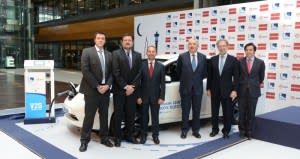
Photo: Nissan & Endesa
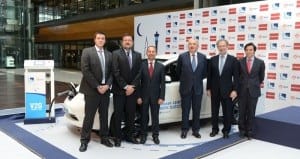
Photo: Nissan & Endesa
Nissan and Endesa have outlined an agreement to commercialize a vehicle to grid (V2G) electricity management system, which allows Nissan LEAF and e-NV200 owners to sell energy from their vehicle’s batteries back to the grid. The system is set to dramatically improve the flexibility of the electricity grid and increase utilization of renewable energy, according to the companies.
The system allows for management of energy with a bidirectional charger that can charge and discharge the Nissan battery on demand. The Nissan EV battery is fitted to the the Nissan LEAF and the e-NV200 light commercial vehicle. The V2G unit can be fed from the normal electricity supply and from solar panels or wind turbines on the owner’s property if local regulations allow this.
Thanks to this system, a driver of a 100 percent electric model such as the Nissan LEAF or e-NV200 will be able to connect to recharge their vehicle during periods of low demand at cheaper electricity rates and then sell back to the grid during peak periods at a higher price when additional capacity is expensive for the producer.
The two companies will work together to make what is now technologically possible, a commercial reality. “Nissan will cooperate with Endesa to increase even further the appeal of 100 percent electric vehicles in Spain and beyond by adding even more benefits to ownership. The ability to sell energy to the grid will mean our EV customers will make money in addition to the savings they already enjoy on fuel. This technology means that as well as cleaner air for everyone, EVs can help make electricity supply smarter and more sustainable.” remarked Marco Toro, managing director of Nissan Iberia.
Electric vehicles have between 10 and 100 kWh of stored electrical capacity and often spend much of their time parked, V2G systems can have a central role in the transformation of energy systems. “Thanks to this technology electric vehicles will become part of the electrical system, introducing new storage capacity and demonstrating that the energy stored in an electric vehicle can be used for other purposes in addition to mobility,” said José Bogas, director CEO of Endesa.
Electricity has traditionally been impossible to store on a large scale, which means that energy produced can sometimes be lost if there is no demand at that time, according to the companies. Energy from wind farms, particularly at night, is not necessarily needed by the grid at that time. With the adoption of the V2G system, Nissan and Endesa will encourage the use of this energy during the night for charging to better balance the grid and increase the adoption of renewable energy.
Energy management is one of the most important parts of the development of smart cities across the world with better optimization of production, distribution and use between producers and consumers, according to the companies.
The agreement includes other areas of joint action:
Study of the possible reuse of batteries for electric vehicles (second life), so that at the end of the vehicle’s life, the battery can continue to be used in less intensive uses for example, energy storage before it is recycled years later
Design and evaluation of innovative energy package deals and electric mobility for both the residential segment (B2C) and businesses (B2B).
More Global Fleet
Holman Takes Full Ownership of ARIZA in Mexico
Holman is bringing its Mexican fleet management operation fully under its own brand after more than 30 years as a joint venture. The change gives multinational fleet customers a single Holman operation across the U.S., Canada, and Mexico.
Read More →
Proven Ways to Reduce Work Truck Downtime
The age-old problem of downtime will always be a reality, but with new strategies at hand, fleets have more ways to keep trucks on the road longer.
Read More →
The Top 300 Commercial Fleets
The Top 300 Commercial Fleets: See the List
Read More →


Cameras, Safety and Insurance: From Reactive Claims to Real-Time Prevention (Part 2 of 2)
Part Two: Commercial auto remains one of the most challenging and costly lines of coverage for fleet operators and insurers alike. Continue learning more about how to effectively address these issues from Onur Aksan, Enterprise Business Development Executive, Geotab
Read More →
Cameras, Safety and Insurance: From Reactive Claims to Real-time Prevention
Commercial auto remains one of the most challenging and costly lines of coverage for fleet operators and insurers alike. Learn more about how to effectively address these issues from Onur Aksan, Enterprise Business Development Executive, Geotab.
Read More →
Fleet Costs Are Rising: Here’s How Leaders Are Responding
Fleet leaders are under pressure to reduce costs, adapt to economic uncertainty, and make smarter decisions. See how peers across North America are responding with real data, proven strategies, and forward-looking insights. Download the 2026 Market Pulse Report to benchmark your strategy and uncover where you can gain an edge.
Read More →
Enterprise Fleet Management Surpasses 900,000 Vehicles in U.S. & Canada
Enterprise Mobility connects with mobility solutions around the globe
Read More →
Automotive Fleet's Guide to Fleet Electrification
Unlock the secrets to a successful transition to electric fleets with Automotive Fleet's comprehensive Fleet Electrification Guide!
Read More →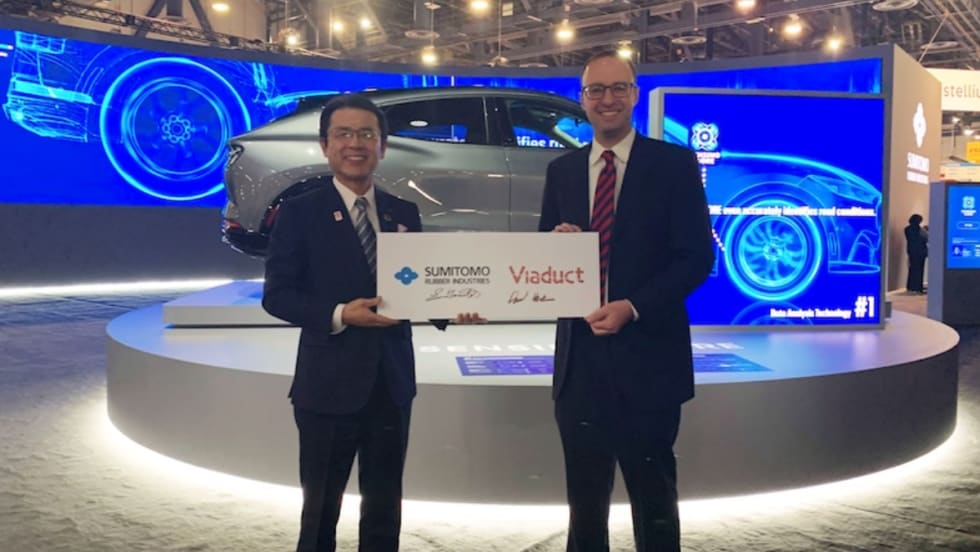
Sumitomo Rubber Industries to Acquire Viaduct
Viaduct will join Sumitomo as an independent subsidiary. Partnership strengthens global reach and accelerates AI-driven innovation for fleets and manufacturing.
Read More →