




Europe to Send Emergency Oil to U.S.
PARIS — Europe will dip into its emergency stocks of gasoline to help the United States through an energy crisis that began when Hurricane Katrina smashed into Gulf coast refiners, EU governments said Sept. 2.
PARIS — Europe will dip into its emergency stocks of gasoline to help the United States through an energy crisis that began when Hurricane Katrina smashed into Gulf coast refiners, EU governments said Sept. 2, according to Reuters. France, Germany, and Spain said they were ready and able to send fuel across the Atlantic in an operation coordinated by the West’s energy watchdog, the International Energy Agency. A U.S. government official confirmed Washington had asked for help and said most of the gasoline would come from Europe. EU nations have watched in horror as the world’s richest country struggles with the aftermath of Katrina. Thousands are feared dead and troops in the flooded city of New Orleans have been told to shoot-to-kill to crack down on looting. Gasoline prices have soared by nearly a fifth over the past week and President George W. Bush has urged Americans to go easy on fuel. Unlike the IEA, the United States has only emergency reserves of crude and a small stockpile of heating oil. According to the Reuters report, an expected 2 million barrels per day of oil to be shipped to the United States over the next month. The United States has lost about one million bpd of gasoline output.
More Fuel
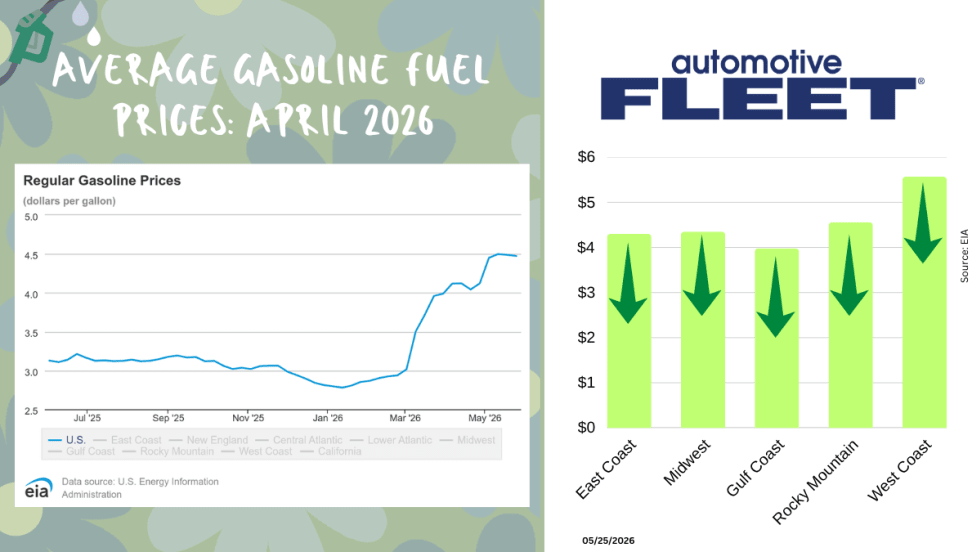
May Fuel Update: All Regions Experience Declines
Gas prices are finally easing in much of the country, but experts warn global tensions could quickly reverse the trend as the national average remains well above last month’s levels.
Read More →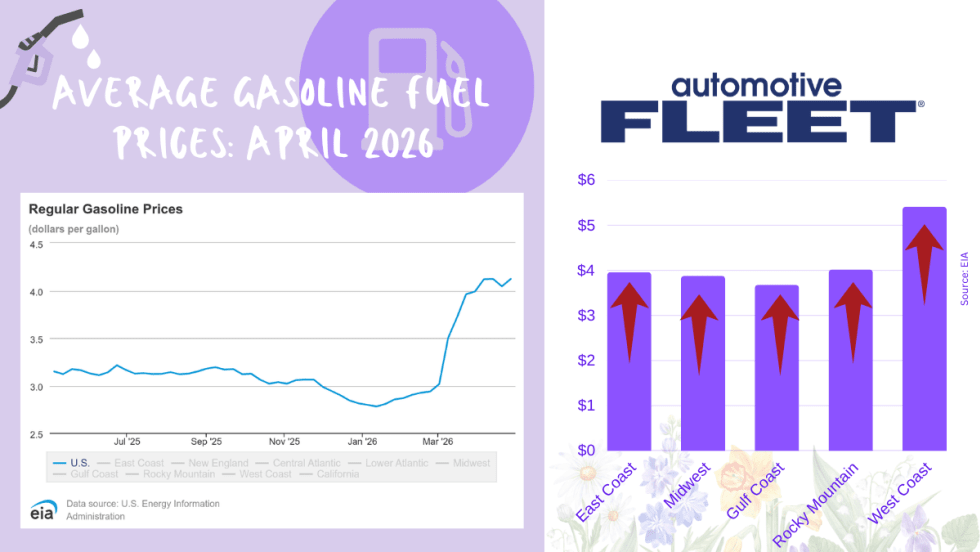
April Fuel Update: Prices Climb Above $4 as Spring Surge Accelerates
National average jumps to $4.04 per gallon, up sharply from last year, with West Coast prices topping $5 and further increases expected amid rising oil tensions.
Read More →
Tips from Fleet Managers on Saving Fuel Costs
Fleet leaders share practical strategies to reduce fuel spend through smarter policy, routing, and driver guidance.
Read More →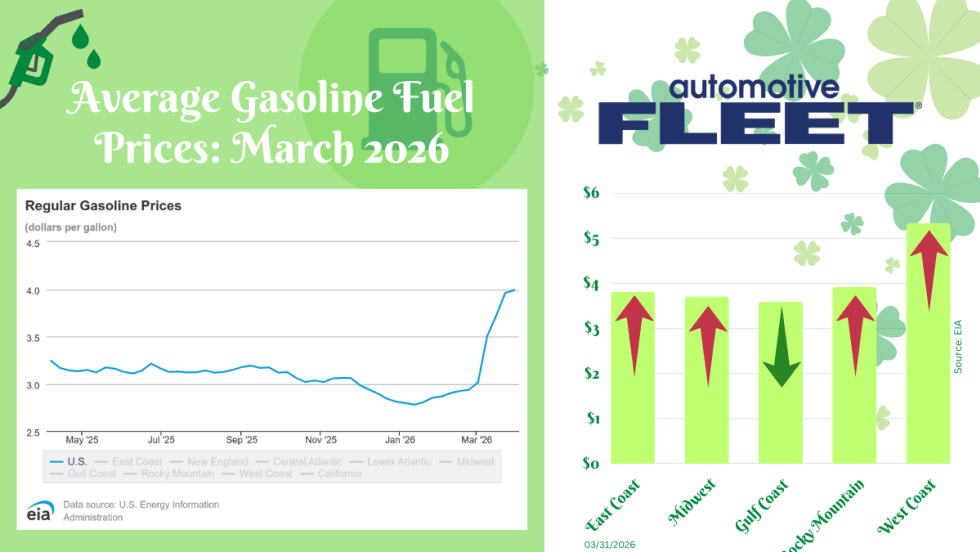
March Fuel Update: Prices Settle With a $4 Average
Fuel prices significantly slowed this week, but a $4 national average is still expected.
Read More →
Bob Adamsky on Fuel Volatility: “Don’t Panic — Have a Plan”
With oil prices rising again, AWP Safety’s fleet manager shares how to respond to rising fuel costs and how the right strategy can turn fuel spikes into cost-saving opportunities.
Read More →
Oil Market Turbulence Is Complicating Fleet Cost Planning
Rapid swings in crude oil prices driven by the conflict in the Middle East could create longer-term cost pressures for fleets, affecting fuel prices, supply chains, and vehicle strategy, says NTEA’s Andrew Wrobel.
Read More →
Report: How AI Is Reshaping Fleet and Field Service Operations
AI is rapidly transforming fleet and field service operations, from predictive maintenance and intelligent scheduling to customer self-service and real-time diagnostics. But while organizations are seeing measurable gains in uptime, productivity, and efficiency, many are still navigating workforce adoption, cybersecurity concerns, and data readiness challenges. Explore the latest trends, investment priorities, and emerging AI use cases shaping the future of fleet operations.
Read More →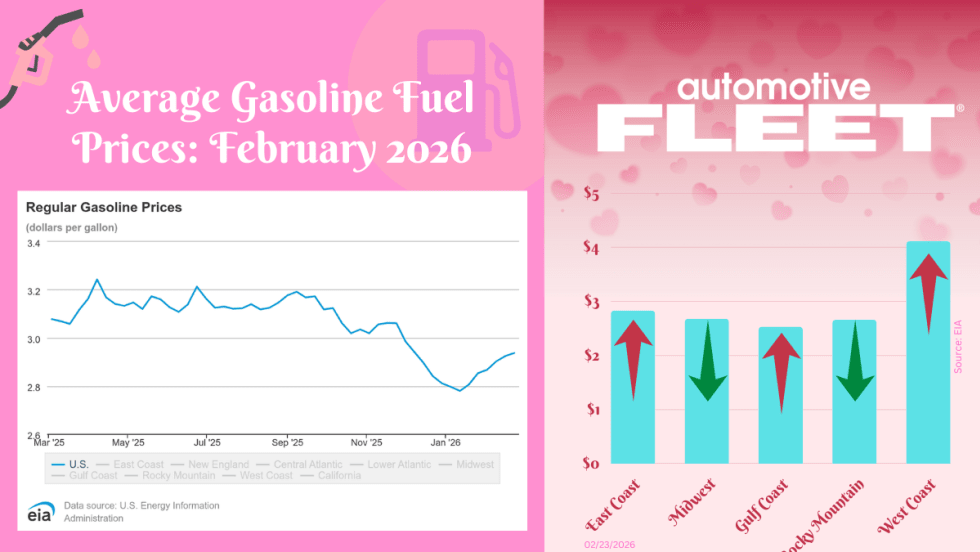
February Fuel Update: Prices Inch Higher for Third Week in a Row
The final February fuel update reveals prices continuing to inch higher for the third week in a row.
Read More →
The 2026 Fuel Economy Guide: Updated Cost and Efficiency Benchmarks for Fleets
Fleet managers can use the DOE’s 2026 Fuel Economy Guide to benchmark MPG across powertrain types using side-by-side vehicle ratings and compare new model-year options.
Read More →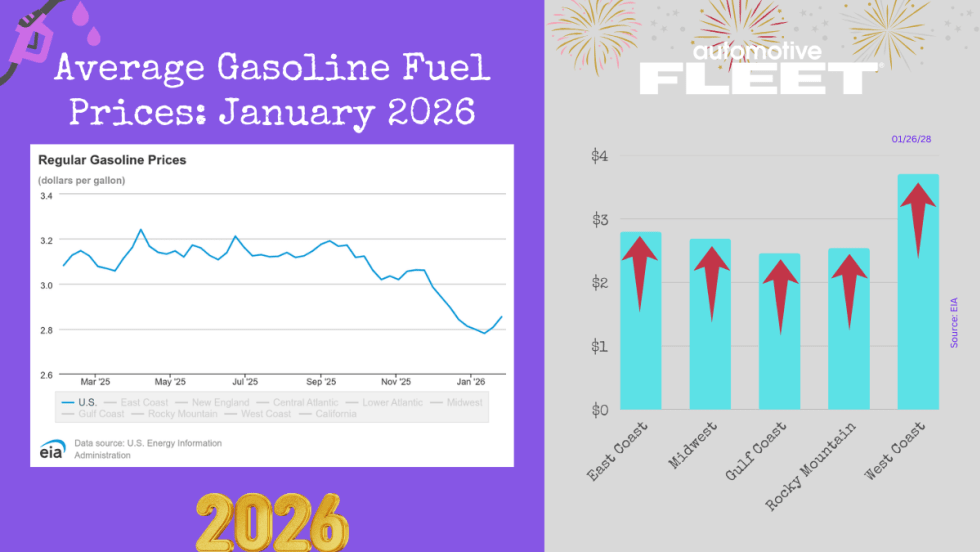
January Fuel Update: Prices Hit Highest Level Since Summer
The national average for fuel prices has officially risen to its highest point since the summer.
Read More →