




Equivalence of U.S. and European Auto Regulations to be Demonstrated
The Alliance of Automobile Manufacturers has told U.S. and European Union negotiating teams that the industry will sponsor a study to demonstrate the equivalence of American and European auto regulations.
The Alliance of Automobile Manufacturers has told U.S. and European Union negotiating teams that the industry will sponsor a study to demonstrate the equivalence of American and European auto regulations. The Alliance, along with the European Automobile Manufacturers’ Association (ACEA) and the American Automotive Policy Council (AAPC), have been actively engaged with U.S. and E.U. governments to seek a vital regulatory harmonization component to a Transatlantic Trade and Investment Partnership (TTIP) agreement.
“The U.S. and Europe have the most advanced auto safety regulations in the world, and in many cases, the differences between the standards are very modest,” said Rob Strassburger, vice president for safety and harmonization at the Auto Alliance. “Mutual recognition of certain standards by the U.S. and E.U. governments will result in significant economic benefits while maintaining safety and environmental performance.”
Regulatory differences between the U.S. and E.U. can act as non-tariff barriers to trade, effectively putting a “trade tax” of 25 percent or more on products sold across the Atlantic, according to a recent European impact assessment, according to the Auto Alliance.
The study will be conducted by the University of Michigan Transportation Research Institute (UMTRI), located in Ann Arbor, Mich., in partnership with SAFER, a transportation research center at Chalmers University, located in Gothenburg, Sweden. Researchers will examine the degree to which vehicles produced to U.S. safety standards can be expected to provide essentially equivalent real-world safety benefits when driven on European roadways as provided by vehicles produced to E.U. standards (and vice-versa for E.U.-certified vehicles when driven on U.S. roadways).
Harmonization is an economic vitality issue, according to the Auto Alliance. Compliance with diverse national environmental and vehicle safety standards imposes engineering, design, and manufacturing constraints that can raise costs to consumers.
Manufacturing is the most important sector for a strong economy, according to an Alliance opinion poll where 92 percent of those surveyed said manufacturing is “very” or “somewhat” important to a strong, modern economy, with only 4 percent saying it was not important.
More Global Fleet

GeoFencing Adds to Your Truck Security Arsenal
Geofencing is a familiar fleet tool today, but its early adoption marked a major shift in vehicle tracking, route monitoring, and the debate over employee privacy.
Read More →
Holman Takes Full Ownership of ARIZA in Mexico
Holman is bringing its Mexican fleet management operation fully under its own brand after more than 30 years as a joint venture. The change gives multinational fleet customers a single Holman operation across the U.S., Canada, and Mexico.
Read More →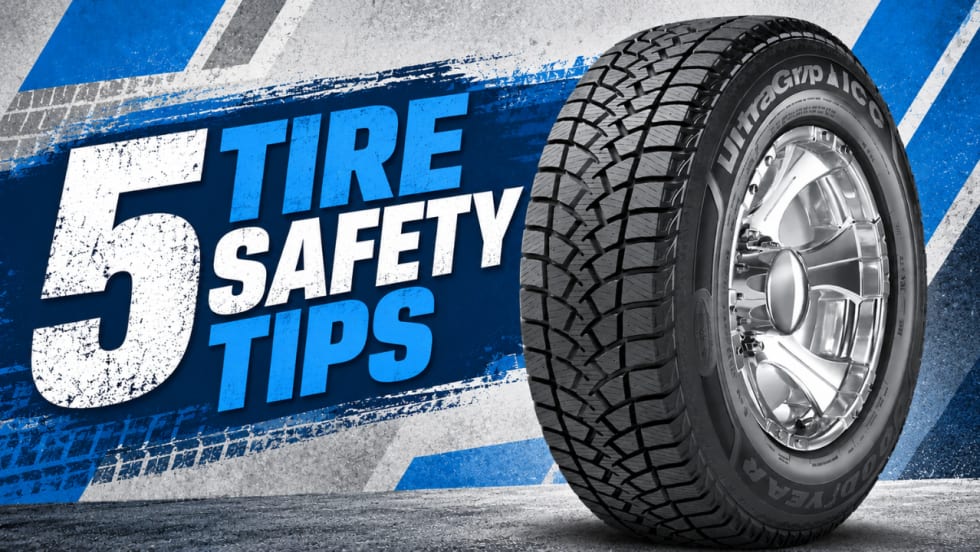
5 Tire Maintenance Tips to Help Prevent Work Truck Downtime
Regular tire checks can do more than extend tread life. These five maintenance practices can help work truck fleets catch problems early, reduce costs, and prevent downtime.
Read More →

Proven Ways to Reduce Work Truck Downtime
The age-old problem of downtime will always be a reality, but with new strategies at hand, fleets have more ways to keep trucks on the road longer.
Read More →


Cameras, Safety and Insurance: From Reactive Claims to Real-Time Prevention (Part 2 of 2)
Part Two: Commercial auto remains one of the most challenging and costly lines of coverage for fleet operators and insurers alike. Continue learning more about how to effectively address these issues from Onur Aksan, Enterprise Business Development Executive, Geotab
Read More →
Cameras, Safety and Insurance: From Reactive Claims to Real-time Prevention
Commercial auto remains one of the most challenging and costly lines of coverage for fleet operators and insurers alike. Learn more about how to effectively address these issues from Onur Aksan, Enterprise Business Development Executive, Geotab.
Read More →
Fleet Costs Are Rising: Here’s How Leaders Are Responding
Fleet leaders are under pressure to reduce costs, adapt to economic uncertainty, and make smarter decisions. See how peers across North America are responding with real data, proven strategies, and forward-looking insights. Download the 2026 Market Pulse Report to benchmark your strategy and uncover where you can gain an edge.
Read More →
Enterprise Fleet Management Surpasses 900,000 Vehicles in U.S. & Canada
Enterprise Mobility connects with mobility solutions around the globe
Read More →