




eNow Powers Zero-Emissions Refrigerated Truck
eNow, producers of solar products for the transportation industry, demonstrated the effectiveness of its solar energy-producing systems for transportation by powering the first zero-emissions commercial-use Transport Refrigeration Unit (TRU) on a truck making deliveries in an urban environment.
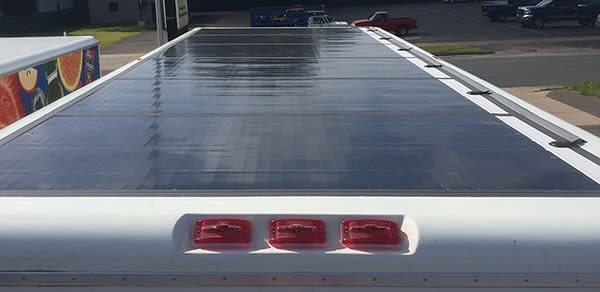
Photo of solar panels courtesy of eNow.
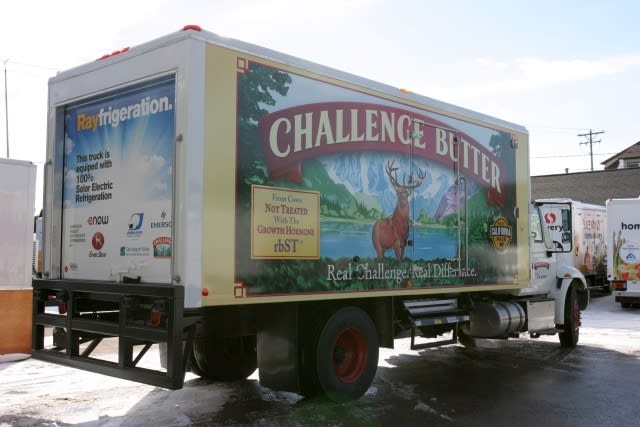
Photo of solar-powered refrigerated truck courtesy of eNow.
eNow, producers of solar products for the transportation industry, demonstrated the effectiveness of its solar energy-producing systems for transportation by powering the first zero-emissions commercial-use Transport Refrigeration Unit (TRU) on a truck making deliveries in an urban environment.
The new zero-emissions TRU branded “Rayfrigeration,” has been undergoing real-world testing since April 2017 in California’s San Joaquin Valley. In five months of testing, emission reductions of 98% nitrous oxide, 86% carbon dioxide, and 97% particulate matter were achieved. TRUs are refrigeration units mounted on trucks and are traditionally powered by high-polluting, small diesel engines to provide the needed cooling to transport chilled products. The Rayfrigeration TRU is the first-to-market battery powered unit for commercial use and was tested on a Challenge Dairy Class 7 truck delivering fresh dairy products throughout Fresno, Calif.
Designed to support medium-temperature refrigeration applications, the Rayfrigeration system employs two forms of energy storage: eutectic medium (cold plates) and a high-capacity auxiliary battery system. The cold plates and auxiliary batteries are initially charged from utility power delivered to the vehicle when plugged in overnight. When the truck is operated on a delivery route, power is provided by eNow’s solar photovoltaic (PV) panels mounted on the truck’s roof. eNow joined Johnson Refrigerated Truck Bodies, Emerson Climate Technologies, and Challenge Dairy Products, Inc. in the summer-long trial that took place in California’s San Joaquin Valley.
The eNow team calculated that average emissions of CO2 over a four-day week with an average delivery day of 7.7 hours were reduced from 2,525 pounds per week to 159 pounds. Nitrous Oxide emissions were reduced from 7,162 grams to 1. This is after adjusting for the emissions from the power plant supplying grid electricity that was used overnight. (Emissions from solar are 0.)
In addition to eliminating harmful emissions, the Rayfrigeration unit is projected to reduce operations and maintenance costs by up to 90% compared to a diesel-powered TRU. The cost savings are achieved through the elimination of fuel costs, eliminating maintenance costs for the diesel APU engine, and an increase in battery life (reducing replacement costs) thanks to consistent charge maintenance by eNow solar.
The 1,800 Watt eNow solar system provided more than enough energy to maintain optimum temperature throughout a typical day of opening and closing the doors while the refrigerated truck delivered fresh dairy products in California’s summer heat. The Rayfrigeration system features eNow solar in combination with a Johnson refrigeration unit and Emerson’s highly efficient compressor technology.
“The Rayfrigeration product is an important step forward in reducing emissions while maintaining the highest levels of efficiency and customer satisfaction for companies delivering perishable goods,” says Jeff Flath, President & CEO of eNow. “eNow’s solar technology is powerful, reliable, and efficient, and more than up to the task of providing emissions-free energy for critical tasks such refrigeration of fresh foods, even the most challenging conditions. We are proud to be a part of this important project.”
The Rayfrigeration solar-charging technology is available through eNow, which currently has more than 4,000 solar systems operating nationwide on Class 8 trucks, buses, emergency and utility vehicles, supporting applications as diverse as heating and cooling, liftgates, wheelchair lifts, safety lights, telematics, and other transportation applications. Upon completion of the testing period, Challenge Dairy plans to transition its entire fleet of distribution trucks to solar-powered TRUs.
An event held October 11 – officially declared “Rayfrigeration Day” in the City of Fresno – eNow joined Johnson Refrigerated Truck Bodies, Emerson Climate Technologies, Challenge Dairy, and government agencies to celebrate the ongoing successful demonstration of California’s first zero-emissions TRU. The San Joaquin Valley Air Pollution Control District and EPA District 9 funded part of the Rayfrigeration initiative through the Technology Advancement Program that encourages innovation through the development of new emission reduction technologies.
Check out a video from ABC on the truck launch below:
Originally posted on Work Truck Online
More Green Fleet

Merchants Fleet Reports 290M EV Miles as Fleets Navigate Changing Electrification Market
From millions in operating savings to hundreds of millions of EV miles, Merchants Fleet’s latest report reveals what’s working and what’s changing in fleet electrification.
Read More →
The EV Breakdown Nobody's Talking About: Why Most Electric Vehicle Roadside Calls Aren't Mechanical Failures
Here's why EV breakdowns are widely misunderstood.
Read More →
ChargePoint Now Available in Energy Pass
ChargePoint and additional planned charging network integrations were added to GM's Energy Pass.
Read More →
First Look: Slate Auto's Electric Fleet Pickup
Could an affordable, modular EV pickup make electrification more practical for fleets?
Read More →
Slate Debuts Colorful, Unique EV Models
A recent media and client event, studded with electric vehicles dressed up on platforms, planted a new position for the manufacturer in the wider EV market. Fleets will find cost-saving advantages.
Read More →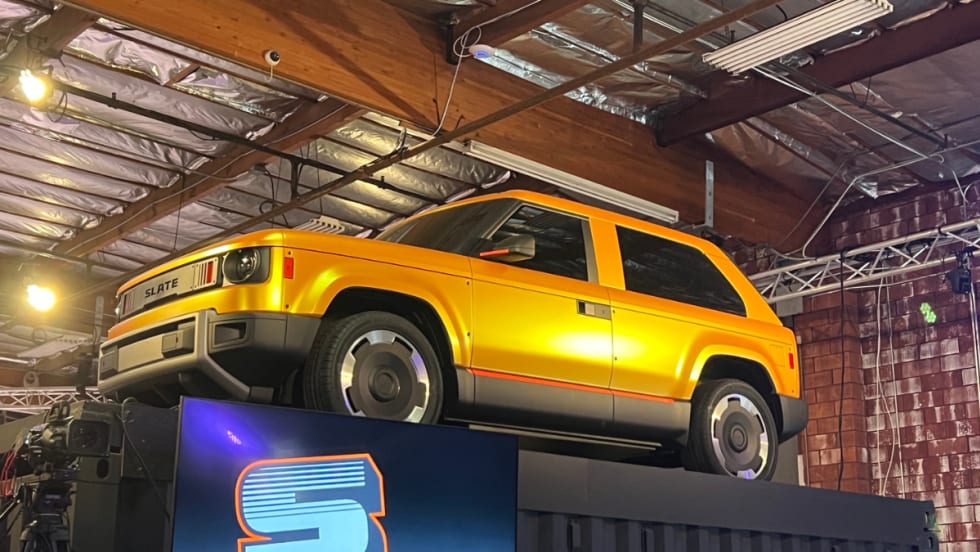
Slate Electric SUV, Pickup Switchable Model Aims For Light-Duty Fleets
Everything about this EV is counterintuitive and understated, making it stand out from the crowd.
Read More →
Inspiration Mobility Acquires Key Electrada Assets
Inspiration Mobility Group has acquired select assets of Electrada, adding the fleet electrification provider's team, technology, and charging infrastructure development capabilities to its energy management business.
Read More →
Turning Connected Vehicle Data Into Decisions That Matter
Fleet leaders have more data than ever, but turning that data into clear, actionable decisions remains a challenge. This white paper shows how leading organizations are using connected vehicle data to improve safety, reduce costs, and optimize fleet performance. Learn how to turn insight into action across your fleet.
Read More →
Are You Tracking Your Fleet's True Total Cost of Ownership?
Bobit Business Media surveyed 190 fleet professionals and found that while most fleets are tracking costs, fragmented systems and data gaps are keeping true TCO visibility out of reach. With rising pressure to control spend in an increasingly volatile environment, the gap between what fleets think they know and what the data actually shows is wider than you might expect. See how your peers are managing costs today and where the industry still has room to improve.
Read More →