




Energy Dept. Helps Fund Biorefinery Projects in Wisconsin, Louisiana
WASHINGTON, D.C. --- The U.S. Department of Energy selected two small-scale cellulosic biorefinery projects in Park Falls, Wis., and Jennings, La., for federal funding of up to $40 million over five years.
WASHINGTON, D.C. --- The U.S. Department of Energy selected two small-scale cellulosic biorefinery projects in Park Falls, Wis., and Jennings, La., for federal funding of up to $40 million over five years.
The department said the projects will further President Bush's goal of making cellulosic ethanol cost-competitive with corn-based ethanol by 2012, and help reduce America's gasoline use by expanding the availability of alternative and renewable transportation fuels.
"To meet our growing energy demand we must continue to research and advance clean energy solutions to improve our energy security, reduce greenhouse gas emissions -- and clean, sustainable cellulosic biofuels do just that,” DOE Assistant Secretary Andy Karsner said. "These biorefineries will create fuel from non-food based sources to power our vehicles and reduce our dependence on foreign oil."
On average, commercial-scale biorefineries process roughly 700 tons or more of non-food feedstock per day, with an output of approximately 15-30 million gallons a year (MMGY) of biofuels. These smaller-scale facilities will input approximately 70 tons of feedstock per day -– with outputs ranging from 1.5 to 6 MMGY. The selected small-scale projects will produce liquid transportation fuels such as cellulosic ethanol from wood, energy crops and agricultural waste products.
These two biorefinery projects are the final round of selections for the department's competitive small-scale biorefinery solicitation. Earlier this year, DOE selected seven other projects, comparable in size and scope, to receive up to a total of $200 million. With the addition of the two new projects, the selected biorefinery projects will receive up to a total of $240 million in DOE funding, subject to appropriations, over the next five fiscal years. Once federal funding is combined with industry cost share, more than $735 million will be invested in these nine projects, over the next four to five years.
This project is part of more than $1 billion in investment that DOE has announced for multi-year biofuels research and development projects.
Cellulosic ethanol is an alternative fuel made from a wide variety of plant materials or non-food based feedstocks, including agricultural wastes such as corn stover; forest wastes such as saw dust and forest thinnings; and energy crops, such as switchgrass.
In studies conducted by scientists at DOE's Argonne National Laboratory, compared with conventional gasoline, ethanol produced from cellulosic materials requires as much as 90 percent less fossil energy to produce and has the potential to reduce greenhouse gas emissions by more than 86 percent over the lifecycle.
Negotiations between the following companies and DOE will begin immediately to determine final project plans and funding levels:
** Flambeau River Biofuels (FRB) LLC of Park Falls, Wis.-- The proposed biorefinery will be installed in an existing pulp and paper mill in Park Falls, Wis., and will produce liquid fuels from abundant and renewable cellulosic (wood) biomass. The biorefinery will not be dependent on any food-based feedstock materials, but rather on by-product or residuals from forest and agricultural sources. When completed, the facility will produce at least 1 trillion BTUs of renewable energy for the host mill and 6 million gallons of transportation (sulfur-free diesel) fuels per year.
FRB participants/investors include: ANL Consultants, Auburn University, Brigham Young University, Citigroup Global Markets, CleanTech Partners, Emerging Fuels Technology, Flambeau River Papers, Johnson Timber, National Renewable Energy Lab, Michigan Technological University, NC State University, Oak Ridge National Laboratory, ThermoChem Recovery International, University of Wisconsin, and the USDA Forest Products Laboratory.
** Verenium Biofuels Corp. of Jennings, La. -- Construction of Verenium's 1.5 million gallon-per-year demonstration-scale cellulosic ethanol facility is underway and is scheduled to be complete in late 2008. The project is moving rapidly to commercialize its proprietary technology for the production of ethanol from a wide array of biomass feedstocks, including sugarcane bagasse, agricultural byproducts, waste wood products and other non-food based energy crops. The Jennings, Louisiana demonstration plant is operated by Verenium Corp., which was formed in 2007 through a merger of Celunol Corp. and Diversa Corp.
More Fuel
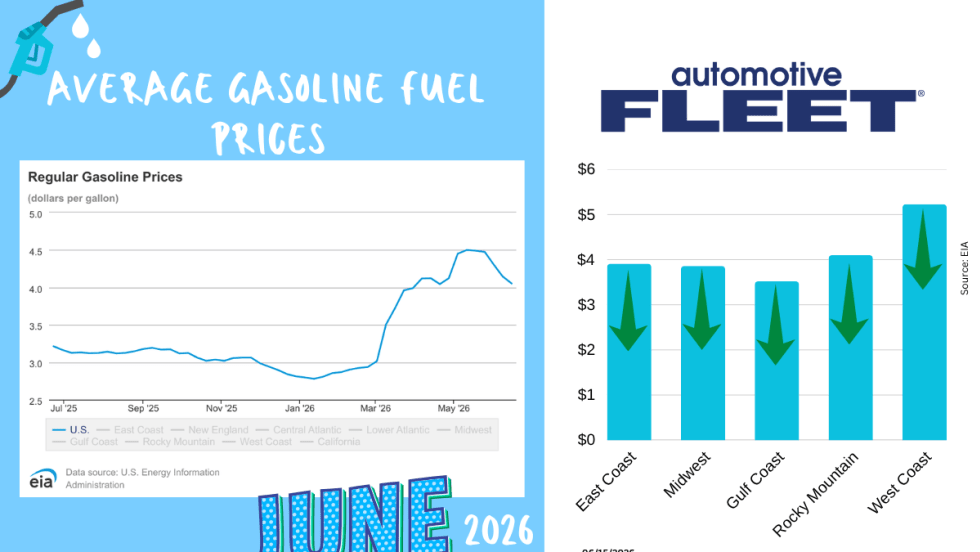
June Fuel Update: Prices Fall Below $4
Drivers are finally getting some relief at the pump. The national average gas price has dropped below $4 a gallon for the first time in months, with prices falling in 47 states as oil markets react to developments in U.S.-Iran negotiations.
Read More →
Study: How 2026's Gas Price Hikes Affect Different Vehicle Types
New data from iSeeCars reveals how rising fuel costs have affected different vehicle segments as gasoline prices climbed nearly 46% over the past four months.
Read More →
Are You Tracking Your Fleet's True Total Cost of Ownership?
Bobit Business Media surveyed 190 fleet professionals and found that while most fleets are tracking costs, fragmented systems and data gaps are keeping true TCO visibility out of reach. With rising pressure to control spend in an increasingly volatile environment, the gap between what fleets think they know and what the data actually shows is wider than you might expect. See how your peers are managing costs today and where the industry still has room to improve.
Read More →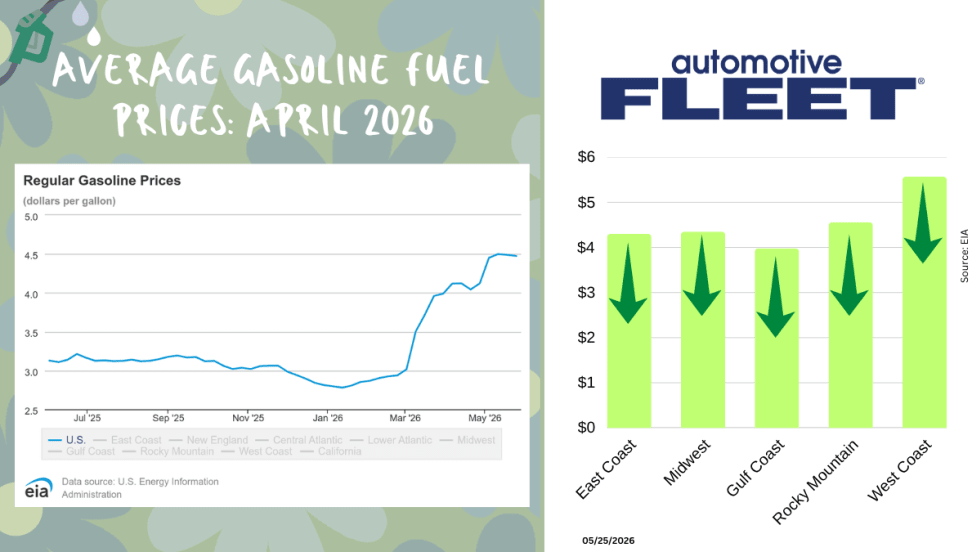
May Fuel Update: All Regions Experience Declines
Gas prices are finally easing in much of the country, but experts warn global tensions could quickly reverse the trend as the national average remains well above last month’s levels.
Read More →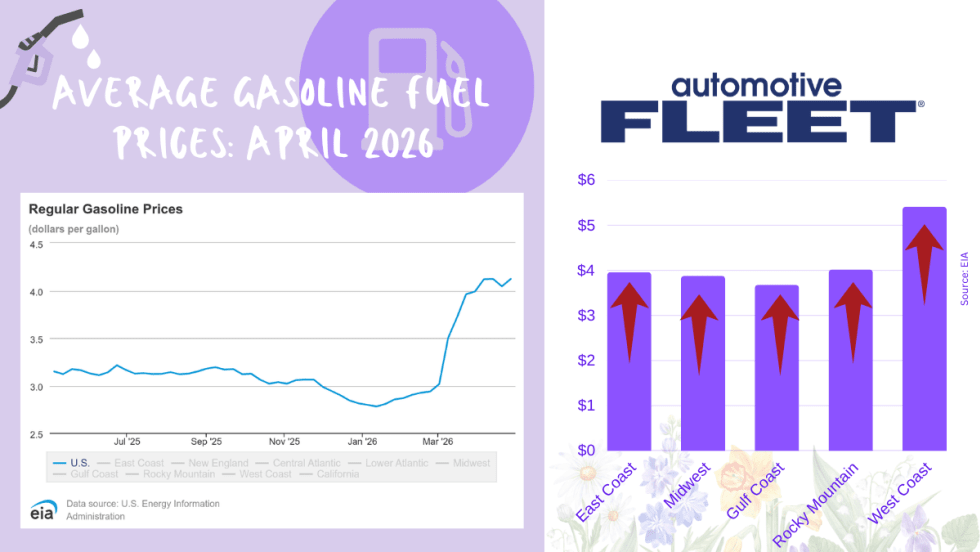
April Fuel Update: Prices Climb Above $4 as Spring Surge Accelerates
National average jumps to $4.04 per gallon, up sharply from last year, with West Coast prices topping $5 and further increases expected amid rising oil tensions.
Read More →
Tips from Fleet Managers on Saving Fuel Costs
Fleet leaders share practical strategies to reduce fuel spend through smarter policy, routing, and driver guidance.
Read More →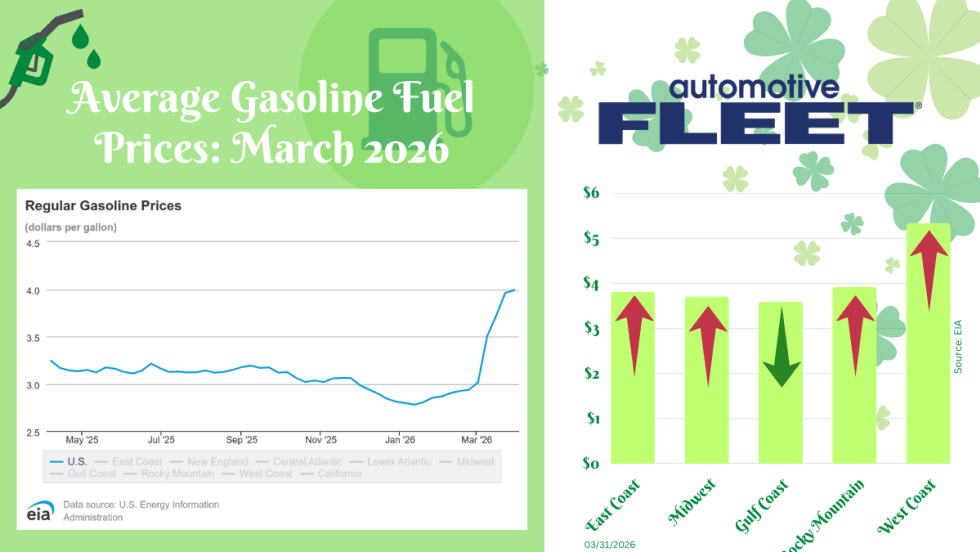
March Fuel Update: Prices Settle With a $4 Average
Fuel prices significantly slowed this week, but a $4 national average is still expected.
Read More →
Bob Adamsky on Fuel Volatility: “Don’t Panic — Have a Plan”
With oil prices rising again, AWP Safety’s fleet manager shares how to respond to rising fuel costs and how the right strategy can turn fuel spikes into cost-saving opportunities.
Read More →
Oil Market Turbulence Is Complicating Fleet Cost Planning
Rapid swings in crude oil prices driven by the conflict in the Middle East could create longer-term cost pressures for fleets, affecting fuel prices, supply chains, and vehicle strategy, says NTEA’s Andrew Wrobel.
Read More →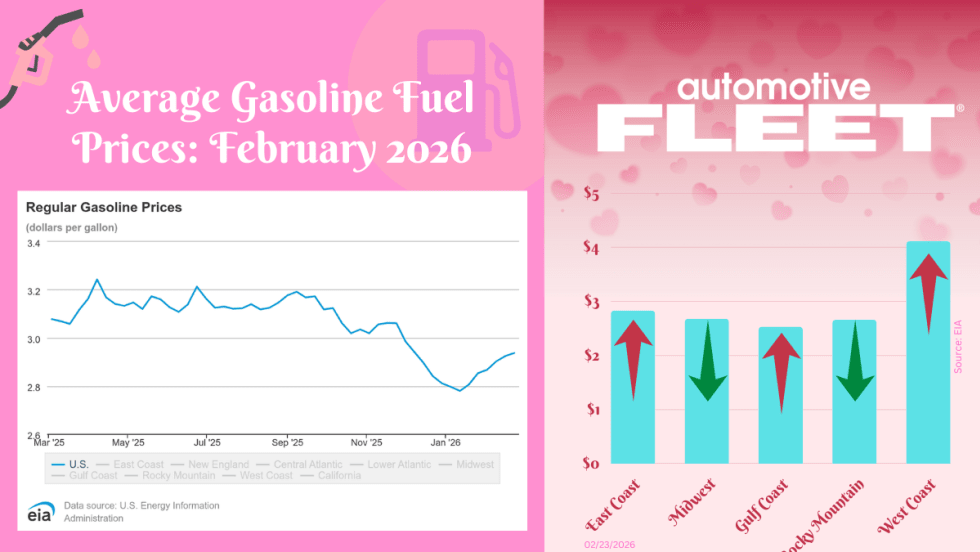
February Fuel Update: Prices Inch Higher for Third Week in a Row
The final February fuel update reveals prices continuing to inch higher for the third week in a row.
Read More →