





Related: Sustainability Inertia: The Fear of Getting Ahead of the Curve
Electric Vehicle Interest Growing Among Fleets
As more and more manufacturers release new electric vehicles, EV interest has been renewed among fleets.
January 13, 2020
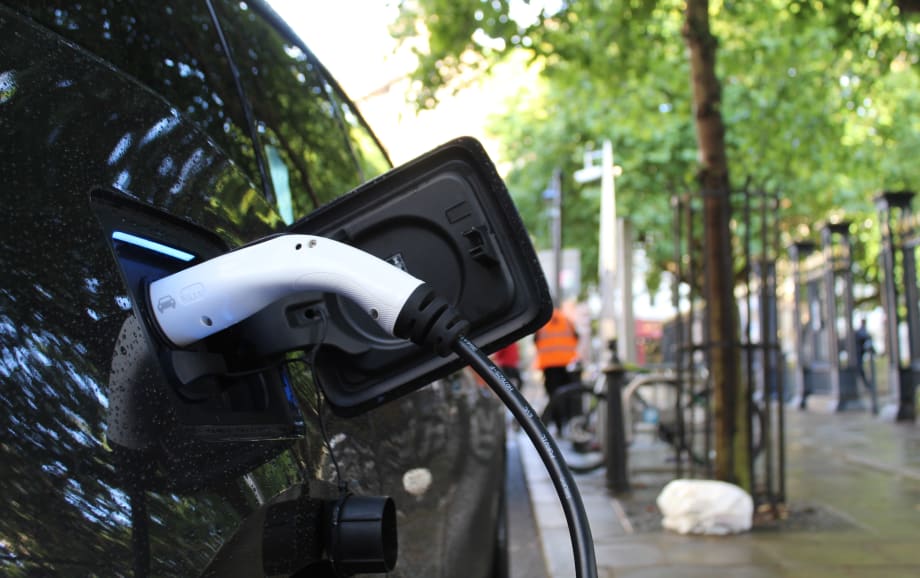
Photo by Andrew Roberts on Unsplash.
4 min to read
In recent years, interest in alternative-fueled vehicles, in particular EVs, has gained a second wind, with renewed examination from a wide variety of fleets.
There are various reasons for this, but what is catching the attention of many has been the onslaught of future product announcements from OEMs on forthcoming hybrids and battery-electric vehicles (BEV), with some OEMs stating that every model in their product lineup will have either a hybrid or BEV counterpart.

Dave Meisel, Quanta Services
“There is so much publicity about electric vehicles and greenhouse gas emissions that it feels like the industry may see a greater migration to these types of alternate-fuel technologies in the near future,” said Dave Meisel, executive vice president – operations for Quanta Services. “That will be a huge change for the way the industry does business ranging from the skills of our technicians to the limitations of charging or fueling infrastructure to incremental regulatory or compliance requirements to name just a few. No one knows exactly where it is going to go or when, but rest assured the impact on the industry will be huge.”
There is also a generational demographic change occurring in the commercial fleet industry, which is increasing overall receptivity by these next-gen users to operate alternative-fuel vehicles.

Tom Callahan, Donlen
“CO2 emissions reduction is a global trend and next-gen employees have bought in — it isn’t going away,” said Tom Callahan, president of Donlen.
In addition, many U.S. fleets are being asked by their European-headquartered parent company to conform to corporate-wide sustainability targets.
Also, a growing number of multinational companies have committed to become carbon neutral or go all electric in the next five to 10 years. One example is the EV100 initiative, which is a global business initiative designed to fast-track the uptake of electric vehicles and infrastructure.
Globally, there is an ongoing proliferation of corporate initiatives to reduce greenhouse gas emissions, with European fleets in the vanguard. European environmental regulations are migrating from CO2 reductions to reductions in aggregated emissions, which include not only CO2, but also NOx and particulates. Despite the high cost, many companies, in all global regions, remain fully committed to achieving self-imposed sustainability targets, especially multinational corporations.
In the U.S., there are six key factors that are driving (or impeding) fleet sustainability programs:
Corporate social responsibility.
Stakeholder pressure.
Difficulty in developing a long-term fleet acquisition strategy.
Limited charging infrastructure that keeps range anxiety a user concern.
Limited green alternatives with medium- and heavy-duty trucks.
Expansion of sustainability initiatives beyond the vehicle that incorporates fleet maintenance facilities.
There is a less tangible, but very real impediment to the transition to alt-fuels, which is user pushback.
“From my personal perspective I believe a key ingredient to implementing a successful fleet sustainability program is change management,” said a fleet manager who wished to be anonymous.
This fleet manager defined change management as the process, tools, and techniques to manage the driver and management side of change to achieve the required business outcome. He contends that change management of drivers is essential for a corporation to successfully transition to the adoption of alternative-fuel powertrains.
To minimize user pushback, some fleet managers opt for a strategy of incremental change. For instance, many vehicle electrification strategies tend to combine hybrids and dedicated battery-electric vehicles in the same acquisition bucket, with the focus on hybrids. The fastest growing portion of the fleet vehicle electrification segment are hybrid acquisitions.

[EMPTY CREDIT]
“We are looking for greener vehicles. All of our business-use sedans that go into service are now hybrids,” said Jim Bigelow, senior director, enterprise fleet for Cox Enterprises. “We have been acquiring 90-plus hybrids per year for the past four years. We are focusing on the safest vehicles in the fleet trim level. The No. 1 challenge continues to be obtaining green vehicles from the OEMs. At the moment, the trend is that the most OEMs are ‘skipping’ hybrid and moving along to electrification.”
In addition, fleets that operate in-house maintenance facilities, such as Cox Enterprises, are incorporating these operations into their overall corporate sustainability programs.
“We are greening all of our shops,” said Bigelow. “This includes all aspects of our fleet from cradle to grave. For example, we are working with OEMs and upfitters to manufacture/build a greener vehicle/upfit, which includes all components of the assembly.”
More Green Fleet
Sponsored•October 1, 2026
New Propane Autogas Program Offers Fleet Compensation
Qualified commercial fleets can receive $7,500 per eligible propane autogas vehicle and up to $10,000 for new refueling site prep. Learn how the program works and see whether your fleet qualifies.
Read More →
EV Charging Use Is Outpacing Infrastructure Growth
ChargePoint’s 2026 Charging Forward Report points to rising charger use, higher-powered charging, commercial vehicle electrification, and energy-management technology. Here’s what fleets should know.
Read More →
Merchants Fleet Reports 290M EV Miles as Fleets Navigate Changing Electrification Market
From millions in operating savings to hundreds of millions of EV miles, Merchants Fleet’s latest report reveals what’s working and what’s changing in fleet electrification.
Read More →
The EV Breakdown Nobody's Talking About: Why Most Electric Vehicle Roadside Calls Aren't Mechanical Failures
Here's why EV breakdowns are widely misunderstood.
Read More →
ChargePoint Now Available in Energy Pass
ChargePoint and additional planned charging network integrations were added to GM's Energy Pass.
Read More →

First Look: Slate Auto's Electric Fleet Pickup
Could an affordable, modular EV pickup make electrification more practical for fleets?
Read More →
Slate Debuts Colorful, Unique EV Models
A recent media and client event, studded with electric vehicles dressed up on platforms, planted a new position for the manufacturer in the wider EV market. Fleets will find cost-saving advantages.
Read More →
Slate Electric SUV, Pickup Switchable Model Aims For Light-Duty Fleets
Everything about this EV is counterintuitive and understated, making it stand out from the crowd.
Read More →
Inspiration Mobility Acquires Key Electrada Assets
Inspiration Mobility Group has acquired select assets of Electrada, adding the fleet electrification provider's team, technology, and charging infrastructure development capabilities to its energy management business.
Read More →