




Eco-Driving Study Aims to Improve Fuel Economy by 30 percent
RIVERSIDE, CA -- Researchers at the University of California, Riverside along with their research partners have received a $1.2 million grant from the Department of Energy to study and evaluate technologies that provide feedback to drivers so they can cut harmful emissions and reduce fuel use by up to 30 percent.
RIVERSIDE, CA -- Researchers at the University of California, Riverside along with their research partners have received a $1.2 million grant from the Department of Energy to study and evaluate technologies that provide feedback to drivers so they can cut harmful emissions and reduce fuel use by up to 30 percent.
The three-year project aims to develop and demonstrate a comprehensive driver feedback technology that will improve fuel efficiency of passenger cars and fleet vehicles of businesses and government. This technology already exists on a small scale, but this study will make large advances in a fully integrated feedback system that includes better trip planning and routing, improved efficiency while driving, and comprehensive reporting on a periodic basis, researchers said.
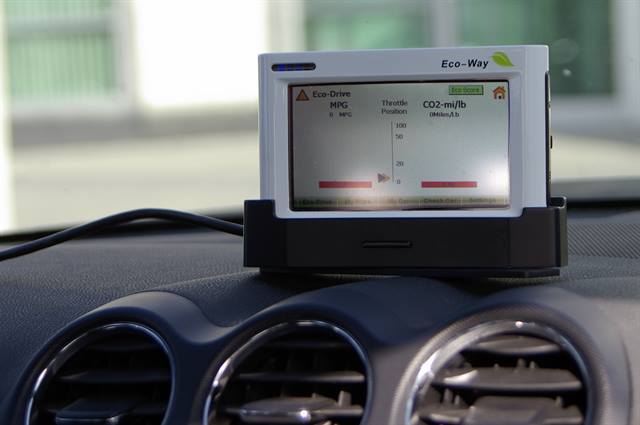
Eco-driving device from Earthrise Technology
This is one of the first major research studies in the United States to address eco-driving that’s providing drivers advice and feedback to reduce fuel consumption and tailpipe emissions. Several small studies, including one at UC Riverside, have found fuel economy improvements in the range of 5 to 15 percent. Larger-scale eco-driving programs in Asia and Europe have shown fuel improvements up to 20 percent.
“This grant allows us to go beyond small, anecdotal studies to show, on a large scale, the significant positive economic and environmental impacts of eco-driving principles and the value of feedback systems,” said Matthew Barth, the principal investigator on the project and the director of UC Riverside’s Center for Environmental Research and Technology at the Bourns College of Engineering.
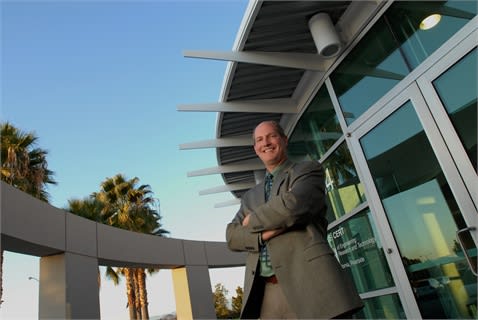
Matthew Barth will head research project
The project is one of 40 being funded through a more than $175 million Department of Energy program aimed at improving the fuel efficiency of the next generation of vehicles. The projects will help ensure that technologies are available to help automakers achieve new fuel efficiency standards.
Last month, President Obama announced automakers will be required to increase fuel economy for cars and light-duty trucks to 54.5 miles per gallon by 2025. Last week, he announced the first-of-a-kind fuel-efficiency standards for commercial trucks, buses and other heavy-duty vehicles. Fuel consumption will have to be cut by 10 to 20 percent by 2018.
There are many things a driver can do to save fuel and reduce emissions, including better trip planning, keeping vehicles well-maintained, avoiding rapid starts and stops, avoiding unnecessary idling and taking the most direct route to a destination.
“We want to take those practices to the next level with the aid of the driver feedback technology,” said Kanok Boriboonsomsin, the co-principal investigator on the project and an assistant research engineer at the Center for Environmental Research and Technology.
The next-generation environmentally friendly driving feedback system, which will be developed as part of this grant, will build on existing technology and current research by developing and integrating a number of innovative features, including:
• Calculation of schedules and routes for day-to-day passenger travel or fleet operation that accounts for appointment times, road networks, driver and vehicle costs, vehicle capacity and other constraints
• Calculation of the most fuel-efficient route for the trip that incorporates information of the vehicle characteristics, roadway attributes and traffic conditions
• Provision of audio driving feedback to the driver (for reduced driver distraction) to avoid conditions such as excessive idling, speeding and aggressive acceleration/braking
• Monitoring of driving behavior, vehicle performance and fuel consumption in real time
• A scoring system that shows which vehicles, drivers and routes are the most fuel efficient
• Customized reports to the driver with recommendations for improving fuel efficiency
• Continually updated algorithms for individual vehicles and drivers based on real-world fuel consumption data from the engine control unit of each vehicle.
By integrating driver feedback technology, researchers expect that overall fuel savings will range from 10 percent to 30 percent. The project will also enable drivers to improve and optimize driving habits and enable fleet managers to monitor performance and make adjustments to training and policies.
The researchers will also develop a database of driving conditions in the fleet’s operating area, which will continually be improved by algorithm modifications.
The project is a public private collaboration.
Involved on the public side are UC Riverside; UC Berkeley, which will provide behavioral analysis of drivers; and Riverside Transit Agency and California Department of Transportation, both of which will provide fleet vehicles for testing.
Involved on the private side are: ESRI, a Redlands-based developer of geographic information systems (GIS) technologies that will provide trip planning software; NAVTEQ, which will provide mapping and traffic data and technical support; Beat the Traffic, which will provide access to smartphone GPS data and develop methods to determine delays on roads; Earthrise Technology, which will provide telematics devices and software interface; and Automatiks, which will provide system configuration and installation of the in-vehicle device.
All the work on this project, except for the field operational tests, will be performed at the Center for Environmental Research and Technology. The field operational tests will be performed on a variety of in-use vehicles from commuters and commercial fleets operating throughout Riverside and San Bernardino counties.
More Green Fleet

EV Charging Use Is Outpacing Infrastructure Growth
ChargePoint’s 2026 Charging Forward Report points to rising charger use, higher-powered charging, commercial vehicle electrification, and energy-management technology. Here’s what fleets should know.
Read More →
Merchants Fleet Reports 290M EV Miles as Fleets Navigate Changing Electrification Market
From millions in operating savings to hundreds of millions of EV miles, Merchants Fleet’s latest report reveals what’s working and what’s changing in fleet electrification.
Read More →
The EV Breakdown Nobody's Talking About: Why Most Electric Vehicle Roadside Calls Aren't Mechanical Failures
Here's why EV breakdowns are widely misunderstood.
Read More →
ChargePoint Now Available in Energy Pass
ChargePoint and additional planned charging network integrations were added to GM's Energy Pass.
Read More →

First Look: Slate Auto's Electric Fleet Pickup
Could an affordable, modular EV pickup make electrification more practical for fleets?
Read More →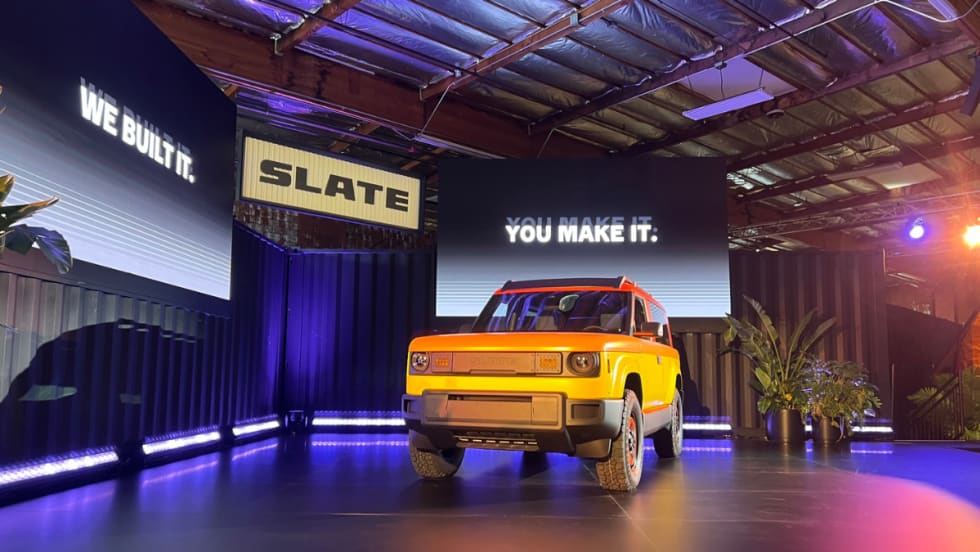
Slate Debuts Colorful, Unique EV Models
A recent media and client event, studded with electric vehicles dressed up on platforms, planted a new position for the manufacturer in the wider EV market. Fleets will find cost-saving advantages.
Read More →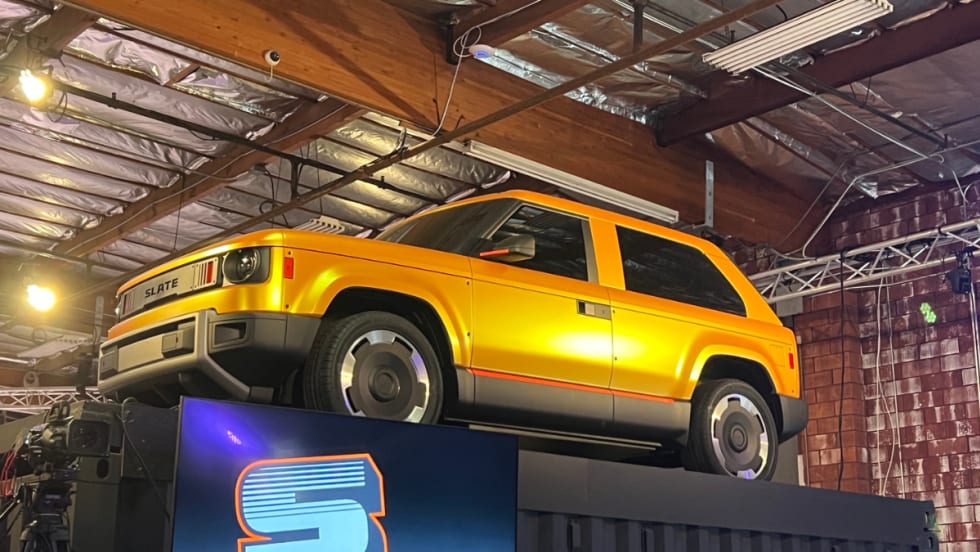
Slate Electric SUV, Pickup Switchable Model Aims For Light-Duty Fleets
Everything about this EV is counterintuitive and understated, making it stand out from the crowd.
Read More →
Inspiration Mobility Acquires Key Electrada Assets
Inspiration Mobility Group has acquired select assets of Electrada, adding the fleet electrification provider's team, technology, and charging infrastructure development capabilities to its energy management business.
Read More →
Turning Connected Vehicle Data Into Decisions That Matter
Fleet leaders have more data than ever, but turning that data into clear, actionable decisions remains a challenge. This white paper shows how leading organizations are using connected vehicle data to improve safety, reduce costs, and optimize fleet performance. Learn how to turn insight into action across your fleet.
Read More →