




Drugged Driving on the Rise, NHTSA Says
Despite a drop in drunk driving, new NHTSA research finds that growing use of marijuana and prescription drugs is raising new safety concerns.

Photo of OxyContin by 51fifty via Wikimedia Commons.
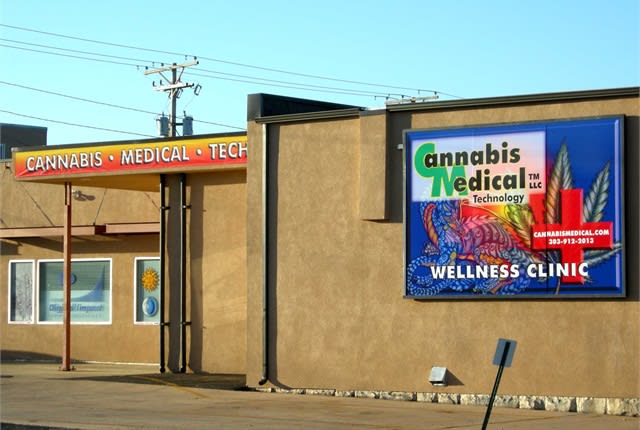
Photo of medical marijuana clinic in Denver by Plazak via Wikimedia Commons.
Though drunk driving is less prevalent today compared to past decades, new research released by the federal government suggests that growing use of marijuana and prescription drugs is raising new driver safety concerns.
The National Highway Traffic Safety Administration on Feb. 6 released a pair of studies focused on impaired driving in the U.S. One study, the latest version of NHTSA’s Roadside Survey of Alcohol and Drug Use by Drivers, found that the number of drivers with alcohol in their system has declined by nearly one-third since 2007 – and by more than three-quarters since the first Roadside Survey in 1973.
But that same survey indicated a spike in the number of drivers using marijuana or illegal drugs. In the 2014 survey, nearly one in four drivers tested positive for at least one drug that could affect safety.
“America made drunk driving a national issue and while there is no victory as long as a single American dies in an alcohol-related crash, a one-third reduction in alcohol use over just seven years shows how a focused effort and cooperation among the federal government, states and communities, law enforcement, safety advocates and industry can make an enormous difference,” said NHTSA Administrator Mark Rosekind. “At the same time, the latest Roadside Survey raises significant questions about drug use and highway safety."
The National Roadside Survey, conducted five times over the past 40 years, is a completely voluntary, anonymous survey that gathers data in dozens of locations across the country.
Multiple roadside signs alert drivers that a voluntary survey site is ahead, and researchers gather data from those who volunteer. Drivers are notified that the survey is completely voluntary and that collected information is entirely anonymous. NHTSA has worked with research experts, law enforcement agencies and privacy advocates to refine procedures and address any potential concerns.
The latest edition of the survey shows that the prevalence of alcohol use by drivers continues to drop. About 8 percent of drivers during weekend nighttime hours were found to have alcohol in their system, and just over 1 percent were found with 0.08 percent or higher breath alcohol content – the legal limit in every state. This is down by about 30 percent from the previous survey in 2007 and down 80 percent from the first survey in 1973.
On the other hand, use of illegal drugs or medicines that can affect road safety is climbing. The number of weekend nighttime drivers with evidence of drugs in their system climbed from 16.3 percent in 2007 to 20 percent in 2014. The number of drivers with marijuana in their system grew by nearly 50 percent, according to the survey.

Photo of OxyContin by 51fifty via Wikimedia Commons.
A second survey, the largest of its kind ever conducted, assessed whether driver marijuana use is associated with greater crash risk. The survey found that marijuana users are more likely to be involved in accidents, but the increased risk may be partially linked to the demographics of such users. In particular, marijuana users are more likely to be young men – a group already at high risk.
This was the most precisely controlled study of its kind ever conducted, NHTSA said, but it measured the risk associated with marijuana at the levels found among drivers in a large community.
Other studies using driving simulators and test tracks have found that marijuana at sufficient dosage levels will affect driver risk.
“Drivers should never get behind the wheel impaired, and we know that marijuana impairs judgment, reaction times and awareness,” said Jeff Michael, NHTSA’s associate administrator for research and program development. “These findings highlight the importance of research to better understand how marijuana use affects drivers so states and communities can craft the best safety policies.”
The study, conducted in Virginia Beach, Va., gathered data over a 20-month period from more than 3,000 drivers who were involved in crashes, as well as from a comparison group of 6,000 drivers who did not crash. The study found that drivers who had been drinking above the 0.08 percent legal limit had about four times the risk of crashing as sober drivers. Those with blood alcohol levels at 0.15 percent or higher had 12 times the risk.
NHTSA plans a series of additional studies to further understand the risk of drugged driving. They will include the Washington State Roadside Survey, which will assess risk in a state where marijuana has recently been legalized, and a simulator study with the National Institute on Drug Abuse to assess how drivers under the influence of drugs behave behind the wheel.
“Researchers have developed a deep body of knowledge about the link between drinking, driving and risk. We know drunk driving kills,” Rosekind said. “The combined message of these two surveys is that our work to understand and combat drunk driving is paying off, but that we have much to learn about how illegal drugs and prescription medicines affect highway safety – and that developing that knowledge is urgent, because more and more drivers have these drugs in their systems.”
More Safety
IIHS Crash Avoidance Tests Reveal Safety Gaps in Cargo Vans and Work Trucks
New crash-avoidance ratings from the Insurance Institute for Highway Safety reveal inconsistent performance among commercial vehicles, with several popular cargo vans and heavy-duty pickups struggling to avoid collisions with other vehicles and pedestrians.
Read More →
What’s Next for Fleet? Safety, AI & Industry Recognition | AF News Recap
Could your company's culture be encouraging distracted driving? This week, we're exploring how workplace expectations affect driver safety, what AI, EVs, and autonomous vehicles could mean for the future of fleet management, and how fleet professionals can strengthen their award nominations.
Read More →
Does Your Fleet's Culture Encourage Distracted Driving?
What happens when the people responsible for enforcing safety rules are the ones setting the wrong example? The answer may reveal why some of the biggest risks to fleet drivers have little to do with what's written in the employee handbook.
Read More →
Fleet Manager’s Ultimate Playbook: Navigating the New Standard in OEM Connectivity
Rising operating costs, driver safety concerns, and unplanned downtime are putting unprecedented pressure on modern fleets. Discover how fleet managers use embedded OEM connectivity and real-time vehicle data to cut TCO, prevent downtime, and protect drivers without aftermarket telematics hardware.
Read More →
From Driver Well-Being to EV Charging | AF News Recap
Mental health belongs in the fleet safety conversation. This week, we’re looking at five ways fleets can support employee well-being before a crisis, plus Holman’s expansion in Mexico, new one-day Fleet Forward passes, and why EV charging demand is outpacing infrastructure growth.
Read More →
Nexar-Nauto Merger Aims to Give Fleets Better Safety Intelligence Through Larger Driving Dataset
Stefan Heck tells Automotive Fleet that combining more than 10 billion miles of driving history with Nexar's AI models will give fleets deeper insights into driver risk and roadway conditions than either company could provide independently.
Read More →
Don't Wait for a Crisis: 5 Ways to Build Mental Health Into Your Fleet Safety Program
For Suicide Prevention Month, fleet and safety leaders have an opportunity to put mental health where it belongs: at the center of workplace safety.
Read More →
How Camera Data Can Strengthen a Fleet’s Insurance Renewal
Insights from a commercial insurance carrier and a broker show how fleets can turn video telematic data, driver coaching, and improved claims results into a stronger case at insurance renewal.
Read More →
The Safest Fleets Aren’t the Ones with the Most Technology
You’ve made the telematics investment. Here’s how to capture the other half of its value and build the safest fleet on the road.
Read More →
Hidden in Plain Sight: Fleet Compliance Risks
Fleet compliance isn't just about having policies — it's about consistently enforcing them. This practical guide reveals six hidden compliance risks common in public sector and shared fleet operations and outlines proven strategies to improve visibility, accountability, and audit readiness
Read More →