




Drowsy Driving Major Threat to Road Safety
WASHINGTON, D.C. --- The National Sleep Foundation's 2009 Sleep in America poll shows that 1 percent, or as many as 1.9 million drivers, have had a car crash or a near miss due to drowsiness in the past year.
WASHINGTON, D.C. --- The National Sleep Foundation's 2009 Sleep in America poll shows that 1 percent, or as many as 1.9 million drivers, have had a car crash or a near miss due to drowsiness in the past year.
Even more surprising, 54 percent of drivers (105 million) have driven while drowsy at least once in the past year, and 28 percent (54 million) do so at least once per month, according to the study.
"People underestimate how tired they are and think that they can stay awake by sheer force of will," said Thomas Balkin, chairman of the National Sleep Foundation. "This is a risky misconception. Would there be 1.9 million fatigue-related crashes or near misses if people were good at assessing their own ability to drive when fatigued?"
"The problem," said Balkin, "is that although we are pretty good at recognizing when we feel sleepy, we do not recognize the process of actually falling asleep as it is happening. The process robs us of both self-awareness and awareness of our environment. All it takes is a moment of reduced awareness to cause a crash."
Studies show that being awake for more than 20 hours results in an impairment equal to a blood alcohol concentration of 0.08 percent, the legal limit in all states. Like alcohol, fatigue slows reaction time, decreases awareness and impairs judgment. But unlike an awake driver impaired by alcohol, a sleeping driver is unable to take any action to avoid a crash.
"Too many Americans are exhausted when they get behind the wheel, and they may not fully understand how dangerous it is to drive while drowsy," said David M. Cloud, CEO of the National Sleep Foundation. "The National Sleep Foundation recommends that drivers take practical measures when they feel that sleepiness is impairing their driving. Unfortunately, many drivers are misinformed on what to do in this situation. Understanding crucial warning signs and countermeasures is key to preventing fatigue-related crashes."
The following warning signs indicate that it's time to stop driving and find a safe place to pull over and address your condition:
Difficulty focusing, frequent blinking and/or heavy eyelids
Difficulty keeping reveries or daydreams at bay
Trouble keeping your head up
Drifting from your lane, swerving, tailgating and/or hitting rumble strips
Unable to clearly remember the last few miles driven
Missing exits or traffic signs
Yawning repeatedly
Feeling restless, irritable or aggressive.
Here are the National Sleep Foundation's Tips for Drowsy-free Driving:
Get a good night's sleep before you hit the road. Most adults need seven to nine hours of sleep to maintain proper alertness.
Don't be too rushed to arrive at your destination. Many drivers try to maximize their time by driving at night or not stopping for breaks. However, crashes caused by sleepiness are among the most deadly. It's worth extra time and money to arrive at your destination safely.
Use the buddy system. Just as you should not swim alone, avoid driving alone for long distances. A buddy who remains awake for the journey can take a turn behind the wheel and help identify the warning signs of fatigue.
Take a break every 100 miles or two hours.
Avoid alcohol and sedating medications. Check your labels or ask your doctor or pharmacist about side-effects.
Avoid driving at times when you would normally be sleeping.
Take a nap. If you feel that you are in danger of falling asleep, find a safe place to take a 15- to 20-minute nap.
Pack a cooler with caffeinated beverages or keep caffeinated gum and mints in the glove compartment.The equivalent of two cups of coffee can increase alertness for several hours. Since caffeine in liquid form takes about 20 to 30 minutes to take effect, consume caffeine before taking a short nap to get the benefits of both. However, it should be remembered that caffeine does not replace sleep, it only delays its onset temporarily.
Adequate sleep remains the best countermeasure for sleepiness.
For more information about drowsy driving, visit www.sleepfoundation.org.
More Safety

Nexar-Nauto Merger Aims to Give Fleets Better Safety Intelligence Through Larger Driving Dataset
Stefan Heck tells Automotive Fleet that combining more than 10 billion miles of driving history with Nexar's AI models will give fleets deeper insights into driver risk and roadway conditions than either company could provide independently.
Read More →
Don't Wait for a Crisis: 5 Ways to Build Mental Health Into Your Fleet Safety Program
For Suicide Prevention Month, fleet and safety leaders have an opportunity to put mental health where it belongs: at the center of workplace safety.
Read More →
How Camera Data Can Strengthen a Fleet’s Insurance Renewal
Insights from a commercial insurance carrier and a broker show how fleets can turn video telematic data, driver coaching, and improved claims results into a stronger case at insurance renewal.
Read More →
The Safest Fleets Aren’t the Ones with the Most Technology
You’ve made the telematics investment. Here’s how to capture the other half of its value and build the safest fleet on the road.
Read More →
Hidden in Plain Sight: Fleet Compliance Risks
Fleet compliance isn't just about having policies — it's about consistently enforcing them. This practical guide reveals six hidden compliance risks common in public sector and shared fleet operations and outlines proven strategies to improve visibility, accountability, and audit readiness
Read More →
NETS Sets 2026 Fleet Safety Benchmark Conference for Indianapolis
The Sept. 15–17 program will feature fleet benchmarking data, case studies, emerging technologies, and implementation strategies while running alongside the NSC Safety Congress & Expo.
Read More →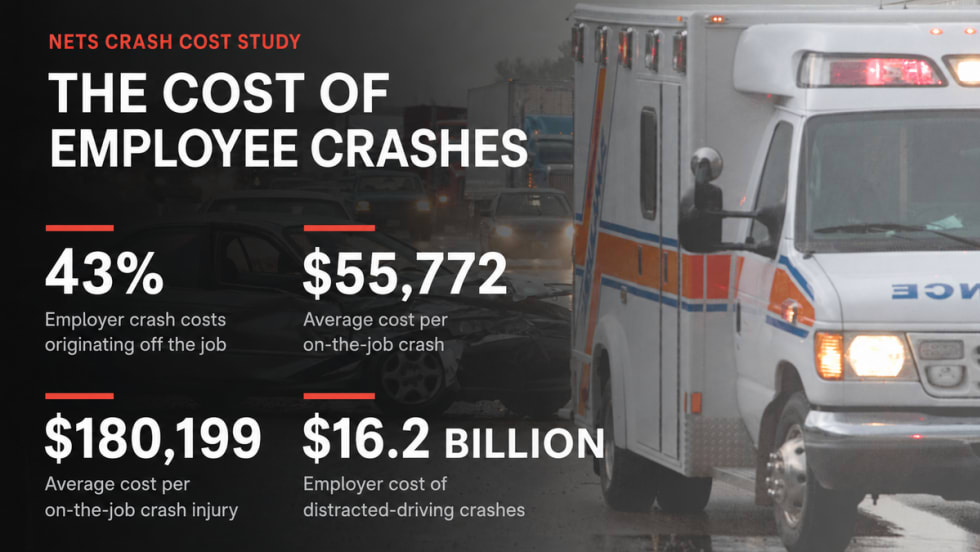
Off-the-Job Crashes Account for 43% of Employers’ $61.7 Billion Crash Burden
NETS quantifies costs dispersed across fleet, risk, HR, and other departments while providing new per-crash benchmarks for employers.
Read More →
Ram Recalls More Than 1.27 Million 1500 Pickups for Seat Belt Anchor Issue
The recall affects certain 2019-2026 Ram 1500 pickups that may have improperly attached second-row seat belt buckle anchors.
Read More →
How Better Visibility Cut Speeding Violations by 48%
Fleet leaders don't need more data, they need clearer visibility into what the data is saying. This case study explores how one utility replaced speeding-event counts with a single metric — miles driven in violation — to strengthen safety and significantly reduce speeding violations.
Read More →
Operation Safe Driver Week: Why the Industry's Oldest Safety Campaign Still Matters to Fleets
A look at how a 2007 enforcement initiative became one of the most consequential weeks on the fleet safety calendar, and what it means for your drivers in 2026.
Read More →