




Driver Monitor System Combats Distraction, Drowsiness
Seeing Machines exhibits the new safety technology at CES in a Jaguar F-Type prototype developed jointly with Intel at Jaguar Land Rover's new R&D facility.
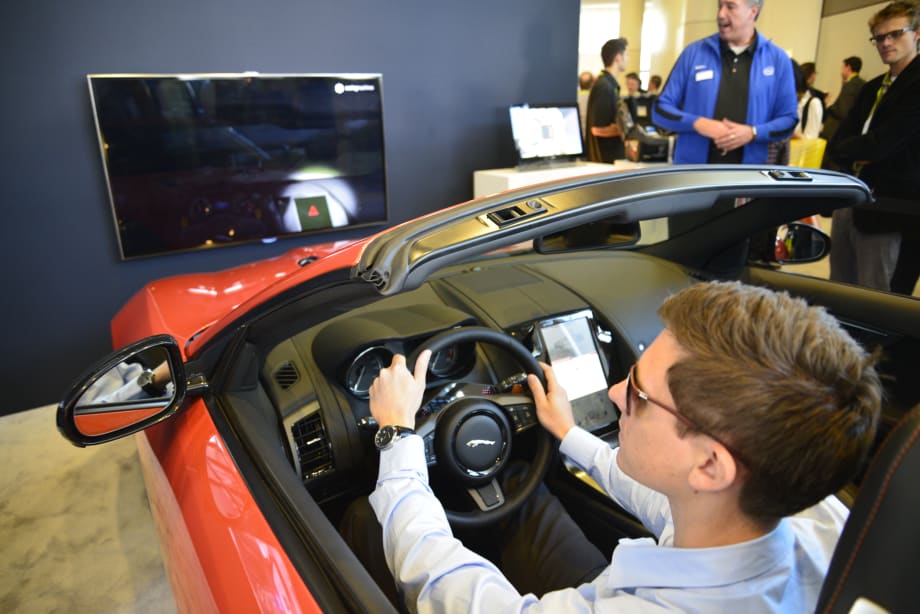
Seeing Machines demonstrates its Driver Monitor System in a Jaguar F-Type prototype developed jointly with Intel at Jaguar Land Rover's R&D facility. Photo courtesy of Jaguar Land Rover.
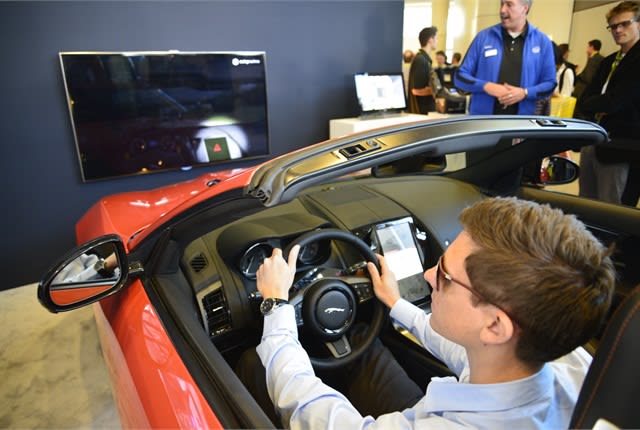
Seeing Machines demonstrates its Driver Monitor System in a Jaguar F-Type prototype developed jointly with Intel at Jaguar Land Rover's R&D facility. Photo courtesy of Jaguar Land Rover.
Jaguar Land Rover is working with Intel and Seeing Machines to develop sensing technology that monitors a driver's face and eyes to reduce distracted and drowsy driving.
Seeing Machines is a leader in the development of computer vision-related technologies that help machines understand people by tracking and interpreting human faces and eyes.
At the International Consumer Electronics Show in Las Vegas last week, Seeing Machines demonstrated its Driver Monitor System (DMS) in a Jaguar F-Type prototype developed jointly with Intel at Jaguar Land Rover's new R&D facility in Portland, Ore.
DMS uses attention-monitoring sensors in the dashboard to detect eye and facial movements so it can determine whether the driver has become inattentive, either because of drowsiness or distraction. The system can assess the state of the driver in real-world conditions, including in bright sunlight and when the driver is wearing glasses or sunglasses.
“The algorithm we have developed for DMS has the potential to seamlessly enable a host of safety and autonomous driving features and reduce the potential for accidents caused by the driver not paying attention,” explained Nick Langdale-Smith, vice president of Seeing Machines.
To deliver the processing power required by the DMS system, Seeing Machines asked Intel to install hardware in the F-Type prototype based on the newest Intel Core i7 chips.
“The attention-monitoring technology we are showcasing at CES has huge potential for road safety,” said Wolfgang Ziebart, engineering director of Jaguar Land Rover. “If the driver’s gaze moves towards the infotainment screen or out of a side window, and the car identifies this, then the system could alert the driver to hazards earlier. DMS could even enhance settings in safety systems like Autonomous Emergency Braking to reflect the driver’s lack of attention. As the car drives up to a hazard, the brakes could engage autonomously sooner because the car realizes the driver has not seen the danger ahead.”
DMS could also help the car share information with the driver more effectively. Jaguar Land Rover is currently researching a next-generation heads-up display that could use the full width of the windshield. The idea is to present the right information at the right time, without requiring the driver to take his or her eyes off the road.
“Whether we are projecting a transparent view of the bonnet, or helping the driver to navigate by following a ghost car, it would be very useful to understand exactly when the driver’s eyes aren’t actually looking at the windscreen to see this information, so it can be repeated or shared in a different way,” Ziebart noted.
More Safety

Nexar-Nauto Merger Aims to Give Fleets Better Safety Intelligence Through Larger Driving Dataset
Stefan Heck tells Automotive Fleet that combining more than 10 billion miles of driving history with Nexar's AI models will give fleets deeper insights into driver risk and roadway conditions than either company could provide independently.
Read More →
Don't Wait for a Crisis: 5 Ways to Build Mental Health Into Your Fleet Safety Program
For Suicide Prevention Month, fleet and safety leaders have an opportunity to put mental health where it belongs: at the center of workplace safety.
Read More →
How Camera Data Can Strengthen a Fleet’s Insurance Renewal
Insights from a commercial insurance carrier and a broker show how fleets can turn video telematic data, driver coaching, and improved claims results into a stronger case at insurance renewal.
Read More →
The Safest Fleets Aren’t the Ones with the Most Technology
You’ve made the telematics investment. Here’s how to capture the other half of its value and build the safest fleet on the road.
Read More →
Hidden in Plain Sight: Fleet Compliance Risks
Fleet compliance isn't just about having policies — it's about consistently enforcing them. This practical guide reveals six hidden compliance risks common in public sector and shared fleet operations and outlines proven strategies to improve visibility, accountability, and audit readiness
Read More →
NETS Sets 2026 Fleet Safety Benchmark Conference for Indianapolis
The Sept. 15–17 program will feature fleet benchmarking data, case studies, emerging technologies, and implementation strategies while running alongside the NSC Safety Congress & Expo.
Read More →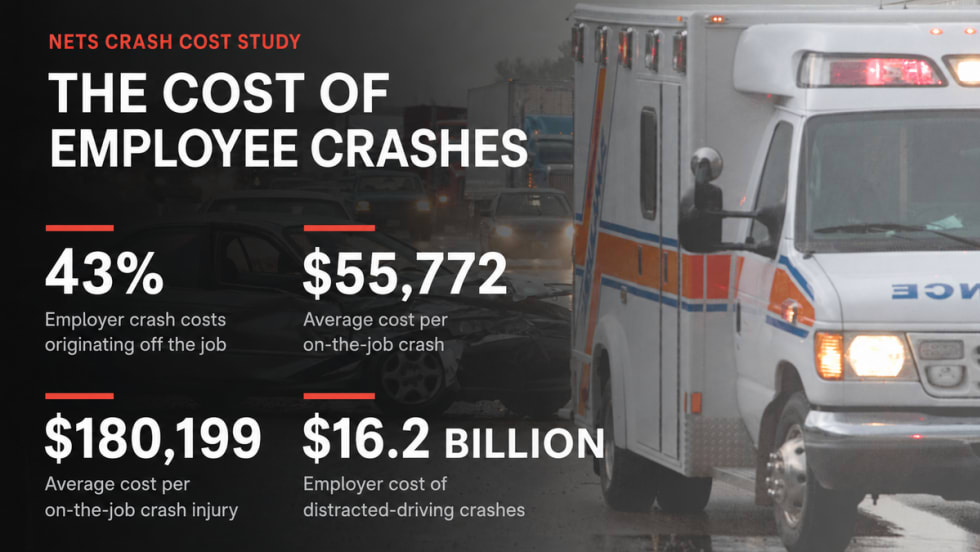
Off-the-Job Crashes Account for 43% of Employers’ $61.7 Billion Crash Burden
NETS quantifies costs dispersed across fleet, risk, HR, and other departments while providing new per-crash benchmarks for employers.
Read More →
Ram Recalls More Than 1.27 Million 1500 Pickups for Seat Belt Anchor Issue
The recall affects certain 2019-2026 Ram 1500 pickups that may have improperly attached second-row seat belt buckle anchors.
Read More →
How Better Visibility Cut Speeding Violations by 48%
Fleet leaders don't need more data, they need clearer visibility into what the data is saying. This case study explores how one utility replaced speeding-event counts with a single metric — miles driven in violation — to strengthen safety and significantly reduce speeding violations.
Read More →
Operation Safe Driver Week: Why the Industry's Oldest Safety Campaign Still Matters to Fleets
A look at how a 2007 enforcement initiative became one of the most consequential weeks on the fleet safety calendar, and what it means for your drivers in 2026.
Read More →