




DriveCam Studies Role of Following Distance in Rear-End Collisions
SAN DIEGO --- DriveCam Inc., a global driver risk management company, said that analysts in its Risk InfoCenter recently reviewed incidences of rear-end crashes to determine the impact of following distance on the likelihood of collision.
SAN DIEGO --- DriveCam Inc., a global driver risk management company, said that analysts in its Risk InfoCenter recently reviewed incidences of rear-end crashes to determine the impact of following distance on the likelihood of collision.
Analysis also identified steps drivers can take to lessen their risk of being involved in rear-end crashes.
With over 7 million events in its Risk InfoCenter database, DriveCam can provide insight into risky driving based on actual driving behavior.
Rear-end crashes are the second most common claim for fleet operators, according to research from Risk Management News. They make up 17 percent of all claims and cost on average over $13,000 per claim. Although recommended following distances can vary by weight and size of vehicle, most nationally recognized driver training programs advocate a minimum following distance of three or four seconds. DriveCam categorized the incidents it reviewed into two groups -- those in which a subject vehicle's following distance was less than two seconds and those for which following distance was two seconds or more.
"There is no greater risk of being struck from the rear when the subject vehicle is maintaining less than two seconds than having greater than two seconds following distance," explained Del Lisk, DriveCam vice president of safety services.
However, the story is different when it comes to the subject vehicle rear-ending the vehicle ahead. "Incidents involving the subject rear-ending the lead vehicle where the subject vehicle had less than two seconds of following distance were almost three times as common as those where the driver was maintaining a distance of two seconds or greate," Lisk said.
The study also showed that a large number of rear-end crashes involve a change in speed by the lead vehicle or an interruption to the flow of traffic in the lane. In fact, more rear-end crashes happen in the farthest right lane than other lanes when on city streets. The right lane has pedestrians, parked cars and turning vehicles that are constantly disturbing traffic flow.
Following this same logic, the left-most lane was the next most frequent since this lane can be impacted by traffic slowing or stopping to make a left turn. The center lane had far fewer incidents of rear-end crashes. "This is partially due to the fact that more of the roads had only one or two lanes of same-direction traffic," explained Lisk. "However, it may also be due to the fact that the center lane has fewer traffic flow disturbances."
DriveCam offers these tips for avoiding rear-end crashes:
-- When possible, avoid the far right and left lanes, except when preparing to turn. Drive in the center lane as much as possible (except where prohibited by state and local laws).
-- Maintain the proper following distance appropriate for the weight and size of the vehicle being driven.
-- Try to maintain a steady speed to reduce sudden stops and starts. This will also assist with fuel efficiency.
More Safety

Nexar-Nauto Merger Aims to Give Fleets Better Safety Intelligence Through Larger Driving Dataset
Stefan Heck tells Automotive Fleet that combining more than 10 billion miles of driving history with Nexar's AI models will give fleets deeper insights into driver risk and roadway conditions than either company could provide independently.
Read More →
Don't Wait for a Crisis: 5 Ways to Build Mental Health Into Your Fleet Safety Program
For Suicide Prevention Month, fleet and safety leaders have an opportunity to put mental health where it belongs: at the center of workplace safety.
Read More →
How Camera Data Can Strengthen a Fleet’s Insurance Renewal
Insights from a commercial insurance carrier and a broker show how fleets can turn video telematic data, driver coaching, and improved claims results into a stronger case at insurance renewal.
Read More →
The Safest Fleets Aren’t the Ones with the Most Technology
You’ve made the telematics investment. Here’s how to capture the other half of its value and build the safest fleet on the road.
Read More →
Hidden in Plain Sight: Fleet Compliance Risks
Fleet compliance isn't just about having policies — it's about consistently enforcing them. This practical guide reveals six hidden compliance risks common in public sector and shared fleet operations and outlines proven strategies to improve visibility, accountability, and audit readiness
Read More →
NETS Sets 2026 Fleet Safety Benchmark Conference for Indianapolis
The Sept. 15–17 program will feature fleet benchmarking data, case studies, emerging technologies, and implementation strategies while running alongside the NSC Safety Congress & Expo.
Read More →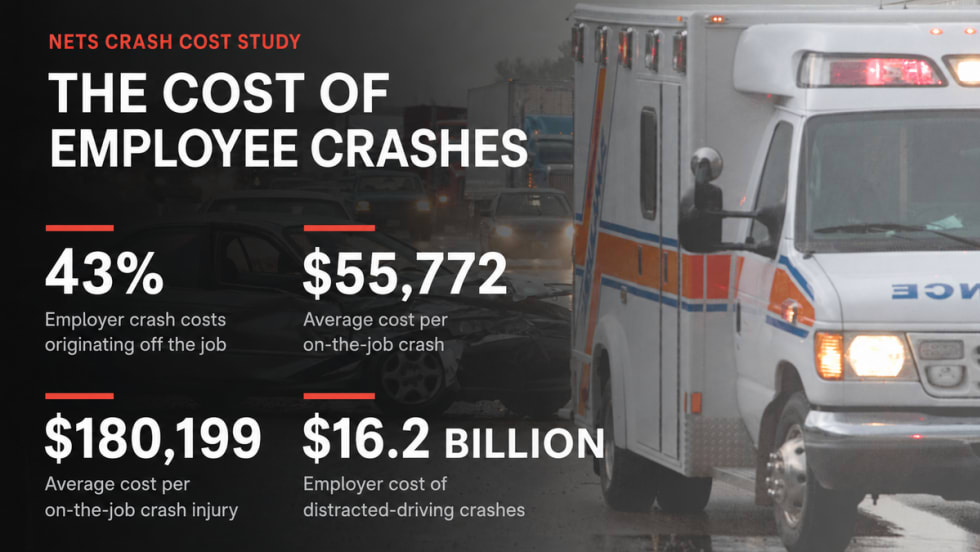
Off-the-Job Crashes Account for 43% of Employers’ $61.7 Billion Crash Burden
NETS quantifies costs dispersed across fleet, risk, HR, and other departments while providing new per-crash benchmarks for employers.
Read More →
Ram Recalls More Than 1.27 Million 1500 Pickups for Seat Belt Anchor Issue
The recall affects certain 2019-2026 Ram 1500 pickups that may have improperly attached second-row seat belt buckle anchors.
Read More →
How Better Visibility Cut Speeding Violations by 48%
Fleet leaders don't need more data, they need clearer visibility into what the data is saying. This case study explores how one utility replaced speeding-event counts with a single metric — miles driven in violation — to strengthen safety and significantly reduce speeding violations.
Read More →
Operation Safe Driver Week: Why the Industry's Oldest Safety Campaign Still Matters to Fleets
A look at how a 2007 enforcement initiative became one of the most consequential weeks on the fleet safety calendar, and what it means for your drivers in 2026.
Read More →