




DOT Report Recommends NHTSA Reform How It Identifies Defects
WASHINGTON – The Department of Transportation Office of Inspector General has released an audit report that concludes the National Highway Traffic Safety Administration (NHTSA) needs to implement reforms to its process for identifying and addressing vehicle safety defects.
WASHINGTON – The Department of Transportation Office of Inspector General has released an audit report that concludes the National Highway Traffic Safety Administration (NHTSA) needs to implement reforms to its process for identifying and addressing vehicle safety defects.
NHTSA’s Office of Defects Investigation (ODI) is responsible for determining whether vehicles and vehicle equipment have design, construction or performance defects that pose a safety threat and require a safety recall.
DOT’s Office of Inspector General initially launched its NHTSA ODI audit in February 2010. In late 2009, consumer complaints alleging unintended acceleration in vehicles made by Toyota, as well as some other automakers, had placed NHTSA ODI under greater public scrutiny for its role in public safety. The Office of Inspector General audit was eventually expanded further at the request of Secretary of Transportation Ray LaHood and Congress.
The newly released report cites NHTSA ODI’s limited information sharing and coordination with foreign countries. As a result, the report concludes, NHTSA ODI is hindered in its ability to identify safety defects and issue recalls in an increasingly global auto industry.
The Office of Inspector General report concludes that NHTSA ODI lacks systematic processes for:
• Tracking consumer complaints, and retaining and documenting records of pre-investigation decisions
• Determining when to use third-party or Vehicle Research and Test Center assistance
• Ensuring timely investigations of defect complaints
• Documenting investigation information
• Protecting consumers' personal information on its website
• Assessing workforce needs
• Training investigators.
The audit report includes 10 recommendations for NHTSA Administrator David Strickland:
1. Revise the pre-investigation processes to ensure that the review of each complaint is recorded and that complaints are tracked to associated investigations in the Advanced Retrieval of Tire, Equipment, and Motor Vehicle Information System (ARTEMIS).
2. Establish pre-investigation processes for retaining and storing pre-investigation records, such as investigation proposals and insurance company data.
3. Require that decisions made and actions taken by ODI Defect Assessment Panels are recorded, including justifications for not proceeding to investigations.
4. Establish systematic processes for determining when a third-party or the Vehicle Research Test Center should be used to verify manufacturer information or assist in identifying a potential defect.
5. Revise the ODI investigation process to require justifications for continuing or closing investigations that exceed timeliness goals.
6. Revise the ODI investigation process to establish criteria for documenting evidence, such as associated complaints, meetings with manufacturers and other stakeholders, and third-party analysis or testing conducted.
7. Strengthen ODI’s redaction policy and process to better protect consumers’ personal information from public availability, such as by using automated redaction software.
8. Conduct a workforce assessment to determine the number of staff required to ensure that ODI meets its objectives and determines the most effective mix of staff.
9. Develop a formal training program to assist ODI staff in acquiring the knowledge and staying abreast of ODI processes and current and new automobile technologies.
10. Develop and implement a strategy for increasing coordination with foreign countries to enhance ODI’s ability to identify safety defects and to exchange information on foreign recalls.
More Safety

Nexar-Nauto Merger Aims to Give Fleets Better Safety Intelligence Through Larger Driving Dataset
Stefan Heck tells Automotive Fleet that combining more than 10 billion miles of driving history with Nexar's AI models will give fleets deeper insights into driver risk and roadway conditions than either company could provide independently.
Read More →
Don't Wait for a Crisis: 5 Ways to Build Mental Health Into Your Fleet Safety Program
For Suicide Prevention Month, fleet and safety leaders have an opportunity to put mental health where it belongs: at the center of workplace safety.
Read More →
How Camera Data Can Strengthen a Fleet’s Insurance Renewal
Insights from a commercial insurance carrier and a broker show how fleets can turn video telematic data, driver coaching, and improved claims results into a stronger case at insurance renewal.
Read More →
The Safest Fleets Aren’t the Ones with the Most Technology
You’ve made the telematics investment. Here’s how to capture the other half of its value and build the safest fleet on the road.
Read More →
Hidden in Plain Sight: Fleet Compliance Risks
Fleet compliance isn't just about having policies — it's about consistently enforcing them. This practical guide reveals six hidden compliance risks common in public sector and shared fleet operations and outlines proven strategies to improve visibility, accountability, and audit readiness
Read More →
NETS Sets 2026 Fleet Safety Benchmark Conference for Indianapolis
The Sept. 15–17 program will feature fleet benchmarking data, case studies, emerging technologies, and implementation strategies while running alongside the NSC Safety Congress & Expo.
Read More →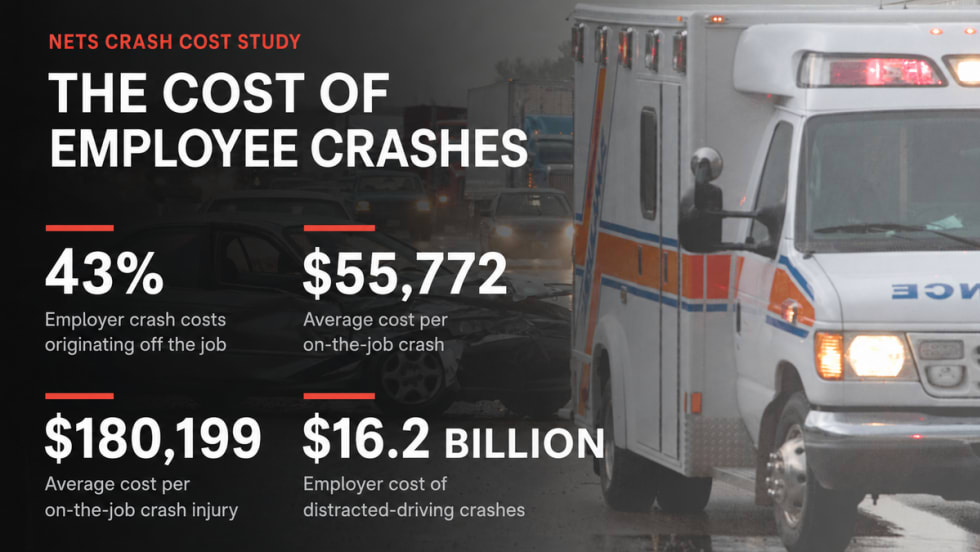
Off-the-Job Crashes Account for 43% of Employers’ $61.7 Billion Crash Burden
NETS quantifies costs dispersed across fleet, risk, HR, and other departments while providing new per-crash benchmarks for employers.
Read More →
Ram Recalls More Than 1.27 Million 1500 Pickups for Seat Belt Anchor Issue
The recall affects certain 2019-2026 Ram 1500 pickups that may have improperly attached second-row seat belt buckle anchors.
Read More →
How Better Visibility Cut Speeding Violations by 48%
Fleet leaders don't need more data, they need clearer visibility into what the data is saying. This case study explores how one utility replaced speeding-event counts with a single metric — miles driven in violation — to strengthen safety and significantly reduce speeding violations.
Read More →
Operation Safe Driver Week: Why the Industry's Oldest Safety Campaign Still Matters to Fleets
A look at how a 2007 enforcement initiative became one of the most consequential weeks on the fleet safety calendar, and what it means for your drivers in 2026.
Read More →