




DOT Kicks Off Drunk Driving Crackdown
WASHINGTON - The U.S. Department of Transportation last week kicked off the annual "Drunk Driving. Over The Limit. Under Arrest" winter holiday crackdown involving thousands of law enforcement agencies across the nation. Transportation Secretary Ray LaHood also highlighted the new "No Refusal" strategy that a number of states are employing to put a stop to drunk driving.
WASHINGTON - The U.S. Department of Transportation last week kicked off the annual "Drunk Driving. Over The Limit. Under Arrest" winter holiday crackdown involving thousands of law enforcement agencies across the nation. Transportation Secretary Ray LaHood also highlighted the new "No Refusal" strategy that a number of states are employing to put a stop to drunk driving.
Through the "No Refusal" strategy, law enforcement officers are able to quickly obtain warrants from "on call" judges in order to take blood samples from suspected drunk drivers who refuse a breathalyzer test.
"Drunk driving remains a leading cause of death and injury on our roadways," said LaHood. "I applaud the efforts of the law enforcement officials who have pioneered the 'No Refusal' approach to get drunk drivers off our roads. And I urge other states to adopt this approach to make sure that drunk drivers can't skirt the law and are held accountable."
According to DOT's National Highway Traffic Safety Administration (NHTSA), in many states, a large proportion of people pulled over for DUIs refuse to take an alcohol breathalyzer test. The latest data show that the states with the highest refusal rates included New Hampshire at 81 percent, Massachusetts at 41 percent, Florida at 40 percent, Louisiana at 39 percent and Ohio at 38 percent. States that have adopted "No Refusal" programs report more guilty pleas, fewer trials and more convictions.
"MADD is proud to support NHTSA, as well as our heroes in law enforcement, in their focus on 'No Refusals,'" said MADD National President Laura Dean-Mooney. "Working together, we can make our roadways safer and eliminate drunk driving in the U.S."
LaHood was joined for the announcement by NHTSA Administrator David Strickland, MADD President Laura Dean-Mooney, as well as Warren Diepraam, an assistant district attorney in Texas who is a leading advocate of the "No Refusal" strategy. Lafourche Parrish Sheriff Craig Webre, who instituted a "No Refusal" policy in Thibodaux, La., was also on hand to share his experiences. The officials strongly endorsed the "No Refusal" initiative and applauded states already employing this strategy to get drunk drivers off of their roads, including Texas, Louisiana, Florida, Kansas, Missouri, Illinois, Utah, Idaho and Arizona.
"When it comes to drunk driving, we cannot afford to have repeat offenders," said Strickland. "The 'No Refusal' strategy helps support prosecutions and improves deterrence, which means fewer drunk drivers on the road. I want to remind everyone this holiday season: if you're over the limit, you're under arrest. So please, for safety's sake, find a designated driver or take a taxi if you are under the influence."
It is against the law in all U.S. states and the District of Columbia to drive with a blood alcohol concentration (BAC) level of .08 or higher. Yet, NHTSA data show that last year, 10,839 people were killed in alcohol-impaired driving crashes, including 753 in December alone. Agency trend data have consistently shown an increase in fatalities during the holiday season.
The holiday enforcement crackdown is supported by $7 million in national TV and radio advertising and runs from Dec. 15 through Jan. 3.
More Safety

Nexar-Nauto Merger Aims to Give Fleets Better Safety Intelligence Through Larger Driving Dataset
Stefan Heck tells Automotive Fleet that combining more than 10 billion miles of driving history with Nexar's AI models will give fleets deeper insights into driver risk and roadway conditions than either company could provide independently.
Read More →
Don't Wait for a Crisis: 5 Ways to Build Mental Health Into Your Fleet Safety Program
For Suicide Prevention Month, fleet and safety leaders have an opportunity to put mental health where it belongs: at the center of workplace safety.
Read More →
How Camera Data Can Strengthen a Fleet’s Insurance Renewal
Insights from a commercial insurance carrier and a broker show how fleets can turn video telematic data, driver coaching, and improved claims results into a stronger case at insurance renewal.
Read More →
The Safest Fleets Aren’t the Ones with the Most Technology
You’ve made the telematics investment. Here’s how to capture the other half of its value and build the safest fleet on the road.
Read More →
Hidden in Plain Sight: Fleet Compliance Risks
Fleet compliance isn't just about having policies — it's about consistently enforcing them. This practical guide reveals six hidden compliance risks common in public sector and shared fleet operations and outlines proven strategies to improve visibility, accountability, and audit readiness
Read More →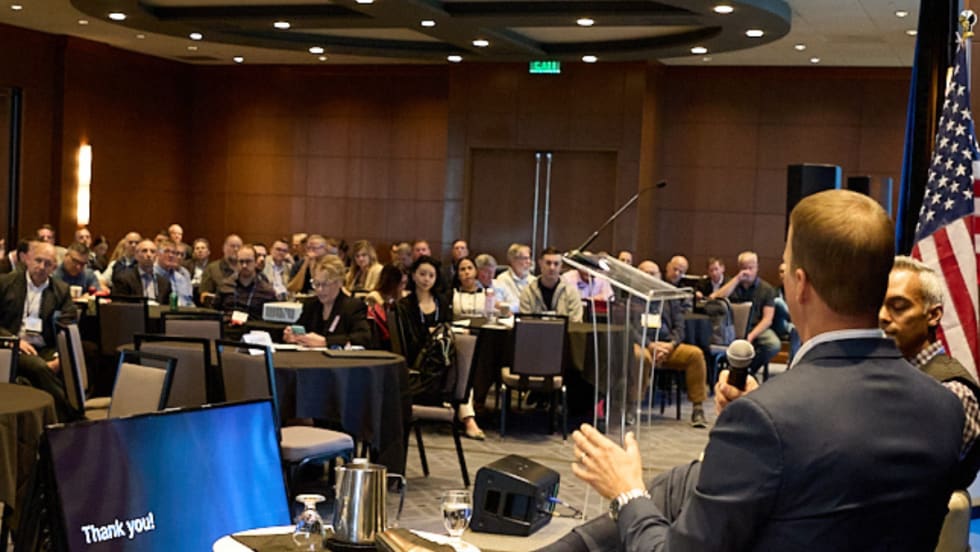
NETS Sets 2026 Fleet Safety Benchmark Conference for Indianapolis
The Sept. 15–17 program will feature fleet benchmarking data, case studies, emerging technologies, and implementation strategies while running alongside the NSC Safety Congress & Expo.
Read More →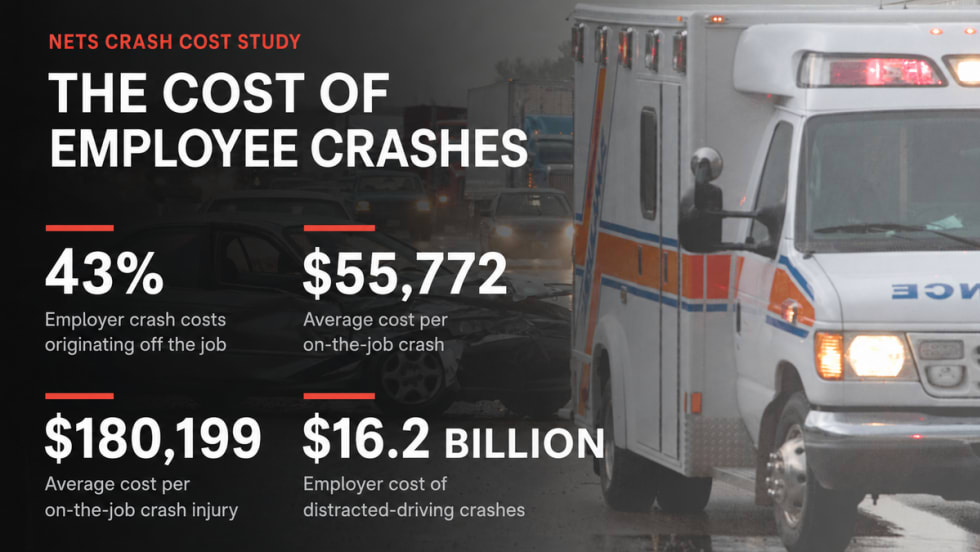
Off-the-Job Crashes Account for 43% of Employers’ $61.7 Billion Crash Burden
NETS quantifies costs dispersed across fleet, risk, HR, and other departments while providing new per-crash benchmarks for employers.
Read More →
Ram Recalls More Than 1.27 Million 1500 Pickups for Seat Belt Anchor Issue
The recall affects certain 2019-2026 Ram 1500 pickups that may have improperly attached second-row seat belt buckle anchors.
Read More →
How Better Visibility Cut Speeding Violations by 48%
Fleet leaders don't need more data, they need clearer visibility into what the data is saying. This case study explores how one utility replaced speeding-event counts with a single metric — miles driven in violation — to strengthen safety and significantly reduce speeding violations.
Read More →
Operation Safe Driver Week: Why the Industry's Oldest Safety Campaign Still Matters to Fleets
A look at how a 2007 enforcement initiative became one of the most consequential weeks on the fleet safety calendar, and what it means for your drivers in 2026.
Read More →