




DOE Report Highlights EV Funding Impact
WASHINGTON - The Department of Energy has released a new report on the economic impact of Recovery Act investments in advanced batteries and vehicles.
WASHINGTON - The Department of Energy has released a new report on the economic impact of Recovery Act investments in advanced batteries and vehicles.
The report, "Recovery Act Investments: Transforming America's Transportation Sector," documents how Recovery Act funds are being matched with private capital to create new jobs, construct new plants, add new manufacturing lines, install electric vehicle charging stations across the country and help build the emerging domestic electric vehicle industry from the ground up.
Among the key highlights of the report:
For every dollar of the $2.4 billion in seed money the government provided through the Recovery Act advanced battery and electric vehicle grants, the companies have matched it at minimum dollar for dollar.
Pre-Recovery Act, the U.S. produced just 2 percent of the world's batteries for advanced vehicles, but due to Recovery Act investments, the U.S. will have the capacity to produce 20 percent of these batteries by 2012 and up to 40 percent by 2015 -- that's a jump from 2 percent to 40 percent in a span of just five years.
Nine of the nine new battery plants opening as a result of Recovery Act investments will have started construction by mid-July -- and four of those will be operational by the end of the year. In addition, 21 other plants will make battery or electric vehicle components with the help of Recovery Act grants.
Before the Recovery Act, high battery costs meant a car with a 100-mile range would need a battery that cost $33,000. But because of the higher-volume domestic manufacturing the Recovery Act is spurring, the cost of such a battery could come down to $16,000 by the end of 2013 and $10,000 by the end of 2015, dramatically driving down the cost of an electric vehicle and greatly expanding the domestic market.
Before the Recovery Act, there were less than 500 electric vehicle charging locations in the U.S. But as a result of Recovery Act investments, there will be over 20,000 by 2012.
More Green Fleet

New Propane Autogas Program Offers Fleet Compensation
Qualified commercial fleets can receive $7,500 per eligible propane autogas vehicle and up to $10,000 for new refueling site prep. Learn how the program works and see whether your fleet qualifies.
Read More →
EV Charging Use Is Outpacing Infrastructure Growth
ChargePoint’s 2026 Charging Forward Report points to rising charger use, higher-powered charging, commercial vehicle electrification, and energy-management technology. Here’s what fleets should know.
Read More →
Merchants Fleet Reports 290M EV Miles as Fleets Navigate Changing Electrification Market
From millions in operating savings to hundreds of millions of EV miles, Merchants Fleet’s latest report reveals what’s working and what’s changing in fleet electrification.
Read More →
The EV Breakdown Nobody's Talking About: Why Most Electric Vehicle Roadside Calls Aren't Mechanical Failures
Here's why EV breakdowns are widely misunderstood.
Read More →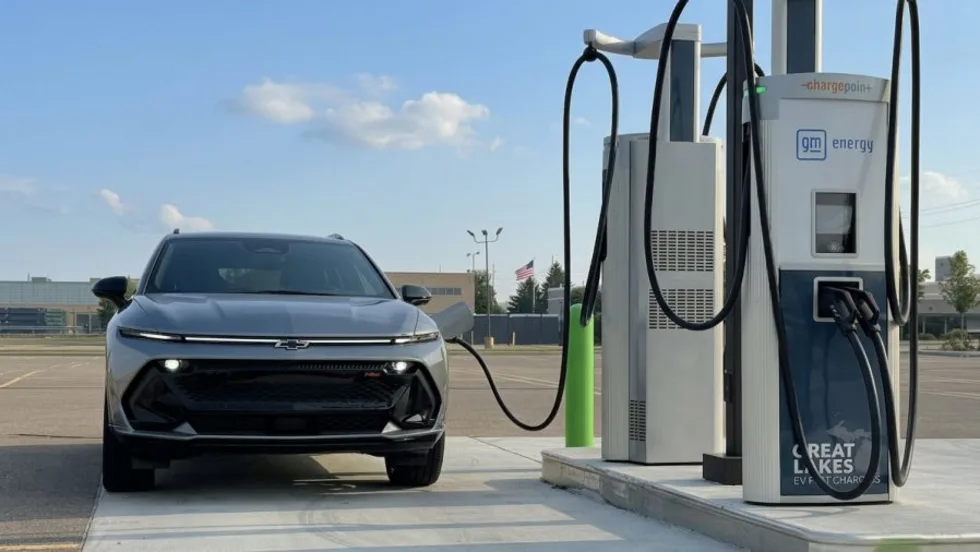
ChargePoint Now Available in Energy Pass
ChargePoint and additional planned charging network integrations were added to GM's Energy Pass.
Read More →

First Look: Slate Auto's Electric Fleet Pickup
Could an affordable, modular EV pickup make electrification more practical for fleets?
Read More →
Slate Debuts Colorful, Unique EV Models
A recent media and client event, studded with electric vehicles dressed up on platforms, planted a new position for the manufacturer in the wider EV market. Fleets will find cost-saving advantages.
Read More →
Slate Electric SUV, Pickup Switchable Model Aims For Light-Duty Fleets
Everything about this EV is counterintuitive and understated, making it stand out from the crowd.
Read More →
Inspiration Mobility Acquires Key Electrada Assets
Inspiration Mobility Group has acquired select assets of Electrada, adding the fleet electrification provider's team, technology, and charging infrastructure development capabilities to its energy management business.
Read More →