




DOE Recognizes Trio of Clean Cities Leaders
Three coordinators who lead the Lake Michigan Consortium, were the latest team to be named to the U.S. Department of Energy’s Clean Cities Hall of Fame. The award recognizes outstanding contributions to the Clean Cities mission of reducing petroleum use in transportation.
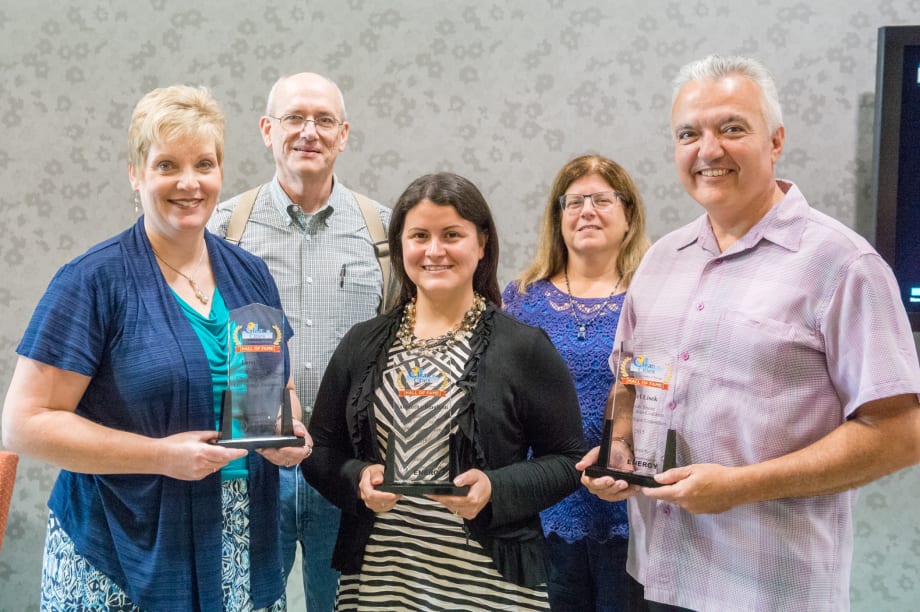
Front: Lorrie Lisek (Wisconsin), Samantha Bingham (Chicago), Carl Lisek (South Shore). Back: National Clean Cities Director Dennis Smith and Co-Director Linda Bluestein. Photo courtesy of Clean Cities.
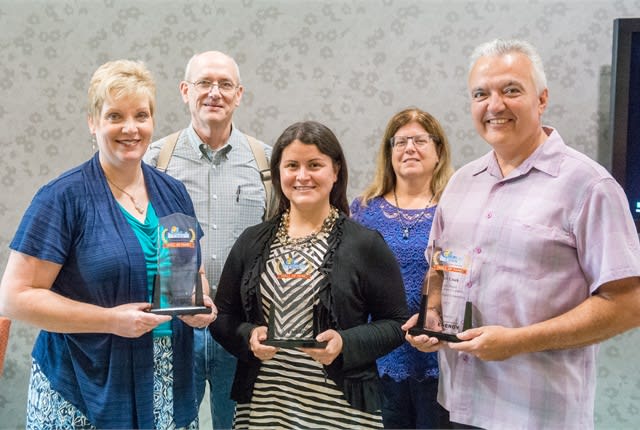
Front: Lorrie Lisek (Wisconsin), Samantha Bingham (Chicago), Carl Lisek (South Shore). Back: National Clean Cities Director Dennis Smith and Co-Director Linda Bluestein. Photo courtesy of Clean Cities.
Three coordinators who lead the Lake Michigan Consortium — a collaboration between Chicago Area Clean Cities, Merrillville, Ind.-based South Shore Clean Cities, and Milwaukee-based Wisconsin Clean Cities — were the latest team to be named to the U.S. Department of Energy’s Clean Cities Hall of Fame. The award recognizes outstanding contributions to the Clean Cities mission of reducing petroleum use in U.S. transportation.
National Clean Cities Director Dennis Smith and Co-Director Linda Bluestein inducted Samantha Bingham (Chicago), Carl Lisek (South Shore), and Lorrie Lisek (Wisconsin) into the Clean Cities Hall of Fame on Sept. 3. The coordinators were in Lemont, Ill., where representatives from nearly 100 Clean Cities coalitions from across the country gathered for the annual Clean Cities Coordinator Workshop.
Under the umbrella of the Lake Michigan Consortium, the three coalitions have been able to amplify their impact to reduce petroleum in their respective regions. Some of the Consortium's efforts include creating alternative fuel corridors along I-90 and I-94, as well as creating alt-fuel hot spots in Chicago, Milwaukee, and Gary and South Bend, Indiana.
Through the consortium, the coalitions have also been highly successful at replicating each other’s alternative-fuel vehicle programs, such as developing a Green Fleet Program for Northwest Indiana based on elements from Illinois’ successful Green Fleet Program and Wisconsin’s fleet analysis. Additionally, the consortium helped create four local alternative fuel training centers across all three regions and held a popular "Winter Webinar Series” in an effort to educate stakeholders.
Created in 2007, the consortium is made up of more than 500 member organizations. It serves a geographic population of more than 9.8 million people with eleven counties that hold non-attainment status for the U.S. EPA 2008 Ground Ozone standard. The consortium, which offers more than 40 years of combined experience in the Clean Cities program, works closely to provide support and technical expertise for stakeholders using or considering alternative fuel vehicles. The trio of coalitions also holds numerous outreach events and trainings aimed at educating the public, fleets, and automotive technicians in an effort to reduce petroleum use.
In addition to the coordinator trio, East Tennessee Clean Fuels Coalition's coordinator Jonathan Overly was also inducted into the Hall of Fame.
More Green Fleet

The EV Breakdown Nobody's Talking About: Why Most Electric Vehicle Roadside Calls Aren't Mechanical Failures
Here's why EV breakdowns are widely misunderstood.
Read More →
ChargePoint Now Available in Energy Pass
ChargePoint and additional planned charging network integrations were added to GM's Energy Pass.
Read More →

First Look: Slate Auto's Electric Fleet Pickup
Could an affordable, modular EV pickup make electrification more practical for fleets?
Read More →
Slate Debuts Colorful, Unique EV Models
A recent media and client event, studded with electric vehicles dressed up on platforms, planted a new position for the manufacturer in the wider EV market. Fleets will find cost-saving advantages.
Read More →
Slate Electric SUV, Pickup Switchable Model Aims For Light-Duty Fleets
Everything about this EV is counterintuitive and understated, making it stand out from the crowd.
Read More →
Inspiration Mobility Acquires Key Electrada Assets
Inspiration Mobility Group has acquired select assets of Electrada, adding the fleet electrification provider's team, technology, and charging infrastructure development capabilities to its energy management business.
Read More →
Turning Connected Vehicle Data Into Decisions That Matter
Fleet leaders have more data than ever, but turning that data into clear, actionable decisions remains a challenge. This white paper shows how leading organizations are using connected vehicle data to improve safety, reduce costs, and optimize fleet performance. Learn how to turn insight into action across your fleet.
Read More →
Are You Tracking Your Fleet's True Total Cost of Ownership?
Bobit Business Media surveyed 190 fleet professionals and found that while most fleets are tracking costs, fragmented systems and data gaps are keeping true TCO visibility out of reach. With rising pressure to control spend in an increasingly volatile environment, the gap between what fleets think they know and what the data actually shows is wider than you might expect. See how your peers are managing costs today and where the industry still has room to improve.
Read More →
Hybrids: Electrification Without the Challenges
For fleet managers, fuel is one of the biggest line items in the budget — and it's one hybrids can shrink without changing how your people work. Download the eBook to see the numbers, understand the technology, and get a step-by-step guide to making the switch.
Read More →