




Dodge Journey Earns 5-Star Safety Ratings
AUBURN HILLS, Mich. --- The 2009 Dodge Journey earned 5-star ratings for driver- and front-passenger protection in a frontal crash along with 5-star driver and rear passenger ratings for side impact protection, the highest ratings in the U.S.government's safety crash test program.
AUBURN HILLS, Mich. --- The 2009 Dodge Journey earned 5-star ratings for driver- and front-passenger protection in a frontal crash along with 5-star driver and rear passenger ratings for side impact protection, the highest ratings in the U.S.government's safety crash test program.
Dodge Journey employs a two-fold approach to safety and security: conventional features including pretensioning and load-limiting seat belt retractors and supplemental air bags are combined with accident-avoidance features including an electronic stability program (ESP), electronic roll mitigation (ERM) and brake assist.
The all-new 2009 Dodge Journey offers more than 35 safety and security features including:
* Advanced multi-stage air bags: Uses a low-risk deployment air bag for the front passenger.
* All-speed traction control: Senses drive-wheel slip and applies individual brakes to a slipping wheel, and can reduce excess engine power until traction is regained.
* Anti-lock brake system (ABS): Senses and prevents wheel lockup, offering improved steering control under extreme braking and/or slippery conditions.
* Anti-lock brake system with rough road detection: Anti-lock brake system capable of detecting if the vehicle is driving on a rough road by the oscillations in the wheel speed signals. Rough road is detected on off-road surfaces or trails, and ABS enters a different pressure control where it will hold the brake pressure for longer pulses.
* Auto-reverse sun roof: Advanced sensing system that automatically engages and reverses the sun roof (to the open position).
* Auto-reverse windows: Automatically engages and reverses the window (to the down position).
* Belt Alert: Periodically activates a chime and illuminates an icon in the instrument cluster to remind the driver and front passenger to buckle up if a vehicle is driven without the driver being properly belted.
* Brake Assist: In a panic brake condition, the system applies maximum braking power, providing the shortest possible stopping distance.
* Brake/park interlock: Prevents an automatic transmission or transaxle from being shifted out of park unless the brake pedal is applied.
* Brake traction control system (BTCS): Helps to keep driving wheels from spinning during acceleration from a stop or during slow speeds by applying individual brakes to the slipping wheel.
* Child seat anchor system: LATCH (lower anchors and tethers for children) is designed to ease installation of compatible aftermarket childseats.
* Child-protection rear door locks: Disables the rear doors' inside-release handle via a small lever on the door-shut face.
* Constant force retractors (CFR): Distribute force or load exerted on a seat belt, and then gradually release the seat-belt webbing in a controlled manner.
* Crumple zones: Designed to compress during an accident to absorb energy from an impact, decreasing transfer of that energy to the occupants.
* Digressive load-limiting seat belts: Retractor senses a vehicle impact and immediately applies a load to the seat belt to properly position the occupant before the full load from the vehicle impact is imparted onto the occupant. It then reduces the seat belt load to moderate forces imparted onto the occupant during the impact event.
* Electronic brake force distribution: Adjusts braking pressure front to rear, based on weight distribution of passengers and cargo, to minimize brake dive during hard braking.
* Electronic roll mitigation (ERM): An extension of the electronic stability program (ESP). Uses input from the ESP sensors to anticipate if the vehicle is at risk of entering a potential roll situation, then reacts immediately, applying the brakes individually and modulating throttle position as needed to attempt avoiding the roll situation.
* Electronic stability program (ESP): Enhances driver control and helps maintain directional stability under all conditions. Provides the greatest benefit in critical driving situations such as turns, and is especially valuable when driving on mixed surface conditions such as snow, ice or gravel. If there's a discernible difference between what the driver asks through the steering wheel and the vehicle's path, ESP applies selective braking and throttle input to put the vehicle back onto the driver's intended path.
* Energy-absorbing steering column: The manual-telescoping steering column utilizes two hydroformed coaxial tubes that can move relative to each other to allow the column to move forward for enhanced energy-absorption during a crash.
* Enhanced accident response system (EARS): Makes it easier for emergency personnel to see and reach occupants in the event of an accident by turning on the interior lighting and unlocking the doors after air bag deployment. Also shuts off the flow of fuel to the engine.
* Height-adjustable front seat belts: Allow occupants to raise and lower the shoulder belt. Encourage seat belt usage by offering a more comfortable fit.
* HomeLink universal home security system transceiver: Stores three separate transmitter radio-frequency codes to operate garage-door openers, security gates, security lighting or other radio-controlled devices.
* Integrated child booster seats: For children up to 4-foot 9-inches tall and between 48-pounds, raise the child into the adult belted zone.
* Interior head-impact protection: Interior pillars above the beltline and instrument panel, including areas around windshield and rear window headers, roof and side-rail structures, and shoulder belt turning loops specifically designed to limit head-impact force.
* Keyless ignition system: A fob with integrated key and a wireless ignition node with integral ignition switch replace the metal key. The double-sided integrated key is inserted into the ignition switch to start the vehicle. The fob also contains the remote keyless entry and a removable valet key.
* Knee bolsters: The lower instrument panel and the glovebox door are designed to properly position the occupant, enabling the air bags to work effectively.
* Low-risk deployment air bag: Front-passenger air bag that uses unique shape, venting, folding patterns, advanced inflators or a combination of these four technologies to position and inflate the restraint properly for a belted passenger, while also meeting federal safety requirements for out-of-position, small occupants and rear-facing infant seats. Occupants are advised to always sit properly in their seats with the seat belt fastened. Children 12 years old and younger should always be seated in a back seat correctly using an infant or child restraint system, or have the seat belt positioned correctly for their age and weight.
* ParkView rear back-up camera: Provides a wide-angle view of the area immediately behind the vehicle, giving the driver greater peace of mind before backing up. Also aids in lining up a trailer to the vehicle's trailer hitch, when so equipped. The image automatically displays on the navigation screen when the transmission is shifted into reverse.
* Remote keyless entry: Locks and unlocks doors, and turns on interior lamps. If the vehicle is equipped with a vehicle-theft security alarm, the remote also arms and disarms that system.
* Remote start: Conveniently starts the engine from outside the vehicle by using the fob while maintaining vehicle security.
* Seat-belt pretensioners: During a collision, the impact sensors initiate the front seat belt pretensioners to immediately remove slack, thereby reducing the forward movement of the occupants' heads and torsos.
* Sentry Key engine immobilizer: Utilizes an engine key that has an embedded transponder with a preprogrammed security code to discourage vehicle theft. When the key is inserted into the ignition, the controller sends a random number to the transponder and the engine is allowed to start. If an incorrect key is used, the engine will shut off after only a few seconds.
* Side-occupant protection system: Includes side-curtain air bags with extended up-time, tethers and roll-detection system that deploy in certain rollover situations and side-impact events. Utilizes information from multiple sensors to determine the severity of the impact.
* Supplemental side air bags: Provide enhanced protection to the driver and front outboard passenger in certain impacts. Each side air bag has its own impact sensor to autonomously trigger the air bag on the side where the impact occurs. Supplemental side air bags are housed within the outboard side of each front seat.
* Supplemental side-curtain air bags: Extend protection to all outboard front- and rear-seat passengers, including third-row outboard passengers in vehicles so equipped. Each side air bag has its own impact sensor to autonomously trigger the air bag on the side where the impact occurs.
* Tire pressure monitoring (TPM): Informs occupants when tire pressure is too low. Pressure-sensor modules within the valve stems of all four road wheels send continuous radio-frequency signals to a receiver and the system.
* Trailer Sway Control (TSC): Reduces trailer sway and improves handling in adverse towing conditions caused by crosswinds and traffic. Software monitors the vehicle's movement relative to the driver's intended path, then applies brake pressure to slow the vehicle and then increases the pressure on one front wheel to counteract the sway induced by the trailer.
* UConnect hands-free communication system: Uses Bluetooth technology to provide voice-controlled wireless communication between the occupants' compatible mobile phone and the vehicle's onboard receiver. The hands-free option promotes safety, freedom, value and flexibility.
More Safety

Nexar-Nauto Merger Aims to Give Fleets Better Safety Intelligence Through Larger Driving Dataset
Stefan Heck tells Automotive Fleet that combining more than 10 billion miles of driving history with Nexar's AI models will give fleets deeper insights into driver risk and roadway conditions than either company could provide independently.
Read More →
Don't Wait for a Crisis: 5 Ways to Build Mental Health Into Your Fleet Safety Program
For Suicide Prevention Month, fleet and safety leaders have an opportunity to put mental health where it belongs: at the center of workplace safety.
Read More →
How Camera Data Can Strengthen a Fleet’s Insurance Renewal
Insights from a commercial insurance carrier and a broker show how fleets can turn video telematic data, driver coaching, and improved claims results into a stronger case at insurance renewal.
Read More →
The Safest Fleets Aren’t the Ones with the Most Technology
You’ve made the telematics investment. Here’s how to capture the other half of its value and build the safest fleet on the road.
Read More →
Hidden in Plain Sight: Fleet Compliance Risks
Fleet compliance isn't just about having policies — it's about consistently enforcing them. This practical guide reveals six hidden compliance risks common in public sector and shared fleet operations and outlines proven strategies to improve visibility, accountability, and audit readiness
Read More →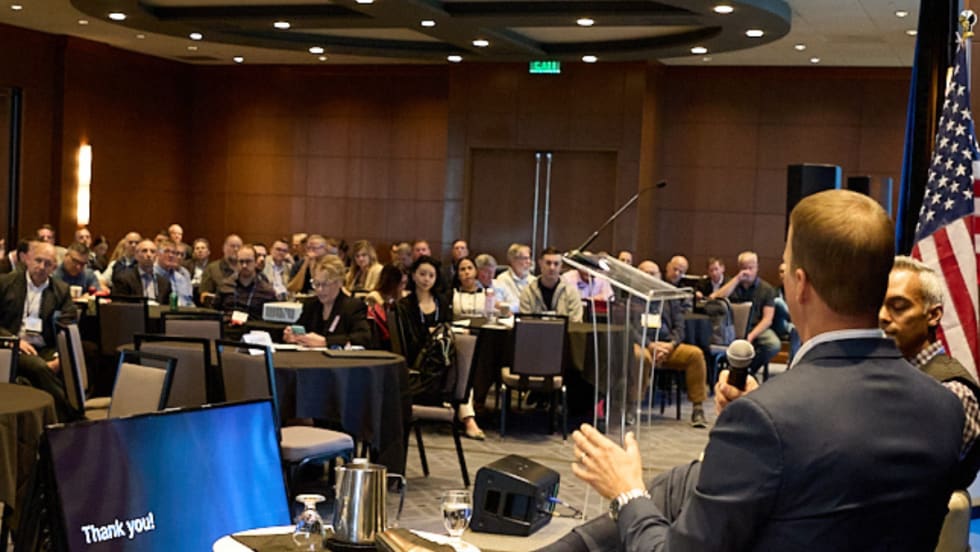
NETS Sets 2026 Fleet Safety Benchmark Conference for Indianapolis
The Sept. 15–17 program will feature fleet benchmarking data, case studies, emerging technologies, and implementation strategies while running alongside the NSC Safety Congress & Expo.
Read More →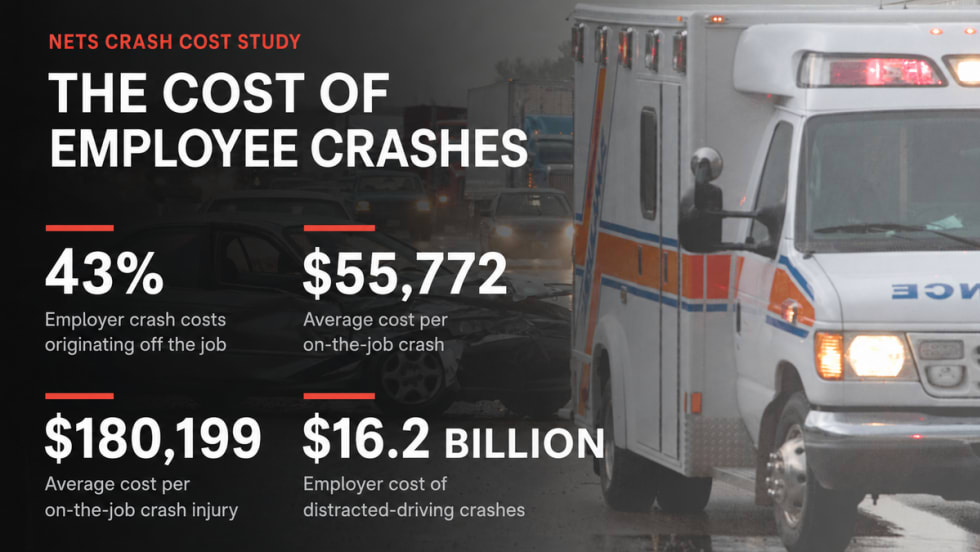
Off-the-Job Crashes Account for 43% of Employers’ $61.7 Billion Crash Burden
NETS quantifies costs dispersed across fleet, risk, HR, and other departments while providing new per-crash benchmarks for employers.
Read More →
Ram Recalls More Than 1.27 Million 1500 Pickups for Seat Belt Anchor Issue
The recall affects certain 2019-2026 Ram 1500 pickups that may have improperly attached second-row seat belt buckle anchors.
Read More →
How Better Visibility Cut Speeding Violations by 48%
Fleet leaders don't need more data, they need clearer visibility into what the data is saying. This case study explores how one utility replaced speeding-event counts with a single metric — miles driven in violation — to strengthen safety and significantly reduce speeding violations.
Read More →
Operation Safe Driver Week: Why the Industry's Oldest Safety Campaign Still Matters to Fleets
A look at how a 2007 enforcement initiative became one of the most consequential weeks on the fleet safety calendar, and what it means for your drivers in 2026.
Read More →