





Related Photos: Driving the 2018 Chevrolet Equinox
Diesel-Powered Chevrolet Equinox to Arrive in Late Summer
Chevrolet's diesel-powered 2018 Equinox compact SUV is expected to go on sale in September before the arrival of the diesel-powered 2017 Mazda CX-5 compact SUV, Chevrolet's marketing director said.
March 27, 2017
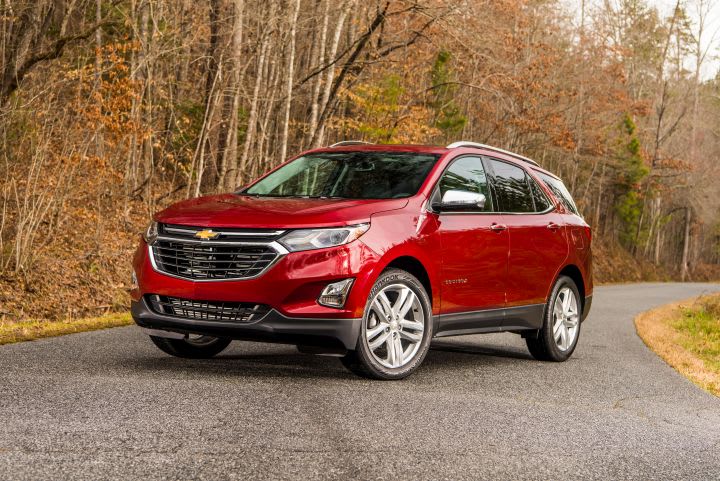
Photo of 2018 Equinox courtesy of Chevrolet.
2 min to read
Photo of 2018 Equinox courtesy of Chevrolet.
Chevrolet's diesel-powered 2018 Equinox compact SUV is expected to go on sale in late summer before the arrival of the diesel-powered 2017 Mazda CX-5 compact SUV, Chevrolet's marketing director said.
The introduction of the diesel SUVs should present a litmus test for consumer and fleet purchasing of light-duty diesels in the wake of Volkswagen's exit from the powertrain category following its emissions scandal.
Chevrolet is viewing the diesel market as a potential opportunity for the company to accumulate sales from competitors exiting the segment, Steve Majoros, Chevrolet's marketing director, told journalists in Asheville, N.C. during an event where automotive journalists drove the gasoline-powered Equinox.
For this third-generation vehicle, GM Fleet will increase its allocation of 2018 Equinox SUVs for commercial and other fleet buyers, Majoros said.
General Mills and other commercial fleets have added the Equinox for functions such as managers, sales professionals and pharmaceutical representatives. They’re also being used for laboratory sample pickup and delivery, said Rita Kass-Shamoun, a GM Fleet spokesperson.
Chevrolet is offering its significantly revamped 2018 Equinox with three powertrains, including a turbocharged 1.5L four cylinder that makes 170 hp paired with a 6-speed automatic, turbocharged 2.0L four cylinder rated at 252 hp that's paired with a 9-speed automatic. The base Equinox is available now, while the 2.0L will arrive in the summer.
Fleet customers have shown "some interest" in the diesel, Kass-Shamoun said.
"We’ll have a better understanding of customer reactions when we can release details on price and fuel economy — that will help fleets determine lifecycle costs of the diesel versus gas engine per their unique needs," Kass-Shamoun said. "For example, we anticipate interest from fleet customers who incur high mileage on their vehicles. The diesel option provides the fuel economy they're seeking and could support a lower total cost of ownership."
The 2018 Equinox reduces weight by about 400 pounds from the outgoing vehicle in the redesign and improves connectivity, safety technology, and adaptive crash avoidance features.
A 1.6L turbo-diesel that makes 136 hp will be paired with a 6-speed automatic. It's expected to achieve 40 mpg on the highway.
The Equinox is available in front-wheel or all-wheel drive. The all-wheel model includes a button above the shifter that allows drivers to toggle between modes, even while the vehicle is in motion.
Mazda is also offering three four-cylinder engines with its 2017 CX-5, including the diesel SkyActiv-D 2.2L that the company says will make the compact SUV one of the most fuel-efficient available. Carryover engines include the 2.0L (155 hp) and 2.5L (184 hp) direct-injection gasoline engines.
Mazda's diesel-powered CX-5 should be on sale before the end of the year, said Jacob Brown, a Mazda spokesman.
More Operations

Here's When You Should Make an Exception to Fleet Policy
Fleet policies are designed to create consistency, but not every driver or situation fits neatly within standard rules.
Read More →
AI-Native or AI-Acquired: What Should Fleet Managers Look for in an AI Platform?
Six questions can help fleet managers look beyond AI marketing claims to evaluate integration, data access, and real-world operational performance.
Read More →
Sponsored•October 14, 2026
A buyer's guide to fleet management software in 2027
Buying fleet management software in 2027 means looking beyond features and price. As fleet operations, technology and expectations evolve, this guide explores what today’s fleet professionals should consider when choosing a system that can deliver value now and adapt to what comes next.
Read More →

What Will Shape the Next Era of Fleet Management?
EVs, AI, and autonomous vehicles are reshaping fleet management. Discover what’s ahead—and how fleet leaders can prepare for the next era.
Read More →
How Fleets Can Recruit and Train Veterans for Technician Roles
Here's how the technician shortage has affected uptime for fleets, and what to do about it.
Read More →
Avis Budget Group Deploys Neology Toll Management Technology Across Major Brands
Neology’s neoFleet platform will manage toll transactions and toll-authority operations for vehicles across Avis, Budget, Payless, Budget Truck and Zipcar.
Read More →
Fleet Personal-Use Charges Edge Higher in 2026
Nearly eight in 10 surveyed fleets allow personal use of company vehicles, while just over half of respondents report charging employees for the privilege.
Read More →
The Future of Fleet + What’s Changing Right Now | AF News Recap
Could developments overseas offer a preview of what’s coming for U.S. fleets? This week, we’re looking at the future of AI, autonomy, and electrification, plus Ford Pro’s new certified pre-owned program, smarter vehicle offboarding, and a new way for fleets to manage toll expenses.
Read More →
How to Handle Vehicle Offboarding
What do fleet managers need to do when a driver leaves?
Read More →
Sponsored•October 1, 2026
Fleet Manager’s Ultimate Playbook: Navigating the New Standard in OEM Connectivity
Rising operating costs, driver safety concerns, and unplanned downtime are putting unprecedented pressure on modern fleets. Discover how fleet managers use embedded OEM connectivity and real-time vehicle data to cut TCO, prevent downtime, and protect drivers without aftermarket telematics hardware.
Read More →