




DeValerio Announces Two Settlements Resolving Claims Against Toyota Motor Sales & Canadian Automobile Dealers' Association
SAN FRANCISCO - Berman DeValerio issued a statement pursuant to an order of the United States District Court for the District of Maine regarding certain models vehicles purchased during 2001-2006.
SAN FRANCISCO - The following statement is being issued by Berman DeValerio pursuant to an order of the United States District Court for the District of Maine:
If You Purchased or Leased a New Car or Truck Manufactured by Any of the Following Automakers During 2001 to 2006, Two Class Action Settlements May Affect Your Legal Rights and You May Be Eligible to Receive a Payment.
Acura
Audi
BMW
Buick
Cadillac
Chevrolet
Chrysler
Dodge
Ford
GMC
Honda
Hummer
Infiniti
Jaguar
Jeep
Land Rover
Lexus
Lincoln
Mazda
Mercedes
Mercury
Mini
Nissan
Oldsmobile
Plymouth
Pontiac
Saab
Saturn
Toyota
Volkswagen
Volvo
Two settlements resolve claims against Toyota Motor Sales, U.S.A., Inc. ("Toyota") and the Canadian Automobile Dealers' Association ("CADA") in several lawsuits across the country. The lawsuits are about an alleged conspiracy among several automakers to keep Canadian new car exports out of the U.S. Toyota and CADA assert that they have acted lawfully and independently and that there is no legal or factual basis for these lawsuits.
This is just a summary-for more info, visit www.CanadianExportAntitrust.com.
Who Is a Class Member? You are a Class Member if you reside in the U.S. and purchased or leased a new vehicle manufactured by one of the automakers listed above from a dealer in the U.S. during the period from January 1, 2001 to December 31, 2006.
What Are the Lawsuits About? The lawsuits claim that several automakers (Chrysler, Ford, GM, Honda, Nissan and Toyota) and a dealer association (CADA) conspired with each other to prevent cheaper, but virtually identical, new cars from being exported to the U.S. from Canada. The lawsuits allege that this violated state antitrust and consumer protection laws and caused new vehicle prices in the U.S. to be higher than they should have been. After considering the extensive evidence of the case after seven years of litigation, the federal Court has ruled in favor of the non-settling defendants and dismissed them from the federal lawsuit. Related lawsuits in state courts in AZ, CA, FL, MN, NM, TN and WI, however, continue against several of the same automakers. See the website for details. If you are a California resident, you should follow the link on the website concerning the pending California class action lawsuit to see how that case may affect you.
What Do the Settlements Provide? Toyota has agreed to pay $35 million, and CADA has agreed to pay $700,000, to settle the lawsuits. Toyota and CADA have agreed not to conspire or share information with others aimed at stopping Canada-to-U.S. new vehicle exports. It is proposed that $500,000 to $1,000,000 of the settlement funds be donated to a nonprofit or government agency engaged in educating or advocating for car buyers.
Will You Receive Any Payment from the Settlements? That depends. You are eligible to file a claim for a payment if you are a Class Member and all of the following apply to you:
1. You purchased or leased your new vehicle during the period January 1, 2001 to April 30, 2003;
2. At the time of your purchase or lease, you resided in one of the following "Eligible States": AZ, AR, CA, ID, KS, ME, MA, MI, MN, MS, NE, NV, NH, NM, ND, SD, TN, VT, WV or WI; and
3. You purchased or leased from a dealer located in one of the Eligible States.
How Do You Ask for Payment? You must submit a claim, which you should do online. A detailed Notice, available at the website, contains all the information you need to submit a claim.
What Are Your Options? You have a choice whether or not to be part of the proposed settlements.
1. If you want to be part of the proposed settlements and you are not eligible for a payment, you don't need to do anything.
2. To get a payment, you must be eligible and file a claim. You should file your claim online at the website. Your claim must be submitted by February 1, 2011.
3. If you do not want to be part of the settlements you must exclude yourself, in writing, by January 28, 2011.
4. If you do not exclude yourself, you may object to either settlement, in writing, by January 28, 2011.
The detailed Notice explains how to exclude yourself or object.
The U.S. District Court for the District of Maine will hold a hearing on February 18, 2011 at 10:00 a.m. to decide whether to approve the settlements. Attorneys for the Class have not been reimbursed for nearly $10 million in out-of-pocket costs, including expert witness fees, and have not been paid any attorneys' fees for litigating the case for over seven years and negotiating the settlements. The Court will consider whether to approve payment of attorneys' fees and costs, combined, not to exceed 30% of the settlement funds plus interest to the attorneys for the Class. You may object to the request for attorneys' fees and costs, in writing, by January 28, 2011.
If you do not have any Internet access, please call 1-866-266-9034 for more info and to learn how to submit a claim by mail.
FOR MORE DETAILED INFORMATION VISIT www.CanadianExportAntitrust.com.
Berman DeValerio is lead counsel for the Settlement Classes. Other Class Counsel include: Pomerantz Haudek Grossman & Gross LLP; Cafferty Faucher LLP; Heins Mills & Olson, PLC; Kohn Swift & Graf, P.C.; Labaton Sucharow LLP; and Lowey Dannenberg Cohen & Hart, P.C.
More Operations

How Fleets Can Recruit and Train Veterans for Technician Roles
Here's how the technician shortage has affected uptime for fleets, and what to do about it.
Read More →
Avis Budget Group Deploys Neology Toll Management Technology Across Major Brands
Neology’s neoFleet platform will manage toll transactions and toll-authority operations for vehicles across Avis, Budget, Payless, Budget Truck and Zipcar.
Read More →
Fleet Personal-Use Charges Edge Higher in 2026
Nearly eight in 10 surveyed fleets allow personal use of company vehicles, while just over half of respondents report charging employees for the privilege.
Read More →
The Future of Fleet + What’s Changing Right Now | AF News Recap
Could developments overseas offer a preview of what’s coming for U.S. fleets? This week, we’re looking at the future of AI, autonomy, and electrification, plus Ford Pro’s new certified pre-owned program, smarter vehicle offboarding, and a new way for fleets to manage toll expenses.
Read More →
How to Handle Vehicle Offboarding
What do fleet managers need to do when a driver leaves?
Read More →
Fleet Manager’s Ultimate Playbook: Navigating the New Standard in OEM Connectivity
Rising operating costs, driver safety concerns, and unplanned downtime are putting unprecedented pressure on modern fleets. Discover how fleet managers use embedded OEM connectivity and real-time vehicle data to cut TCO, prevent downtime, and protect drivers without aftermarket telematics hardware.
Read More →
U.S. Bank Adds Verra Mobility Toll Management to Voyager Fleet Platform
The integration allows U.S. Bank Voyager fleet customers to manage toll payments and violations alongside fuel, EV charging and maintenance expenses.
Read More →
ADAS Prevents Crashes. But Repairs Cost More | AF News Recap
ADAS-equipped vehicles may crash less often, but they can cost more when they do. This week, we’re breaking down what that tradeoff means for fleets, plus Subaru’s first Forester Wilderness Hybrid, Nissan’s new e-POWER Rogue, and why Calstart has become Catalyst Mobility.
Read More →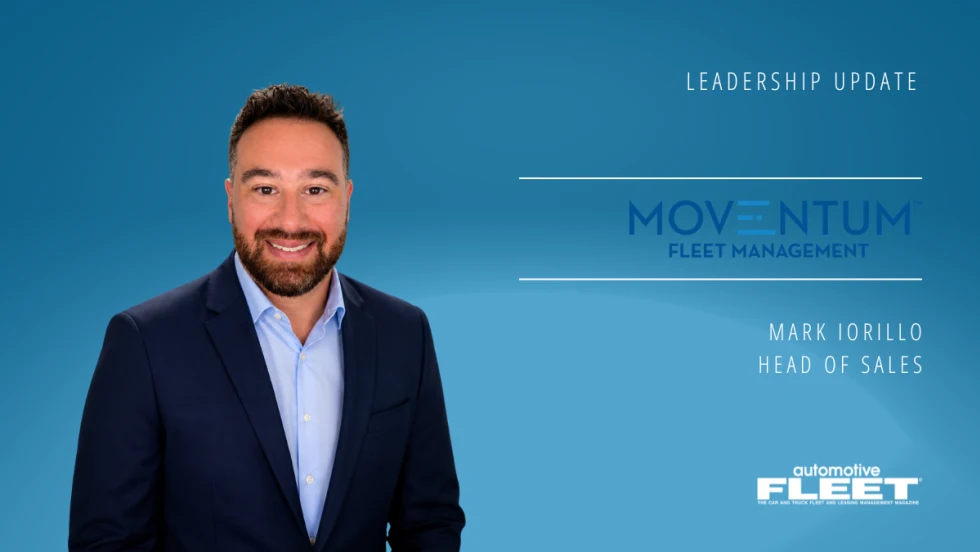
Moventum Fleet Management Names Mark Iorillo Head of Sales
Iorillo brings nearly 20 years of fleet management and sales experience to the role, including previous positions at Element Fleet Management, CEI, Donlen and Ryder.
Read More →
Fleet Has a Talent Pipeline Problem. What Comes Next? | AF News Recap
Where will fleet’s next generation of leaders come from? This week, we’re looking at the industry’s talent pipeline, what certification can add to a fleet career, how to build an award-worthy track record, and the return of Automotive Fleet’s Personal Use Survey.
Read More →