




DEF Tanks May Get Smaller Under New EPA Rules
Under new rules approved by the EPA, vehicles could get smaller DEF tanks than now, because the special fluid is widely available and not as much of it must be carried aboard the vehicle.

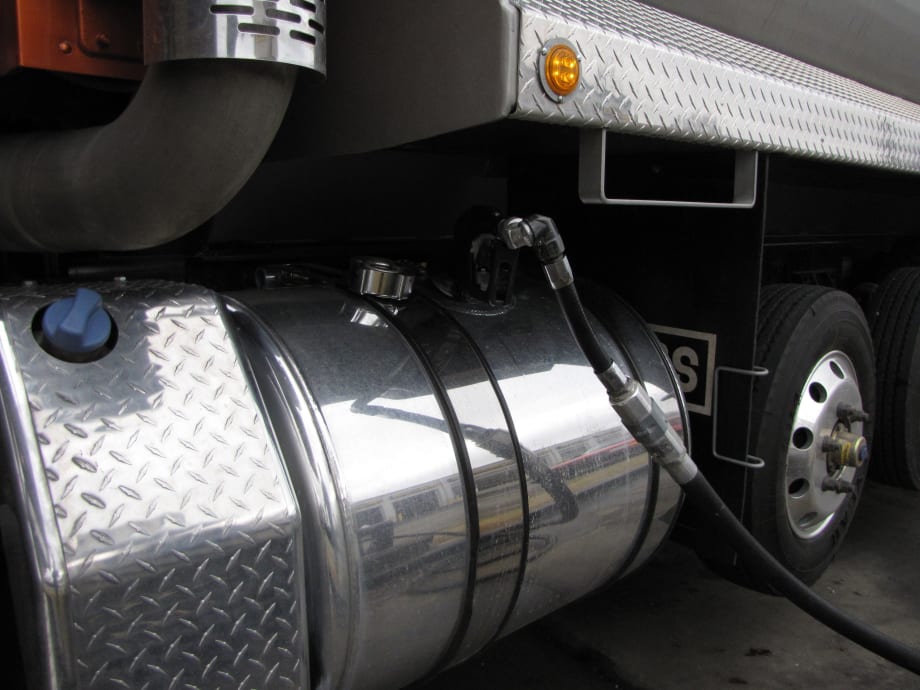
New rules say the blue-capped DEF tank can be replenished more often, allowing trucks to carry less fluid. Thus tanks could become smaller.
New rules say the blue-capped DEF tank can be replenished more often, allowing trucks to carry less fluid. Thus tanks could become smaller.
New rules on replenishment of diesel exhaust fluid will allow vehicle manufacturers more leeway in equipping cars and trucks with DEF tanks without certifying them individually, according to the Environmental Protection Agency. Truck owners and drivers are not directly affected by the new rules, but must continue to maintain vehicles as before.
One practical result is that trucks might get smaller DEF tanks than they currently have. The special fluid is widely available today so not as much of it must be carried aboard the vehicle.
DEF is sprayed into diesel engines’ hot exhaust to reduce nitrogen oxide through a chemical reaction. It is the active part of selective catalytic reduction used by virtually all builders of on-road diesels, and many makers of off-road diesel engines. Dosing rates are about 2% of fuel use, builders have said, though this varies with the operation and engine size and type.
The new rules reflect EPA’s greater confidence in availability of the special fluid, said a source within the agency who couldn’t be directly quoted. In 2001, when rules were first published, selective catalytic reduction was a new concept in North America and EPA wasn’t sure DEF would be readily available.
The new rules set tank-size “ratios” of DEF to fuel, which builders can use for any vehicle. This will give manufacturers “more flexibility” in choosing tank sizes than before, the EPA source said.
Vocational trucks that return home daily for fueling can have DEF tanks that need filling whenever the fuel tanks do, which the rules call a 1 to 1 ratio. This might allow trucks to carry a smaller DEF tank, which could save some weight and frame space.
For long-haul trucks the ratio is 2 to 1, meaning their DEF tanks could be filled every other time the fuel tanks are. This might also allow a smaller DEF tank, though truck owners might prefer larger tanks so the fluid refilling task could be done less often.
Truck builders size tanks based on estimated fluid-dosing rates, and have established several tank sizes for various truck classes. These may or may not change, but under the new rules, manufacturers could follow the 1 to 1 or 2 to 1 ratio and be legal.
Truck owners and drivers are not affected, except that they must continue properly maintaining their vehicles so the anti-pollution equipment, including SCR gear, works properly, EPA says. Like now, failure to keep enough fluid in DEF tanks results in warning lights and eventual cutting of power and torque until tanks are replenished.
However, the rules might have more effect on diesel-powered light-duty vehicles, especially cars, because EPA wants replenishing schedules to be shorter than they are becoming, said Allen Schaeffer, executive director at the Diesel Technology Forum. Manufacturers have sized DEF tanks so top-offs could be done at engine oil-change times, when dealers and service shops could do both, and motorists need not be concerned with DEF.
But those intervals are becoming longer, Schaeffer noted, and EPA worries that fluid fills could be delayed. Motorists who drive diesel-powered cars might have to learn about DEF and know when to top off the tanks.
The rules continue exemptions for emergency vehicles, like fire trucks and ambulances, so their diesels can keep operating at full power even if DEF tanks run low. Emergency exemptions for off-road engines, like diesel-powered generators and pumps, also remain in effect.
More Green Fleet

Merchants Fleet Reports 290M EV Miles as Fleets Navigate Changing Electrification Market
From millions in operating savings to hundreds of millions of EV miles, Merchants Fleet’s latest report reveals what’s working and what’s changing in fleet electrification.
Read More →
The EV Breakdown Nobody's Talking About: Why Most Electric Vehicle Roadside Calls Aren't Mechanical Failures
Here's why EV breakdowns are widely misunderstood.
Read More →
ChargePoint Now Available in Energy Pass
ChargePoint and additional planned charging network integrations were added to GM's Energy Pass.
Read More →

First Look: Slate Auto's Electric Fleet Pickup
Could an affordable, modular EV pickup make electrification more practical for fleets?
Read More →
Slate Debuts Colorful, Unique EV Models
A recent media and client event, studded with electric vehicles dressed up on platforms, planted a new position for the manufacturer in the wider EV market. Fleets will find cost-saving advantages.
Read More →
Slate Electric SUV, Pickup Switchable Model Aims For Light-Duty Fleets
Everything about this EV is counterintuitive and understated, making it stand out from the crowd.
Read More →
Inspiration Mobility Acquires Key Electrada Assets
Inspiration Mobility Group has acquired select assets of Electrada, adding the fleet electrification provider's team, technology, and charging infrastructure development capabilities to its energy management business.
Read More →
Turning Connected Vehicle Data Into Decisions That Matter
Fleet leaders have more data than ever, but turning that data into clear, actionable decisions remains a challenge. This white paper shows how leading organizations are using connected vehicle data to improve safety, reduce costs, and optimize fleet performance. Learn how to turn insight into action across your fleet.
Read More →
Are You Tracking Your Fleet's True Total Cost of Ownership?
Bobit Business Media surveyed 190 fleet professionals and found that while most fleets are tracking costs, fragmented systems and data gaps are keeping true TCO visibility out of reach. With rising pressure to control spend in an increasingly volatile environment, the gap between what fleets think they know and what the data actually shows is wider than you might expect. See how your peers are managing costs today and where the industry still has room to improve.
Read More →