




Related: NETS Developing Road Safety Tools
Crashes Cost U.S. Employers $47.4B
Speeding resulted in $8.4 billion in crash-related expenses, with distracted driving close behind at $8.2 billion, according to a new report from NETS.
by Staff
March 3, 2016
Photo courtesy of NHTSA.
3 min to read
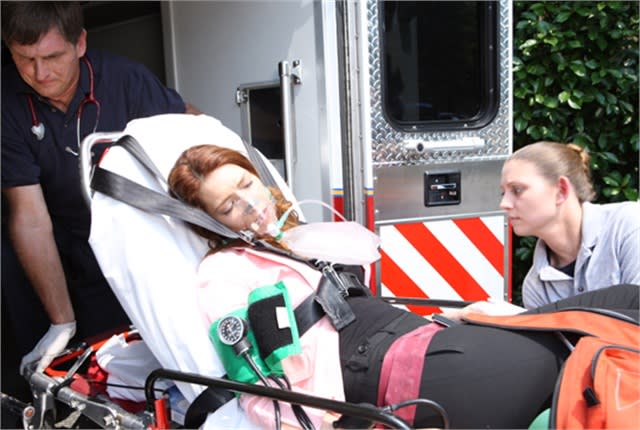
Photo courtesy of NHTSA.
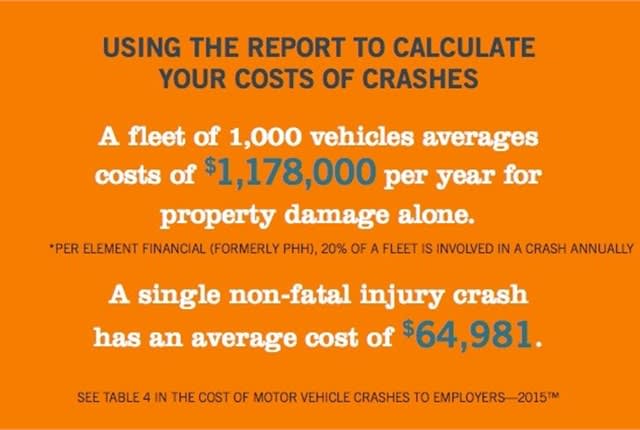
U.S. traffic crashes in 2013 cost employers $47.4 billion in direct expenses including medical care, liability, lost productivity and property damage, according to a new report from the Network of Employers for Traffic Safety.
The study, funded by the National Highway Traffic Safety Administration, discusses how employers could control such costs by promoting safe driving habits, including seat belt usage and the elimination of speeding, drunk driving and distracted driving — whether or not employees are on the clock.
The report updates a 2002 study about the economic burden of traffic crashes on employers.
In 2013, more than 1.6 million workdays were lost because of traffic crashes, according to the new report. Nearly 90% of those lost days were attributed to crashes that occurred off the job. Such collisions involved employees or their dependents.
Speeding resulted in $8.4 billion in crash-related expenses, with distracted driving close behind at $8.2 billion. Driving under the influence of alcohol resulted in $6 billion in losses, and failure to buckle up a seat belt added $4.9 billion to the total.
“The consequences of traffic crashes are far reaching. It’s a domino effect that negatively impacts individuals, families, communities and businesses,” said Mark Rosekind, NHTSA administrator. “It is critical that individuals make safe choices. Driving behavior change in traffic safety is something NHTSA is exploring through a series of regional summits. We hope employers will join us and look at this report as a motivator to help save lives and prevent injuries on our roads.”
Graphic courtesy of NETS.
The report also found that employer-paid medical costs per employee injured in a crash were nearly double in on-the-job crashes where the employee wasn’t wearing a seat belt and were increased by a third for off-the-job crashes.
“When people think of the human and financial impact of traffic crashes on the workplace, they think about company car drivers,” said Jack Hanley, executive director of NETS. “This new report is an eye-opener. It shows that employers bear the crash costs of all their employees, not just their company drivers. Investing in road safety is good business and today’s report provides employers with a blueprint for developing business cases in support of employee road safety.”
Click here to download the full report.
NETS has introduced a free toolkit to help companies encourage employees to wear a seat belt. Coca-Cola Refreshments developed the toolkit at its Bismarck, N.D., site, where observed seat belt usage increased from a baseline 54% to 84% over a six-week period. Coca-Cola Refreshments is a unit of The Coca-Cola Co., a NETS board member.
All of the materials used are available in the toolkit and require minimal time and cost to conduct an all-employee site-wide seat belt usage improvement campaign, NETS said. The free toolkit is available at 2seconds2click.org. NETS also offers, at no charge, “The Comprehensive Guide to Road Safety” for employers with occupational drivers. The guide is available on the group’s website at trafficsafety.org.
More Safety
IIHS Crash Avoidance Tests Reveal Safety Gaps in Cargo Vans and Work Trucks
New crash-avoidance ratings from the Insurance Institute for Highway Safety reveal inconsistent performance among commercial vehicles, with several popular cargo vans and heavy-duty pickups struggling to avoid collisions with other vehicles and pedestrians.
Read More →
What’s Next for Fleet? Safety, AI & Industry Recognition | AF News Recap
Could your company's culture be encouraging distracted driving? This week, we're exploring how workplace expectations affect driver safety, what AI, EVs, and autonomous vehicles could mean for the future of fleet management, and how fleet professionals can strengthen their award nominations.
Read More →
Does Your Fleet's Culture Encourage Distracted Driving?
What happens when the people responsible for enforcing safety rules are the ones setting the wrong example? The answer may reveal why some of the biggest risks to fleet drivers have little to do with what's written in the employee handbook.
Read More →
Sponsored•October 1, 2026
Fleet Manager’s Ultimate Playbook: Navigating the New Standard in OEM Connectivity
Rising operating costs, driver safety concerns, and unplanned downtime are putting unprecedented pressure on modern fleets. Discover how fleet managers use embedded OEM connectivity and real-time vehicle data to cut TCO, prevent downtime, and protect drivers without aftermarket telematics hardware.
Read More →
From Driver Well-Being to EV Charging | AF News Recap
Mental health belongs in the fleet safety conversation. This week, we’re looking at five ways fleets can support employee well-being before a crisis, plus Holman’s expansion in Mexico, new one-day Fleet Forward passes, and why EV charging demand is outpacing infrastructure growth.
Read More →
Nexar-Nauto Merger Aims to Give Fleets Better Safety Intelligence Through Larger Driving Dataset
Stefan Heck tells Automotive Fleet that combining more than 10 billion miles of driving history with Nexar's AI models will give fleets deeper insights into driver risk and roadway conditions than either company could provide independently.
Read More →
Don't Wait for a Crisis: 5 Ways to Build Mental Health Into Your Fleet Safety Program
For Suicide Prevention Month, fleet and safety leaders have an opportunity to put mental health where it belongs: at the center of workplace safety.
Read More →
How Camera Data Can Strengthen a Fleet’s Insurance Renewal
Insights from a commercial insurance carrier and a broker show how fleets can turn video telematic data, driver coaching, and improved claims results into a stronger case at insurance renewal.
Read More →
The Safest Fleets Aren’t the Ones with the Most Technology
You’ve made the telematics investment. Here’s how to capture the other half of its value and build the safest fleet on the road.
Read More →
Sponsored•August 7, 2026
Hidden in Plain Sight: Fleet Compliance Risks
Fleet compliance isn't just about having policies — it's about consistently enforcing them. This practical guide reveals six hidden compliance risks common in public sector and shared fleet operations and outlines proven strategies to improve visibility, accountability, and audit readiness
Read More →