




Related: Ford Dominates New Commercial Vehicle Registrations
Commercial Truck Registrations Rise 12 Percent
Commercial and government fleets added 350,837 trucks in classes 3-8 through the first half of 2015 for a 12.1 percent increase from the comparable period a year ago, according to IHS Automotive's second quarter commercial vehicle report.

Paul Clinton・Former Senior Web Editor
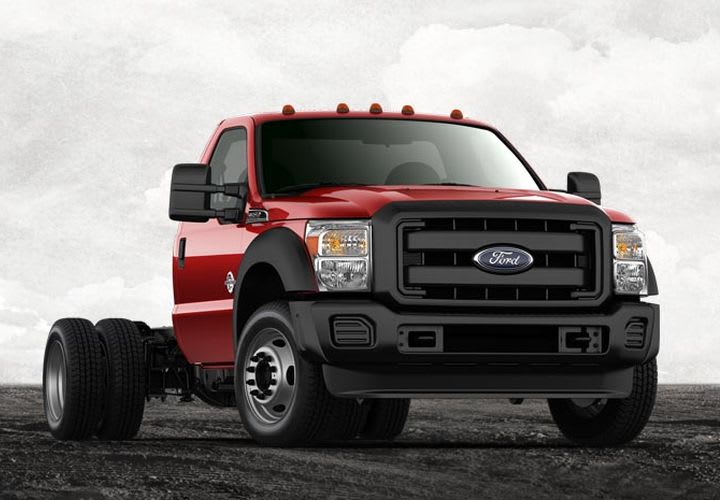
Photo of F-450 Super Duty chassis cab courtesy of Ford.
2 min to read
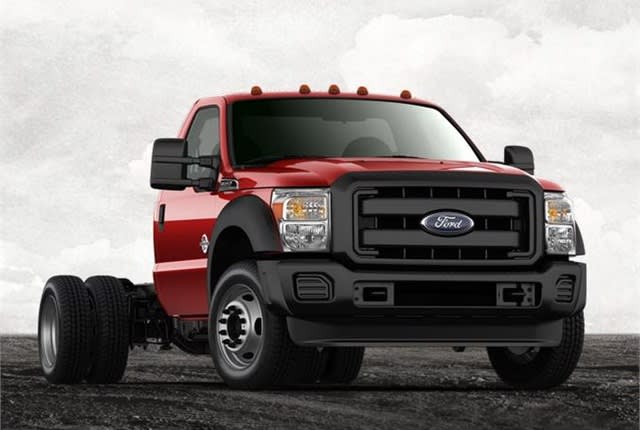
Photo of F-450 Super Duty chassis cab courtesy of Ford.
Commercial and government fleets added 350,837 trucks in classes 3-8 through the first half of 2015 for a 12.1 percent increase from the comparable period a year ago, according to IHS Automotive's second quarter commercial vehicle report.
The increase marks a steady upward trend that began in 2009 for the January-to-June period. This year's first-half registrations marked the fourth strongest period since 2000.
Large fleets with at least 501 vehicles are driving growth among Class 8 registrations with a 20.2 percent increase from a year ago, and registrations of Class 7 and Class 3 vehicles have also showed strength with increases of 11.4 percent and 9.7 percent respectively.
The report forecasts full-year commercial registrations at 696,200 vehicles in classes 3-8 for a 5.4 percent increase form 2014. After Class 8, Class 6 would show the strongest growth trajectory of 5.9 percent with about 51,900 units. Class 5 registrations are projected to fall 5.1 percent to about 58,000 units.
Fleets are adding new trucks more frequently than used trucks even though the two categories make up nearly equal market share. New trucks saw an 11.2 percent increase, while used truck registrations fell 5.4 percent.
Among new-truck brands, Ford saw the highest number of fleet registrations in the first half of 2015 with 94,682 followed by Freightliner with 68,817. As far as engines, diesel remained a strong favorite over gasoline with 77.6 percent share. Registrations of trucks with factory-installed natural gas engines have declined 16.8 percent.
The full report is available to NTEA members by clicking here.
More Operations
Here's When You Should Make an Exception to Fleet Policy
Fleet policies are designed to create consistency, but not every driver or situation fits neatly within standard rules.
Read More →
AI-Native or AI-Acquired: What Should Fleet Managers Look for in an AI Platform?
Six questions can help fleet managers look beyond AI marketing claims to evaluate integration, data access, and real-world operational performance.
Read More →
Sponsored•October 14, 2026
A buyer's guide to fleet management software in 2027
Buying fleet management software in 2027 means looking beyond features and price. As fleet operations, technology and expectations evolve, this guide explores what today’s fleet professionals should consider when choosing a system that can deliver value now and adapt to what comes next.
Read More →

What Will Shape the Next Era of Fleet Management?
EVs, AI, and autonomous vehicles are reshaping fleet management. Discover what’s ahead—and how fleet leaders can prepare for the next era.
Read More →
How Fleets Can Recruit and Train Veterans for Technician Roles
Here's how the technician shortage has affected uptime for fleets, and what to do about it.
Read More →
Avis Budget Group Deploys Neology Toll Management Technology Across Major Brands
Neology’s neoFleet platform will manage toll transactions and toll-authority operations for vehicles across Avis, Budget, Payless, Budget Truck and Zipcar.
Read More →
Fleet Personal-Use Charges Edge Higher in 2026
Nearly eight in 10 surveyed fleets allow personal use of company vehicles, while just over half of respondents report charging employees for the privilege.
Read More →
The Future of Fleet + What’s Changing Right Now | AF News Recap
Could developments overseas offer a preview of what’s coming for U.S. fleets? This week, we’re looking at the future of AI, autonomy, and electrification, plus Ford Pro’s new certified pre-owned program, smarter vehicle offboarding, and a new way for fleets to manage toll expenses.
Read More →
How to Handle Vehicle Offboarding
What do fleet managers need to do when a driver leaves?
Read More →
Sponsored•October 1, 2026
Fleet Manager’s Ultimate Playbook: Navigating the New Standard in OEM Connectivity
Rising operating costs, driver safety concerns, and unplanned downtime are putting unprecedented pressure on modern fleets. Discover how fleet managers use embedded OEM connectivity and real-time vehicle data to cut TCO, prevent downtime, and protect drivers without aftermarket telematics hardware.
Read More →