




Clark County Purchases Clean & Local Diesel
LAS VEGAS - Almost half of the Clark County, Nev., vehicle fleet is being fueled with a new low-emission diesel fuel being produced in Nevada after the County signed a one-year clean diesel contract.
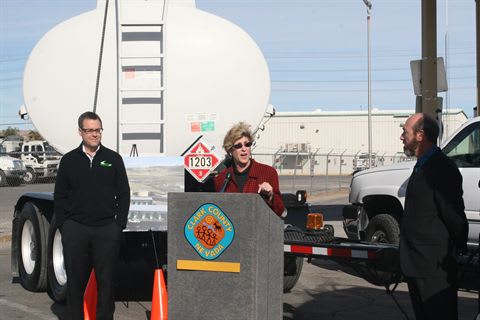
LAS VEGAS - Almost half of the Clark County, Nev., vehicle fleet is being fueled with a new low-emission diesel fuel being produced in Nevada after the County signed a one-year clean diesel contract. Clark County Commissioner Chris Giunchigliani visited the County's Automotive Division yard Jan. 20 to kick off the new clean diesel program as part of the County's ongoing energy conservation efforts, according to a release from the City.
In December, the County Commission approved a contract with Advanced Refining Concepts, LLC, (ARC) to supply its new fuel to the County for powering its diesel vehicle fleet and generators. The new fuel, called GDiesel, showed reduced emissions on test runs, and it costs less. The County uses about 1 million gallons of diesel fuel each year and expects to save $50,000 a year in annual fuel costs by using GDiesel, according to the release.
"Clark County has demonstrated an ongoing commitment to conserving energy and protecting our environment," Commissioner Giunchigliani said. "This new fuel is an exciting product because it reduces air pollution, helps conserve energy and it's saving our local taxpayers money at a time when it's more important than ever to control budget costs."
According to Clark County Commission Chair Susan Brager, the County began experimenting with alternative fuel vehicles in the 1990s and currently operates the third-largest vehicle fleet in Nevada. The majority of Clark County's fleet is powered by alternative fuels. Of its 2,798 vehicles and equipment, 1,426 are diesel powered, most of which will now run on GDiesel. The County also operates 537 hybrid vehicles that have gasoline and electric-powered motors, the largest hybrid fleet in the state and the sixth biggest in the nation, according to Automotive Fleet magazine. The County also operates 451 vehicles with cleaner-burning reformulated gasoline (RFG) and 91 vehicles with a combination of compressed natural gas (CNG) and (RFG). The remaining items in the fleet are trailers and equipment, according to the County.
The County's Automotive Services Division tested GDiesel in various vehicles throughout the County and found significant reductions in common air pollutants.
"It's the cleanest-burning diesel fuel that we have been able to find and requires no modifications to our vehicles or equipment," said David Johnson, manager of the County's Automotive Division. "In addition, shuttle bus drivers at the airport noticed during the testing phase that GDiesel doesn't have the strong odor associated with most diesel fuel products."
Clark County's fleet is considered 100 percent alternative fuel under Nevada state law. Ninety percent of the vehicles counties and local governments acquire each year are required to use alternative fuel, and Clark County's fleet exceeds that standard. Emergency response vehicles such as fire trucks are exempt from the alternative fuel requirement. However, the County will begin using the new GDiesel fuel in Fire department vehicles this year, according to the release.
More Green Fleet

EV Charging Use Is Outpacing Infrastructure Growth
ChargePoint’s 2026 Charging Forward Report points to rising charger use, higher-powered charging, commercial vehicle electrification, and energy-management technology. Here’s what fleets should know.
Read More →
Merchants Fleet Reports 290M EV Miles as Fleets Navigate Changing Electrification Market
From millions in operating savings to hundreds of millions of EV miles, Merchants Fleet’s latest report reveals what’s working and what’s changing in fleet electrification.
Read More →
The EV Breakdown Nobody's Talking About: Why Most Electric Vehicle Roadside Calls Aren't Mechanical Failures
Here's why EV breakdowns are widely misunderstood.
Read More →
ChargePoint Now Available in Energy Pass
ChargePoint and additional planned charging network integrations were added to GM's Energy Pass.
Read More →

First Look: Slate Auto's Electric Fleet Pickup
Could an affordable, modular EV pickup make electrification more practical for fleets?
Read More →
Slate Debuts Colorful, Unique EV Models
A recent media and client event, studded with electric vehicles dressed up on platforms, planted a new position for the manufacturer in the wider EV market. Fleets will find cost-saving advantages.
Read More →
Slate Electric SUV, Pickup Switchable Model Aims For Light-Duty Fleets
Everything about this EV is counterintuitive and understated, making it stand out from the crowd.
Read More →
Inspiration Mobility Acquires Key Electrada Assets
Inspiration Mobility Group has acquired select assets of Electrada, adding the fleet electrification provider's team, technology, and charging infrastructure development capabilities to its energy management business.
Read More →
Turning Connected Vehicle Data Into Decisions That Matter
Fleet leaders have more data than ever, but turning that data into clear, actionable decisions remains a challenge. This white paper shows how leading organizations are using connected vehicle data to improve safety, reduce costs, and optimize fleet performance. Learn how to turn insight into action across your fleet.
Read More →