




Chrysler Pacifica Earns Five-Star Safety Rating
The minivan has drawn the highest possible overall safety score from the National Highway Traffic Safety Administration.
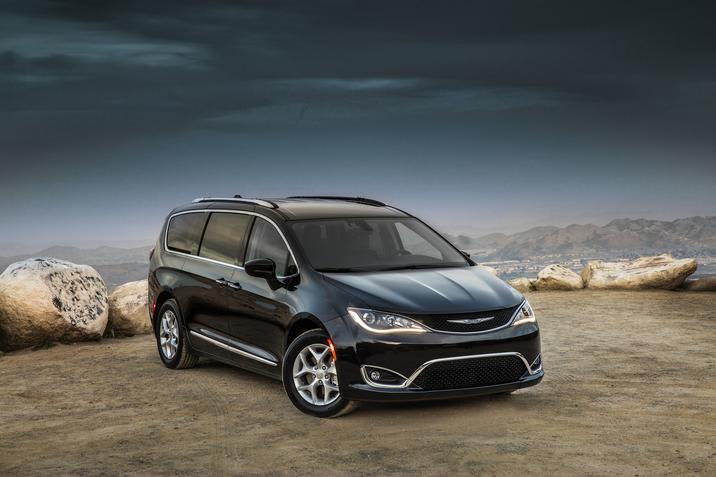
Photo of Chrysler Pacifica courtesy of FCA US.

Photo of Chrysler Pacifica courtesy of FCA US.
The newly introduced 2017-model year Chrysler Pacifica minivan has earned a five-star overall safety rating from the National Highway Traffic Safety Administration.
Five stars is the highest possible safety rating given by NHTSA. To qualify for the top overall score, the Pacifica drew five stars in the frontal crash and side crash tests as well as four stars in the rollover assessment. MGA Research performed the tests on Oct. 6.
NHTSA’s rating system takes into account the availability of three recommended safety features: rear-view cameras, lane-departure warning, and forward-collision warning. The 2017 Chrysler Pacifica checks the box for each category:
ParkView rear backup camera — Standard equipment, it provides a wide-angle view of the area immediately behind the vehicle before reversing at low speeds. It features dynamic grid lines to aid the driver when maneuvering into parking spaces or narrow areas. The image is displayed on the navigation screen when the transmission is shifted into “reverse.”
LaneSense Lane Departure Warning-Plus — Available as part of the Advanced Safety Tec Group, it leverages electronic power steering (EPS) to deliver a torque input to alert and assist the driver with corrective action.
Available Forward Collision Warning-Plus — Available as part of the Advanced Safety Tec Group, it uses radar sensors and cameras to detect whether the Pacifica is approaching another vehicle or large obstacle in its path too rapidly, and warns or may assist the driver in avoiding or mitigating the incident.
The blending of radar sensors and cameras is known as "sensor-fusion technology." Such redundancy affords greater object-detection precision, according to FCA US (Fiat Chrysler Automobiles).
FCA US engineers conducted more than 8,500 simulated crashes and more than 80 full-vehicle impacts. These tests led to the development of a body structure that integrates 12 different steel grades. High-strength steel accounts for 72%, of which 38% is advanced high-strength steel (AHSS). “And because these materials were used strategically, the new Pacifica’s body structure is also 250 pounds lighter than that of the vehicle it replaced – an enhancement that contributes to the vehicle’s class-leading 28 miles-per-gallon highway-cycle fuel-economy rating,” FCA US said in a released statement about the safety rating.
The Pacifica has also earned a 2016 Top Safety Pick+ award from the Insurance Institute for Highway Safety.
More Safety

Nexar-Nauto Merger Aims to Give Fleets Better Safety Intelligence Through Larger Driving Dataset
Stefan Heck tells Automotive Fleet that combining more than 10 billion miles of driving history with Nexar's AI models will give fleets deeper insights into driver risk and roadway conditions than either company could provide independently.
Read More →
Don't Wait for a Crisis: 5 Ways to Build Mental Health Into Your Fleet Safety Program
For Suicide Prevention Month, fleet and safety leaders have an opportunity to put mental health where it belongs: at the center of workplace safety.
Read More →
How Camera Data Can Strengthen a Fleet’s Insurance Renewal
Insights from a commercial insurance carrier and a broker show how fleets can turn video telematic data, driver coaching, and improved claims results into a stronger case at insurance renewal.
Read More →
The Safest Fleets Aren’t the Ones with the Most Technology
You’ve made the telematics investment. Here’s how to capture the other half of its value and build the safest fleet on the road.
Read More →
Hidden in Plain Sight: Fleet Compliance Risks
Fleet compliance isn't just about having policies — it's about consistently enforcing them. This practical guide reveals six hidden compliance risks common in public sector and shared fleet operations and outlines proven strategies to improve visibility, accountability, and audit readiness
Read More →
NETS Sets 2026 Fleet Safety Benchmark Conference for Indianapolis
The Sept. 15–17 program will feature fleet benchmarking data, case studies, emerging technologies, and implementation strategies while running alongside the NSC Safety Congress & Expo.
Read More →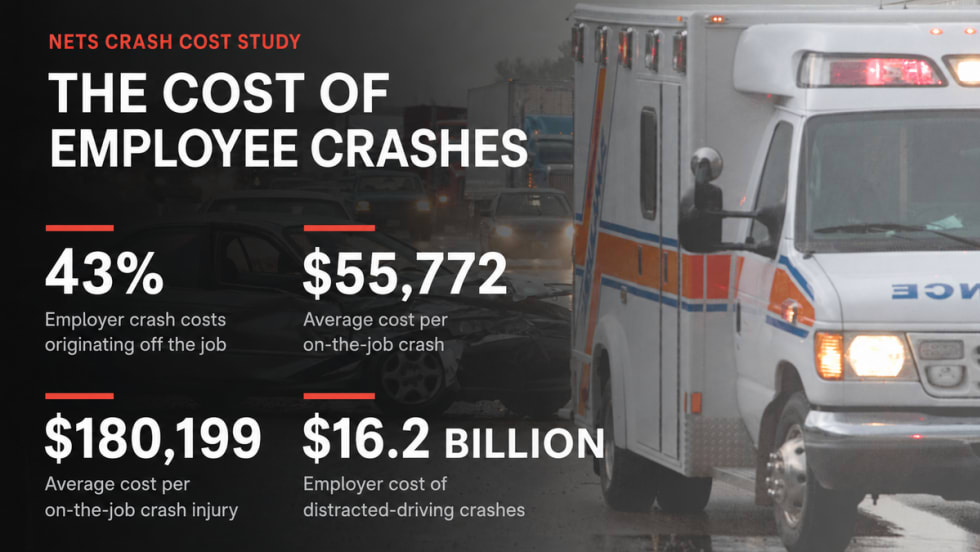
Off-the-Job Crashes Account for 43% of Employers’ $61.7 Billion Crash Burden
NETS quantifies costs dispersed across fleet, risk, HR, and other departments while providing new per-crash benchmarks for employers.
Read More →
Ram Recalls More Than 1.27 Million 1500 Pickups for Seat Belt Anchor Issue
The recall affects certain 2019-2026 Ram 1500 pickups that may have improperly attached second-row seat belt buckle anchors.
Read More →
How Better Visibility Cut Speeding Violations by 48%
Fleet leaders don't need more data, they need clearer visibility into what the data is saying. This case study explores how one utility replaced speeding-event counts with a single metric — miles driven in violation — to strengthen safety and significantly reduce speeding violations.
Read More →
Operation Safe Driver Week: Why the Industry's Oldest Safety Campaign Still Matters to Fleets
A look at how a 2007 enforcement initiative became one of the most consequential weeks on the fleet safety calendar, and what it means for your drivers in 2026.
Read More →