




Chrysler Delivers Test Fleet of PHEV Ram 1500 Pickup Trucks
AUBURN HILLS, MI -- Chrysler Group LLC, working in partnership with the U.S. Department of Energy (DOE), recently delivered the first of a demonstration fleet of Ram 1500 plug-in hybrid electric (PHEV) pickup trucks to municipal officials in Yuma, Ariz.
AUBURN HILLS, MI -- Chrysler Group LLC, working in partnership with the U.S. Department of Energy (DOE), recently delivered the first of a demonstration fleet of Ram 1500 plug-in hybrid electric (PHEV) pickup trucks to municipal officials in Yuma, Ariz.
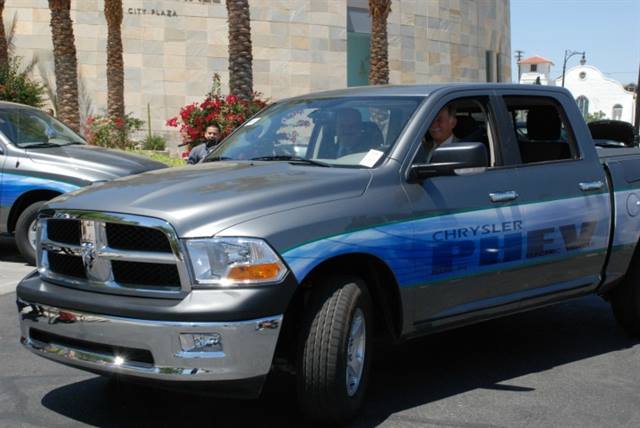
Yuma Mayor Al Krieger drives the first of a demonstration fleet of Ram 1500 PHEV pickup trucks.
Abdullah Bazzi, senior manager of the Chrysler Group’s advanced hybrid vehicle project, delivered the 10 PHEV Ram 1500 pickups. The trucks are part of a national demonstration fleet of 140 vehicles that will be used during the next three years to evaluate customer usage, drive cycles, charging, thermal management, fuel economy, emissions and impact on the region’s electric grid. In addition to Yuma, 11 other partners across the United States will receive vehicles for demonstration and testing purposes.
The project is strictly a demonstration program. There are no plans for a production version of the PHEV Ram 1500 truck at this time, the Chrysler Group said.
Cities and states were selected to evaluate temperature extremes, urban traffic cycles and diverse climates and geographies from North Dakota, Massachusetts, Hawaii and Arizona. Cities will include San Francisco and Sacramento, Calif.; Austin, Texas and Kansas City, Mo.
The Ram 1500 PHEV includes a liquid-cooled 12.9kWhr lithium-ion battery pack and a 6.6 kilowatt (kW) on-board charger. Additional features include AC power generation of up to 6.6kW, directional charging, reverse power flow and full regenerative braking used to capture more energy. For fuel economy improvements, the front axle can be disconnected when not needed. The powertrain also includes a 5.7-liter HEMI V-8 engine and a two-mode hybrid transmission. The 5.7-liter HEMI is equipped with a multiple displacement system (MDS) that improves fuel efficiency at highway speeds by shutting down fuel delivery to up to four cylinders.
The battery pack is located under the second-row seat of the pickup and is liquid-cooled to help maintain a consistent battery temperature. For on-the-job electrical power tools, a 240 volt/30 amp four-prong outlet and 120volt/20amp duplex outlet power strip are located in the rear box.“Cities have been carefully selected to help the Chrysler Group collect a wide range of data,” explained Bazzi. “Temperature extremes found in the cold of North Dakota or the heat of Arizona can have a severe impact on battery life and charging efficiency.”
The choice of a Ram 1500 pickup truck was based upon two-speed transmission technology that was readily available from a previous vehicle electrification project from the Chrysler Group.
Urban and rural use also will be tracked to measure battery performance and overall hybrid efficiency with the demonstration fleet of pickups. Other uses include military bases where vehicles will be able to provide power back to the electric grid in what is termed “reverse power flow” of up to 6.6kW.
Funding for the program in part is provided by the American Recovery and Reinvestment Act of 2009 through the Transportation Electrification Initiative sponsored by the DOE. The purpose of the project, totaling $48 million from DOE and $49.4 million from Chrysler Group, is to help develop vehicles that will be cost-efficient for consumers, satisfy safety concerns of daily travel without recharging, and reduce dependence on foreign oil.
The Chrysler Group said it is also developing a similar fleet of 25 Town & Country minivans with plug-in hybrid technology for demonstration and evaluation that will be allocated to select cities later this year.
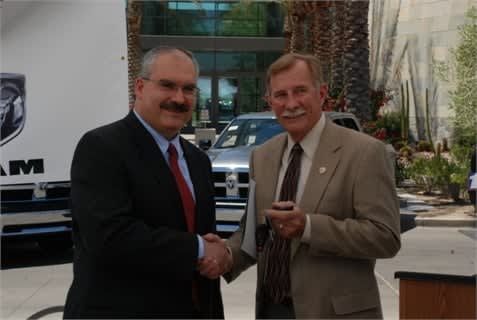
Yuma Mayor Al Krieger (right) takes the keys to a Ram 1500 plug-in hybrid electric pickup from Chrysler Group’s Abdullah Bazzi.
More Green Fleet

EV Charging Use Is Outpacing Infrastructure Growth
ChargePoint’s 2026 Charging Forward Report points to rising charger use, higher-powered charging, commercial vehicle electrification, and energy-management technology. Here’s what fleets should know.
Read More →
Merchants Fleet Reports 290M EV Miles as Fleets Navigate Changing Electrification Market
From millions in operating savings to hundreds of millions of EV miles, Merchants Fleet’s latest report reveals what’s working and what’s changing in fleet electrification.
Read More →
The EV Breakdown Nobody's Talking About: Why Most Electric Vehicle Roadside Calls Aren't Mechanical Failures
Here's why EV breakdowns are widely misunderstood.
Read More →
ChargePoint Now Available in Energy Pass
ChargePoint and additional planned charging network integrations were added to GM's Energy Pass.
Read More →

First Look: Slate Auto's Electric Fleet Pickup
Could an affordable, modular EV pickup make electrification more practical for fleets?
Read More →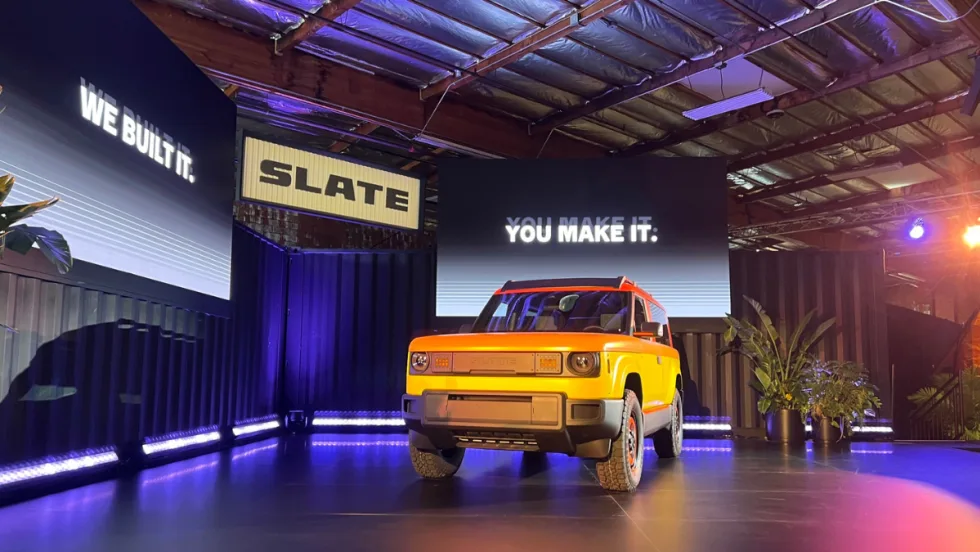
Slate Debuts Colorful, Unique EV Models
A recent media and client event, studded with electric vehicles dressed up on platforms, planted a new position for the manufacturer in the wider EV market. Fleets will find cost-saving advantages.
Read More →
Slate Electric SUV, Pickup Switchable Model Aims For Light-Duty Fleets
Everything about this EV is counterintuitive and understated, making it stand out from the crowd.
Read More →
Inspiration Mobility Acquires Key Electrada Assets
Inspiration Mobility Group has acquired select assets of Electrada, adding the fleet electrification provider's team, technology, and charging infrastructure development capabilities to its energy management business.
Read More →
Turning Connected Vehicle Data Into Decisions That Matter
Fleet leaders have more data than ever, but turning that data into clear, actionable decisions remains a challenge. This white paper shows how leading organizations are using connected vehicle data to improve safety, reduce costs, and optimize fleet performance. Learn how to turn insight into action across your fleet.
Read More →