




China Reduces Tariffs on Imported Vehicles
China will suspend the additional 25% tariff imposed on U.S. auto imports for three months starting Jan. 1, the Chinese Finance Ministry announced Friday.

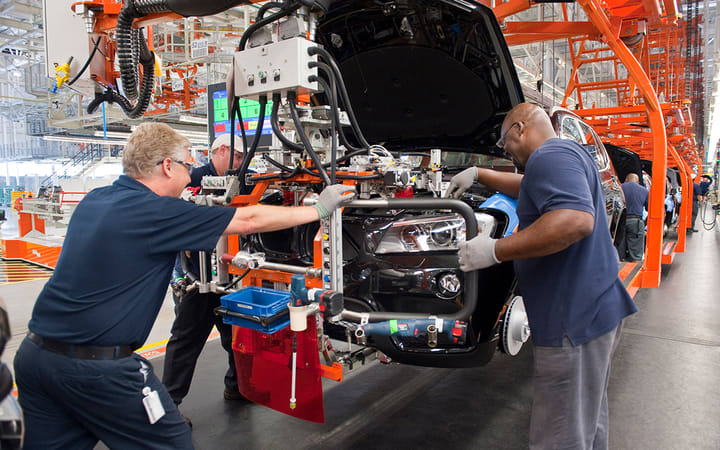
Vehicles exported to China from BMW’s Spartanburg, S.C., plant and other U.S. factories will no longer be subject to an additional 25% import tax as of Jan. 1.
Photo courtesy of BMW.
China will suspend the additional 25% tariff imposed on U.S. auto imports for three months starting Jan. 1, the Chinese Finance Ministry announced Friday. The concession follows a Dec. 1 meeting between President Donald Trump and President Xi Jinping at the G20 summit in Buenos Aires. The ministry described the move as a “concrete action” that will lead to a “mutually beneficial new Sino-U.S. trade order.”
The announcement makes official unconfirmed reports from Bloomberg, other media outlets, and Trump himself that the import tax would be lifted. The 25% hike was enacted in April in retaliation for new levies on steel and aluminum imported to the U.S., bringing the total import tax on U.S.-built vehicles to 40%. Days earlier, China had reduced from 25% to 15% its tariff on all imported vehicles; the U.S. charges an import tax of 27.5% on vehicles made in China.
In the December meeting, Xi agreed to purchase a “very substantial” quantity of American goods to help reduce the nations’ trade imbalance. In return, Trump agreed to back off a threat to raise tariffs from 10% to 25% on $200 billion worth of Chinese exports. The leaders will now work under a self-imposed deadline of April 1 to reach a new, permanent trade deal.
The principal beneficiaries of China’s concession are BMW and Daimler, which owns Mercedes-Benz. The German automakers produce six of China’s 10 most popular imports, many of which are built in American plants. In a statement that followed Trump and Xi’s Buenos Aires meeting, factory executives singled out the pivotal role of BMW’s Spartanburg, S.C., plant in its global operations.
“Free trade has made the success story of BMW in the U.S. possible. In 2017, the Spartanburg plant exported more than 70% of its total production volume of 371,316 units to more than 120 countries,” the statement read, in part. “China is the No. 1 export destination, followed by Germany. According to the U.S. Department of Commerce, the BMW Group is the largest vehicle exporter from the U.S. in terms of value.”
Sales of all U.S. vehicles in China, including those built in Chinese plants operated by General Motors and other manufacturers, were down 1% for the first nine months of the year. In the same span, exports of vehicles to China from the U.S. fell by 30%, a $2.4 billion loss.
More Global Fleet

GeoFencing Adds to Your Truck Security Arsenal
Geofencing is a familiar fleet tool today, but its early adoption marked a major shift in vehicle tracking, route monitoring, and the debate over employee privacy.
Read More →
Holman Takes Full Ownership of ARIZA in Mexico
Holman is bringing its Mexican fleet management operation fully under its own brand after more than 30 years as a joint venture. The change gives multinational fleet customers a single Holman operation across the U.S., Canada, and Mexico.
Read More →
5 Tire Maintenance Tips to Help Prevent Work Truck Downtime
Regular tire checks can do more than extend tread life. These five maintenance practices can help work truck fleets catch problems early, reduce costs, and prevent downtime.
Read More →

Proven Ways to Reduce Work Truck Downtime
The age-old problem of downtime will always be a reality, but with new strategies at hand, fleets have more ways to keep trucks on the road longer.
Read More →


Cameras, Safety and Insurance: From Reactive Claims to Real-Time Prevention (Part 2 of 2)
Part Two: Commercial auto remains one of the most challenging and costly lines of coverage for fleet operators and insurers alike. Continue learning more about how to effectively address these issues from Onur Aksan, Enterprise Business Development Executive, Geotab
Read More →
Cameras, Safety and Insurance: From Reactive Claims to Real-time Prevention
Commercial auto remains one of the most challenging and costly lines of coverage for fleet operators and insurers alike. Learn more about how to effectively address these issues from Onur Aksan, Enterprise Business Development Executive, Geotab.
Read More →
Fleet Costs Are Rising: Here’s How Leaders Are Responding
Fleet leaders are under pressure to reduce costs, adapt to economic uncertainty, and make smarter decisions. See how peers across North America are responding with real data, proven strategies, and forward-looking insights. Download the 2026 Market Pulse Report to benchmark your strategy and uncover where you can gain an edge.
Read More →
Enterprise Fleet Management Surpasses 900,000 Vehicles in U.S. & Canada
Enterprise Mobility connects with mobility solutions around the globe
Read More →