




Chevrolet Unveils All-New 2015 Colorado Mid-Size Pickup
Chevrolet has reentered the mid-size truck market in the U.S. with debut of the all-new 2015 Chevrolet Colorado. The new Colorado will feature a 2.5L I-4 engine as standard.

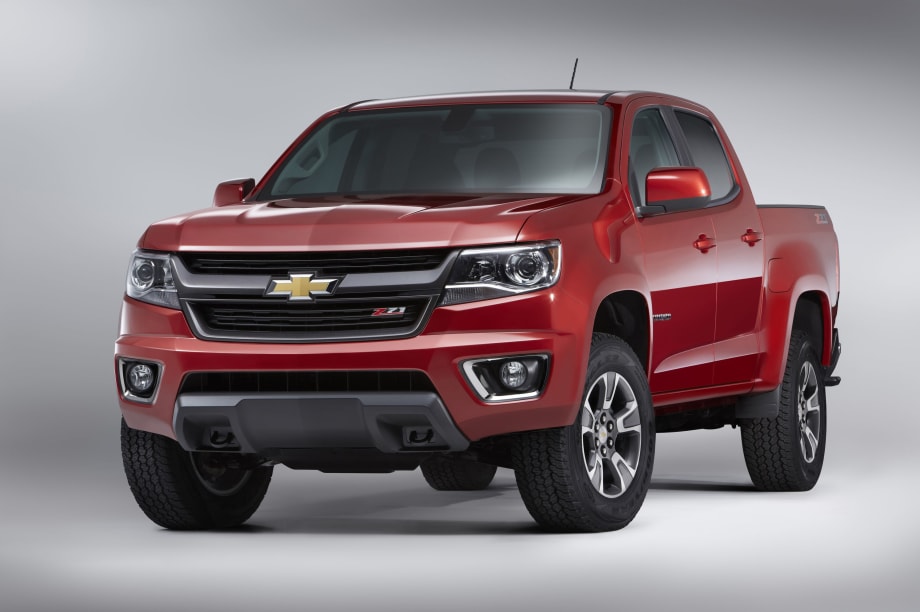
Chevrolet has unveiled the 2015-MY Colorado mid-size pickup.
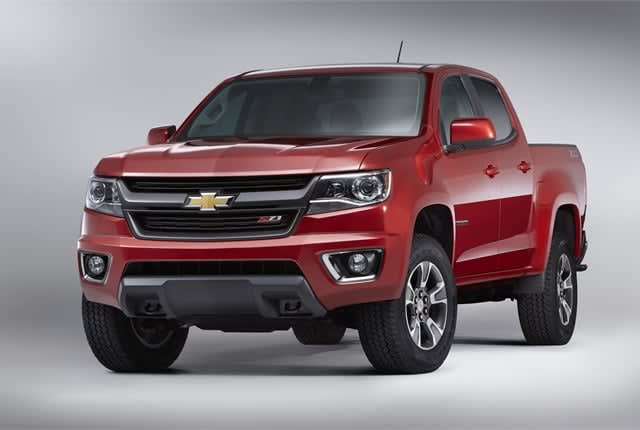
Chevrolet has unveiled the 2015-MY Colorado mid-size pickup.
Editor's note: View our "Chevrolet Colorado '15 Mid-Size Truck" photo gallery for detailed photos of the vehicle.
Chevrolet has reentered the mid-size truck market in the U.S. with the debut of the all-new 2015 Chevrolet Colorado. The new Colorado was developed specifically for the North American market.
There will be three configurations of the 2015 Colorado — an extended-cab model with a 6-foot bed, a crew cab with a 5-foot bed, and a crew cab with a 6-foot bed. With the tailgate down, the 6-foot bed allows 8-foot-long items to be hauled within the vehicle. For fleet and commercial customers, Chevrolet is also planning to offer a rear-seat delete and box-delete version of the Colorado.
The automaker is currently working with its upfitters to develop upfit options for the Colorado.
According to Chevrolet, the Colorado will be ideal for several fleet-specific functions, including auto parts and light delivery, pest control, and light service duties.
Chevrolet will offer three trim levels — the WT, LT, and Z71 trims — that will all be available in either 2WD or 4WD.
The Colorado will be outfitted with a 2.5L I-4 engine as standard, which achieves 193 hp at 184 lb.-ft. of torque. A 3.6L V-6, which achieves 302 hp at 270 lb.-ft. of torque will also be available. During the 2015 calendar year, Chevrolet expects to make a Duramax 2.8L I-4 turbodiesel available for the Colorado.
When properly equipped, the Colorado is expected to have a trailering capacity of more than 6,700 pounds. All capacities, including fuel efficiency, are currently pending.
The Colorado features triple-sealed doors inlaid in the body sides, like the 2014 Silverado, for improved aerodynamic performance and a quieter interior, according to the automaker.
To help keep overall mass down and improve the front-to-rear weight balance, the Colorado features a segment-first aluminum hood. It also features the segment's only active aero grille shutters, which close at certain highway speeds to enhance aerodynamics. The North American version of the Colorado is 900 pounds lighter, 16 inches shorter, 5 inches narrower, and 3 inches lower than the global version of the vehicle.
The Colorado features a number of solutions for hauling and accessing cargo:
Standard CornerStep rear bumper design introduced on the 2014 Silverado.
Available EZ Lift-and-Lower tailgate that uses an internal torsion bar to make raising the tailgate easier with one hand, and a damper for more-controlled lowering.
Standard two-tier loading that allows a platform to effectively split the bed into upper and lower sections, making it easier to haul, store and conceal items such as tools.
Thirteen standard tie-down locations throughout the bed for use with available, movable cargo tie-down rings.
Standard bed rail and tailgate protectors.
Available factory-installed spray-in bed liner.
Standard safety features include:
Six standard air bags, including head side curtain air bags designed for occupant ejection mitigation.
Large rearview mirrors and standard rear-vision camera system for greater visibility.
A forward collision alert system is also available.
Chevrolet unveiled the vehicle at the Los Angeles Auto Show on Wednesday, Nov. 20, 2013.
--By Chris Wolski
More Operations

Fleet Has a Talent Pipeline Problem. What Comes Next? | AF News Recap
Where will fleet’s next generation of leaders come from? This week, we’re looking at the industry’s talent pipeline, what certification can add to a fleet career, how to build an award-worthy track record, and the return of Automotive Fleet’s Personal Use Survey.
Read More →
Smith System Launches Driver Risk Management Program
Fleets have more driver data than ever, but identifying risky behavior doesn't necessarily correct it. Smith System's new Driver Risk Management program combines monitoring, training, and follow-up coaching to help fleets connect risk signals with driver intervention.
Read More →
Automotive Fleet Opens 2026 Personal Use Survey for Commercial Fleet Managers
Less than two weeks left! Commercial and corporate fleet managers are invited to share how their organizations handle company vehicle personal-use policies, charges, and driver eligibility.
Read More →
From AI Prompts to AI-Generated Safety Songs | AF News Recap
Can better prompts make AI more useful for fleet managers? This week, we’re breaking down smarter fleet analysis, an AI-assisted experiment that turned safety training into music, and what happened to fuel prices in August.
Read More →
How to Write Better AI Prompts for Fleet Analysis
Include these six elements in your fleet prompts to generate more relevant analysis and accurate answers.
Read More →
Fleet Meets: Eric Kilgore
This edition of the Fleet Meets series features one of the industry's best leaders driving multi-market and national operations.
Read More →
Why Reactive Fleet Management Is Becoming Too Expensive to Sustain
Research highlights a growing need for proactive management strategies to address rising costs in fleet operations effectively.
Read More →
What Your Fleet KPIs Aren’t Telling You
Tracking fleet metrics is only useful when the data leads to better decisions. This guide helps fleet leaders assess cost, utilization, and downtime more accurately, identify performance gaps, and prioritize the actions that can improve operational results.
Read More →
Hidden in Plain Sight: Fleet Compliance Risks
Fleet compliance isn't just about having policies — it's about consistently enforcing them. This practical guide reveals six hidden compliance risks common in public sector and shared fleet operations and outlines proven strategies to improve visibility, accountability, and audit readiness
Read More →
Turning Fleet Payment Data into Executive Insights
Does data alone drive results in operations?
Read More →