




Chevrolet Introduces CNG-Capable Bi-Fuel Impala
Chevrolet announced the introduction of the 2015 Impala bi-fuel sedan -- a full-size sedan capable of running on either compressed natural gas (CNG) or gasoline.
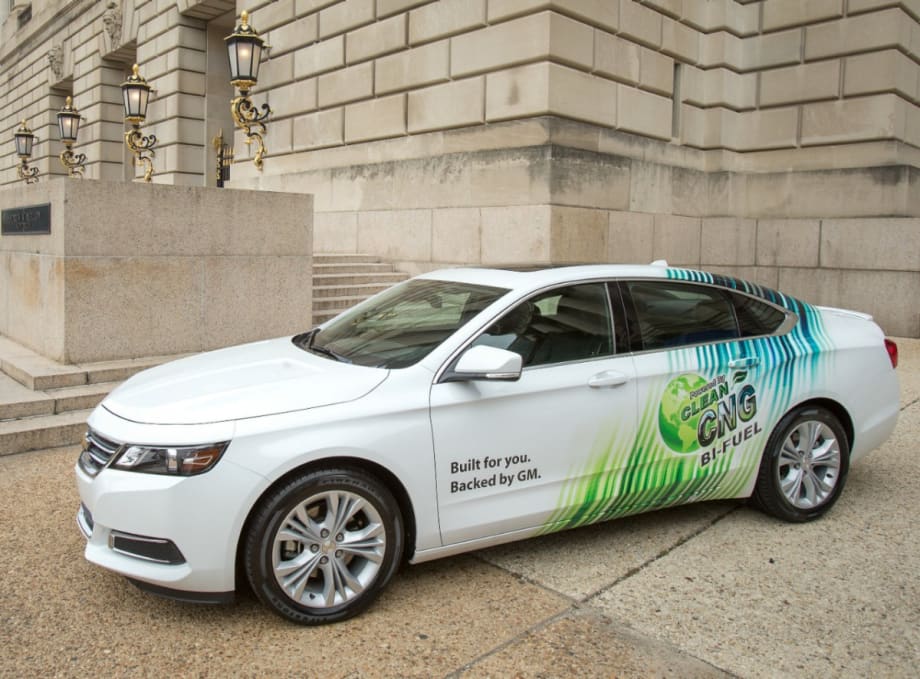
While EPA estimates on the vehicle are not yet finalized, an approximately eight gasoline-gallon-equivalent CNG tank mounted in the Impala’s trunk is expected to provide up to 150 miles of vehicle range for a total range of up to 500 miles.
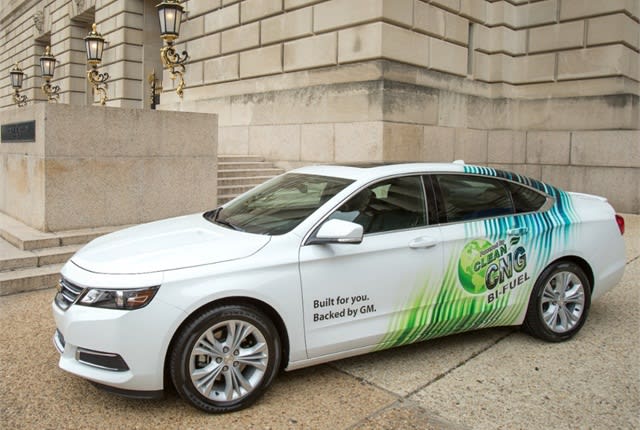
While EPA estimates on the vehicle are not yet finalized, an approximately eight gasoline-gallon-equivalent CNG tank mounted in the Impala’s trunk is expected to provide up to 150 miles of vehicle range for a total range of up to 500 miles.
Chevrolet announced the introduction of the 2015 Impala bi-fuel sedan - a full-size sedan capable of running on either compressed natural gas (CNG) or gasoline.
CNG is less costly at the pump and significantly reduces carbon dioxide emissions compared to traditional liquid fuels such as gasoline, according to the manufacturer. A separate CNG fuel tank, mounted in the trunk, enables the driver to switch between fuels at the push of a button. When the CNG tank is depleted, the system automatically switches to gasoline.
Most of the natural gas used in the U.S. comes from domestic or other North American sources. CNG’s abundance makes it a viable economic alternative for drivers living in areas with easy access to CNG filling stations, and it currently costs significantly less than gasoline. A person who drives 24,000 miles a year can recoup the additional investment in the bi-fuel option within a few years at current prices.
CNG vehicles typically have 20-percent fewer greenhouse gas emissions than gasoline-powered cars, according to the California Air Resources Board (CARB).
The bi-fuel Impala is expected to go on sale next summer to retail and fleet customers at Chevrolet dealers in the United States and Canada.
While EPA estimates on the vehicle are not yet finalized, an approximately eight gasoline-gallon-equivalent (GGE) CNG tank mounted in the Impala’s trunk is expected to provide up to 150 miles of vehicle range for a total range of up to 500 miles.
The bi-fuel Impala is fitted at the factory with a port fuel-injected 3.6L engine that includes hardened intake and exhaust valves and valve seats, to support the long-term durability needed for CNG combustion. The GM-engineered CNG fuel system is added at a secondary manufacturing location by a GM supplier. Ordering CNG is the same as selecting any other option at the time of purchase
Redesigned for 2014, the Impala is new from the ground up, with muscular design elements that provide a nod to the past with modern styling. It is the 10th generation of one of the industry’s most enduring and popular nameplates. Impala has been America’s best-selling full-size sedan since 2004 with sales of more than 169,000 in 2012.
The bi-fuel Impala’s 3.6L V-6 engine has the highest horsepower output in the segment from a naturally aspirated V6 engine, engineered to give a satisfying feeling of immediate performance. When running on natural gas, the engine will deliver approximately 85 percent of the power produced with gasoline. The engine is matched with an advanced 6-speed automatic transmission.
The bi-fuel Impala is covered by GM’s three-year, 36,000-mile new vehicle limited warranty and five-year, 100,000-mile limited powertrain warranty and vehicle emissions warranty, meeting all Environmental Protection Agency and California Air Resources Board emission certification requirements.
More Green Fleet

EV Charging Use Is Outpacing Infrastructure Growth
ChargePoint’s 2026 Charging Forward Report points to rising charger use, higher-powered charging, commercial vehicle electrification, and energy-management technology. Here’s what fleets should know.
Read More →
Merchants Fleet Reports 290M EV Miles as Fleets Navigate Changing Electrification Market
From millions in operating savings to hundreds of millions of EV miles, Merchants Fleet’s latest report reveals what’s working and what’s changing in fleet electrification.
Read More →
The EV Breakdown Nobody's Talking About: Why Most Electric Vehicle Roadside Calls Aren't Mechanical Failures
Here's why EV breakdowns are widely misunderstood.
Read More →
ChargePoint Now Available in Energy Pass
ChargePoint and additional planned charging network integrations were added to GM's Energy Pass.
Read More →

First Look: Slate Auto's Electric Fleet Pickup
Could an affordable, modular EV pickup make electrification more practical for fleets?
Read More →
Slate Debuts Colorful, Unique EV Models
A recent media and client event, studded with electric vehicles dressed up on platforms, planted a new position for the manufacturer in the wider EV market. Fleets will find cost-saving advantages.
Read More →
Slate Electric SUV, Pickup Switchable Model Aims For Light-Duty Fleets
Everything about this EV is counterintuitive and understated, making it stand out from the crowd.
Read More →
Inspiration Mobility Acquires Key Electrada Assets
Inspiration Mobility Group has acquired select assets of Electrada, adding the fleet electrification provider's team, technology, and charging infrastructure development capabilities to its energy management business.
Read More →
Turning Connected Vehicle Data Into Decisions That Matter
Fleet leaders have more data than ever, but turning that data into clear, actionable decisions remains a challenge. This white paper shows how leading organizations are using connected vehicle data to improve safety, reduce costs, and optimize fleet performance. Learn how to turn insight into action across your fleet.
Read More →