




Chevrolet Details 2020 Silverado 1500's New Diesel Engine
The 2020 Chevrolet Silverado 1500’s available 3.0L Duramax inline-six turbo-diesel engine is the first-ever inline-six turbo-diesel offered in Chevrolet’s full-size light-duty trucks.


Photo courtesy of GM
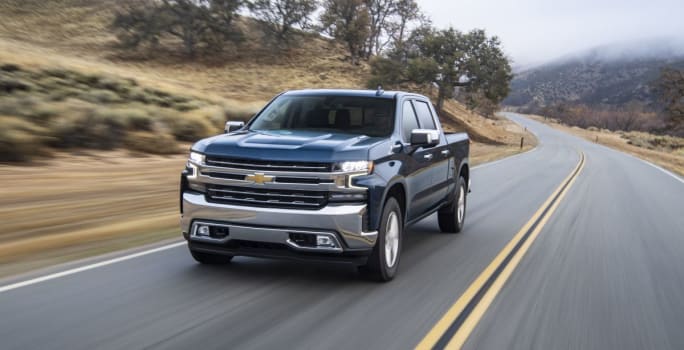
Photo courtesy of GM
The 2020 Chevrolet Silverado 1500’s available 3.0L Duramax inline-six turbo-diesel engine is the first-ever inline-six turbo-diesel offered in Chevrolet’s full-size light-duty trucks, according to General Motors.
Chevrolet engineers started with a clean-sheet design and developed an all-new engine. It is priced identically to the 6.2L V-8 as a $2,495 premium over a 5.3L V-8 model or $3,890 over a 2.7L Turbo model.
“From the moment the engine is started to its idle, acceleration, and highway cruising, the 3.0L Duramax performance will change perceptions of what a diesel engine can offer in refinement,” said Nicola Menarini, director for Diesel Truck Engine Program Execution. “With advanced technologies that draw on global diesel expertise, it’s a no-compromise choice for those who want the capability and driving range of a diesel in a light-duty truck.”
Available on LT, RST, LTZ, and High Country models, the 3.0L Duramax diesel rounds out the new Silverado’s range of six propulsion choices.
It is rated at an SAE-certified 277 hp and 460 lb.-ft. of torque delivering 95% of peak torque at just 1,250 rpm. Peak torque is sustained from 1,500 rpm through 3,000 rpm.
The 3.0L Duramax is paired with GM’s 10L80 10-speed automatic transmission, featuring a centrifugal pendulum absorber torque converter that reduces vibrations to improve smoothness. This combination also offers exhaust braking, which uses the diesel engine’s compression to help slow the vehicle, requiring fewer brake applications by the driver when in Tow Haul mode.
The inline six-cylinder’s lightweight aluminum block and cylinder head reduce overall mass, and Active Thermal Management enhances efficiency and cold-weather warm-up. Ceramic glow plugs also help with shorter heat-up times and a quicker cold start, meaning the engine block heater is not needed until -22 degrees F.
Fleet drivers can gain additional confidence thanks to the exhaust brake available in tow-haul mode. The water charge air cooler, coupled with low-pressure EGR, reduces time to torque. The variable geometry turbocharger helps provide a greater balance of performance and efficiency, and an electronically variable intake manifold helps optimize performance across the rpm band.
Compared to a DOHC V-6, the inline-six architecture offers greater efficiency from the reduced friction of operating only two camshafts and their associated valvetrain components.
The Duramax 3.0L utilizes new low-pressure Exhaust Gas Recirculation to optimize performance and efficiency. The EGR system diverts some of the engine-out exhaust gas and mixes it back into the fresh intake air stream, which is drawn into the cylinder head for combustion. That lowers combustion temperatures and rates.
Traditionally, EGR systems in diesel applications recirculate exhaust gases between the two high-pressure points, the exhaust manifold(s) and intake manifold. However, it generally requires efficiency-robbing assistance from the turbocharger or other supporting elements to achieve the pressure differential required for sufficient EGR flow rates.
The new low-pressure system adds to the high-pressure system, supporting continual adjustment of exhaust backpressure for more efficient operation. It recirculates gases between the low-pressure points in the exhaust system (downstream of the particulate filter) and after the compressor inlet.
When the low-pressure EGR is activated by an electronically controlled valve, the engine burns exhaust gas that has already passed through the particulate filter. That increases the turbocharger’s efficiency, which helps overall vehicle efficiency without deteriorating the rate of particulate matter emitted by the engine.
Originally posted on Work Truck Online
More Vehicle Research

EV Realty Names Henrik Holland President as Charging Platform Expands
The former Prologis Mobility and Shell executive will help expand EV Realty’s truck charging business and move its power-first infrastructure model into autonomous vehicle depots and other fleet sectors.
Read More →
Mercedes-Benz Introduces Electric GLC With Up to 350 Miles of Range
The GLC 400 4MATIC Electric features an 800-volt architecture, 330-kW DC fast charging and a 94-kWh battery, along with Mercedes-Benz's new MB.OS operating system.
Read More →
Fleet Has a Talent Pipeline Problem, not a Talent Problem
Where will the next generation of fleet leaders come from, and what does the industry need to do differently to find them?
Read More →
Fleet Hacks: What Are You Still Doing Manually?
From daily recaps to repeatable workflows, fleet professionals share how AI can cut through busywork while keeping human judgment at the center.
Read More →
How One Fleet Manager Put a New Spin on Safety Training
Joe Lewis turned a pre-trip inspection lesson into an AI-assisted song, then four safety albums. The experiment also revealed why human oversight matters when AI enters driver training.
Read More →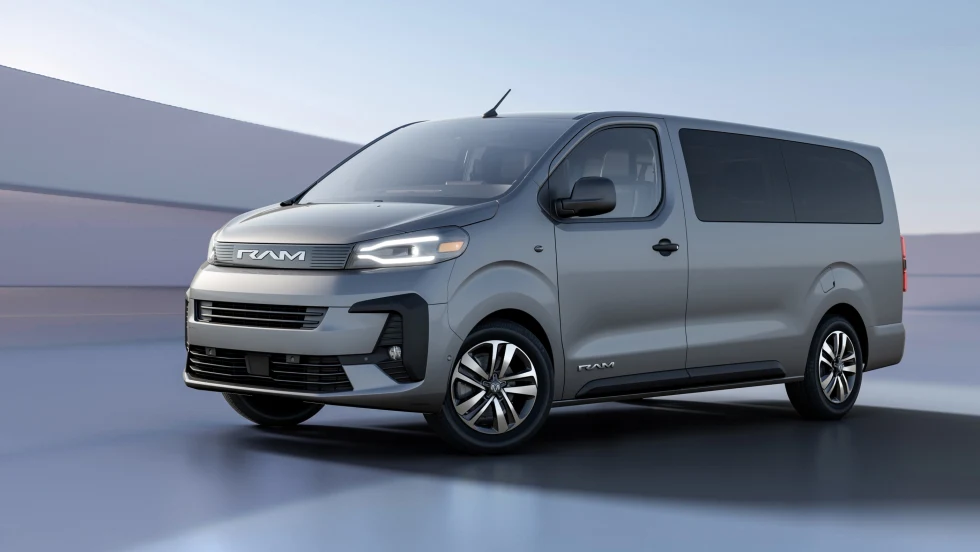
2027 Ram ProMaster City Starts Under $40K
Ram is returning to the smaller commercial van market with a new ProMaster City aimed at delivery, service, trade, and passenger applications. Starting at $39,995 with destination, the 2027 van offers up to 2,000 pounds of towing capacity, more than 2,000 pounds of payload, and multiple cargo and passenger configurations.
Read More →
New Tariff Threats & a Leadership Change at Wheels | AF News Recap
A new tariff threat is creating more uncertainty for fleet ordering, Wheels has named a new president, and we’re asking whether certification is really worth the investment.
Read More →
Certification: What’s in It for the Fleet Manager?
From smarter fleet decisions to stronger career credibility, certification can give fleet managers knowledge they may never gain inside a single operation.
Read More →
Wheels Names Matthew Cole President
Cole brings more than 30 years of automotive and technology experience to the fleet management company, including leadership roles at Aptiv, Visteon and Johnson Controls.
Read More →
AI is changing what fleet managers can build & 849,000 vehicles recalled | AF News Recap
Fleet managers are learning how to build their own AI-powered tools, Stellantis is recalling nearly 849,000 vehicles, and this year’s Fleet Manager of the Year finalists have been revealed. Additionally, we’re examining how to identify repairs that warrant a second look. Here’s what you need to know this week.
Read More →