





Related: Excessive Idling Can Create Pitfalls Voiding Warranty
Check-Engine Repair Costs Spiked in 2018
Automotive diagnostics data and business solutions provider CarMD has released its latest CarMD Vehicle Health Index, an annual report designed to provide an overview of information related to check engine-related car repairs, costs, and trends.
April 24, 2019
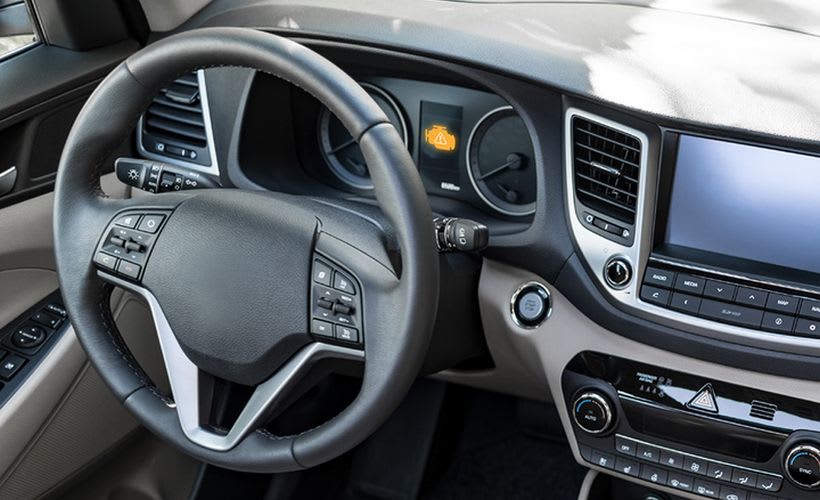
U.S. vehicle owners also saw a 6.5% year-over-year increase in the average cost to repair check engine light issues, according to new findings from CarMD.
Photo courtesy of CarMD.
2 min to read
For the first time, CarMD analysts reported a three-way tie for the most commonly diagnosed check-engine-light repair. "Replace ignition coil(s) and spark plug(s)" and "replace oxygen sensor" each accounted for 5.81% of repairs in 2018. U.S. vehicle owners also saw a 6.5% year-over-year increase in the average cost to repair check engine light issues, with costs up across all four U.S. regions.
The automotive diagnostics data and business solutions provider included the findings in its latest CarMD Vehicle Health Index, an annual report designed to provide an overview of information related to check engine-related car repairs, costs, and trends. Analysts included parts and component rankings this year for the first time.
"Several factors impact the type and cost of repairs, including vehicle age, driving conditions, upkeep and how often a driver addresses a dashboard warning light, which can snowball from a single faulty spark plug into the need for additional repairs if ignored," said Ieon Chen, CEO of CarMD. "By monitoring industry trends, we hope to educate drivers about the importance of repair and maintenance. Likewise, as our data reports an increase or decrease in a particular repair, automotive service professionals can adjust their customer communication and parts inventory accordingly."
Rounding out the five most common problems found to trigger the check engine light included the ignition coil and spark plug, O2 sensor, the catalytic converter, a loose or damaged fuel cap, and ignition coil without spark plug replacement. There was a slight increase in ignition coil issues, while slightly fewer mass air flow sensor, oxygen sensor and EVAP purge control valve replacements in 2018.
Analysts found the average cost to repair a check engine problem in the U.S. in 2018 was $381, including parts ($224) and labor ($157), representing an 11% increase in labor and 3.5% uptick in parts costs. Repair costs were up across all regions of the U.S., with the West seeing the largest increase (8%) and Midwest seeing the smallest (1%).
Vehicle owners in the West paid the most for check engine-related car repairs ($387) — nearly 6% more than drivers in the Midwest, who paid the least ($366). The most common repair in the West, Midwest and Northeast was "replace oxygen sensor(s)" while it was "replace ignition coil(s) and spark plug(s)" in the South.
More Maintenance

Sponsored•October 1, 2026
Fleet Manager’s Ultimate Playbook: Navigating the New Standard in OEM Connectivity
Rising operating costs, driver safety concerns, and unplanned downtime are putting unprecedented pressure on modern fleets. Discover how fleet managers use embedded OEM connectivity and real-time vehicle data to cut TCO, prevent downtime, and protect drivers without aftermarket telematics hardware.
Read More →
How Can Fleet Managers Tell Which Repairs Require Closer Review?
Fleetio’s Brianna Perry demonstrates how Service Advisor evaluates maintenance requests, identifies pricing anomalies, and provides the context fleet managers need to focus their attention on potential problems.
Read More →
Why Roadside Assistance Belongs in a Fleet Risk Strategy
Roadside assistance is more than a tow. See how the right partner can protect drivers, uncover fleet trends, and strengthen your risk strategy.
Read More →
Sponsored•August 7, 2026
Hidden in Plain Sight: Fleet Compliance Risks
Fleet compliance isn't just about having policies — it's about consistently enforcing them. This practical guide reveals six hidden compliance risks common in public sector and shared fleet operations and outlines proven strategies to improve visibility, accountability, and audit readiness
Read More →
How Maintenance Costs Compare Across 27 Fleet Vehicles
Vincentric’s three-year, 60,000-mile projections reveal wide differences for both scheduled and unscheduled maintenance among selected vehicle categories. Projected maintenance visits also play a factor.
Read More →
The EV Breakdown Nobody's Talking About: Why Most Electric Vehicle Roadside Calls Aren't Mechanical Failures
Here's why EV breakdowns are widely misunderstood.
Read More →
How Stellantis Plans to Get Ahead of Fleet Downtime
Keeping fleet vehicles on the road has become as important as buying them. Darren Bradshaw of Mopar North America explains how connected vehicle data, AI, and proactive service strategies are helping Stellantis reduce downtime and move closer to predictive maintenance.
Read More →
Merchants Fleet Expands Maintenance Network with Pep Boys
Merchants Fleet has expanded its relationship with Pep Boys, increasing the service provider's role within its national maintenance network. The move is intended to enhance maintenance coordination and support commercial fleets through Pep Boys' nationwide footprint.
Read More →
The Two Biggest Summer Downtime Threats for Fleets
A conversation with a maintenance expert reveals the two most common summer maintenance pains and how to prevent them.
Read More →
From Marine Corps Motor Pool to Managing 460 Fleet Vehicles
Cesar Ayala of O’Connell Landscape Maintenance shares how he transitioned from the Marine Corps to managing a 460-vehicle fleet—and the real-world challenges of maintenance, compliance, and driver management in California.
Read More →